PlantFun
Plant Needs
Sunlight
Bright indirect light; avoid direct midday sun which can scorch young orange foliage; tolerate low light but will slow color transition
Watering
Water when the top 2–3 cm of soil feels dry; avoid overwatering to prevent root rot, as compacted soil retains moisture easily
Temperature
Thrives at 18–27°C; protect from temperatures below 13°C to avoid leaf yellowing and stunted growth
Characteristics
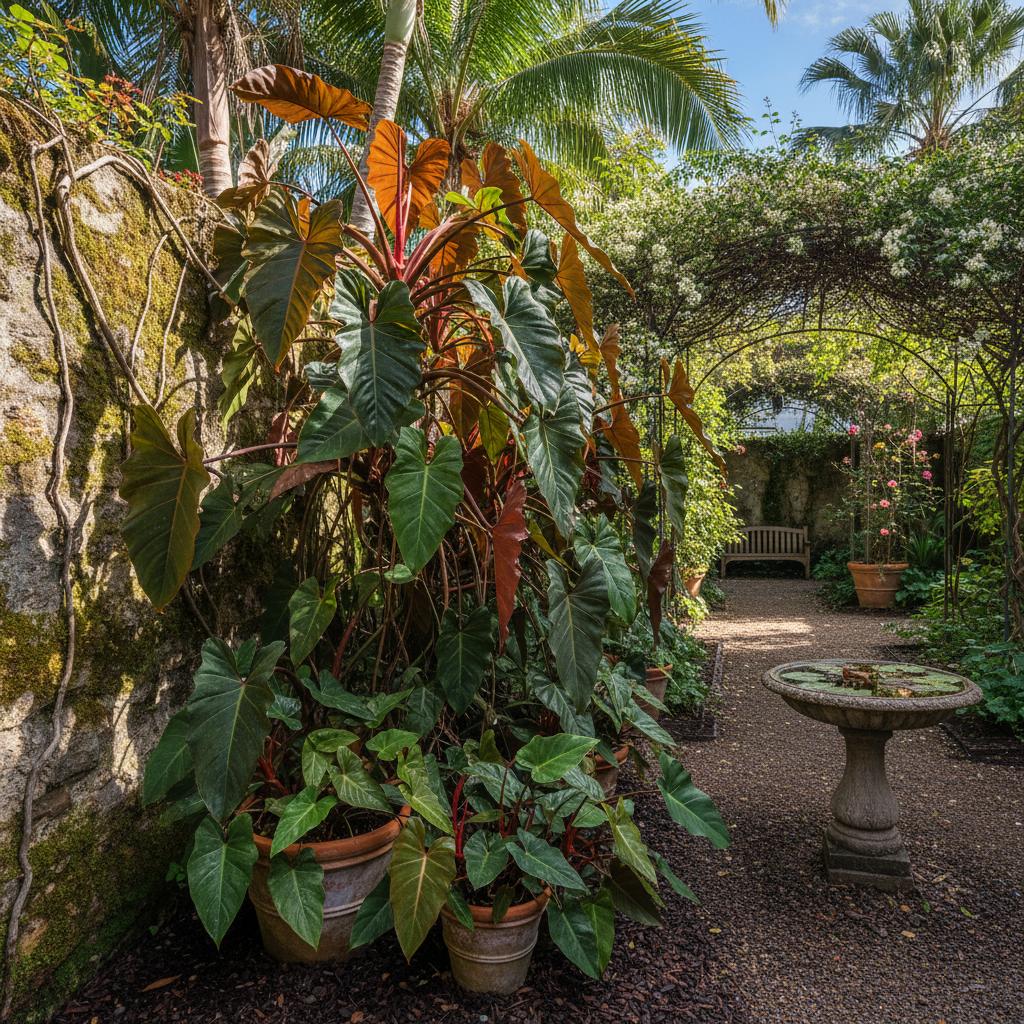
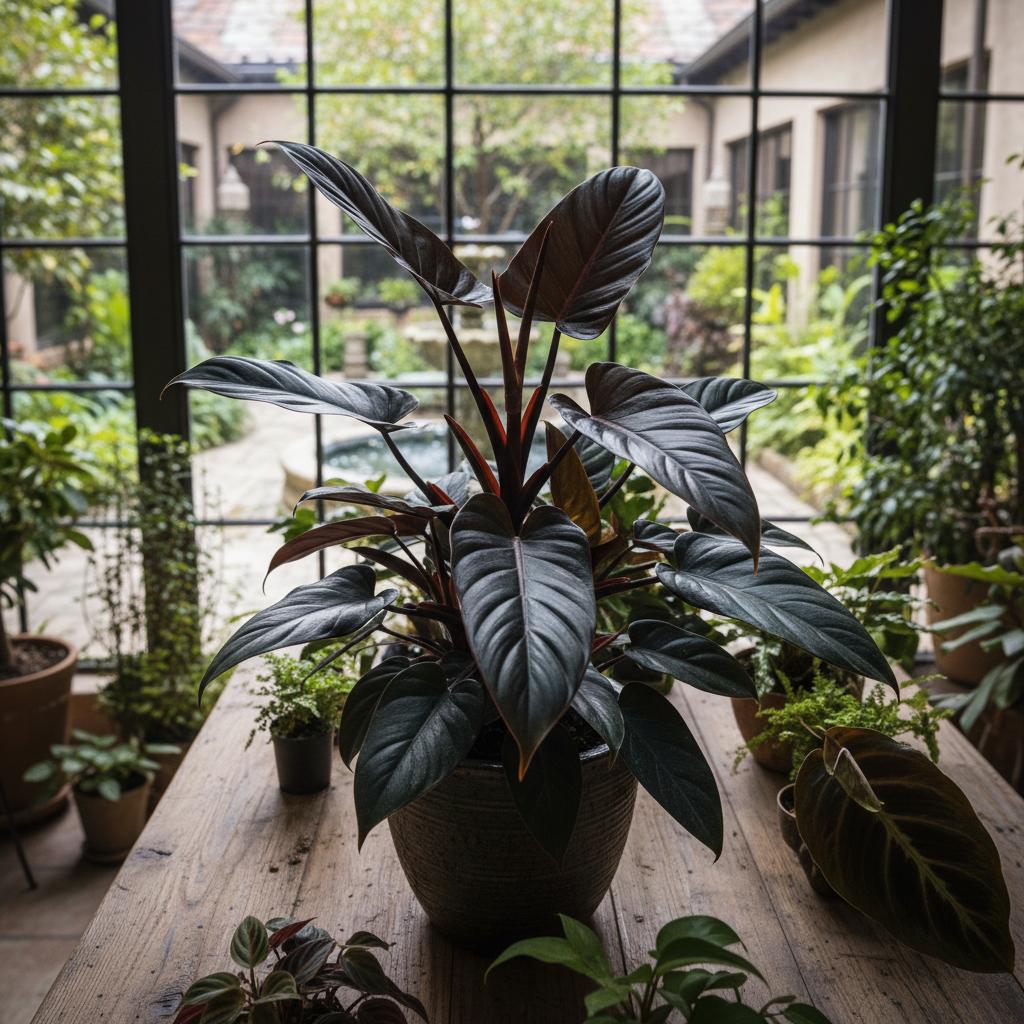
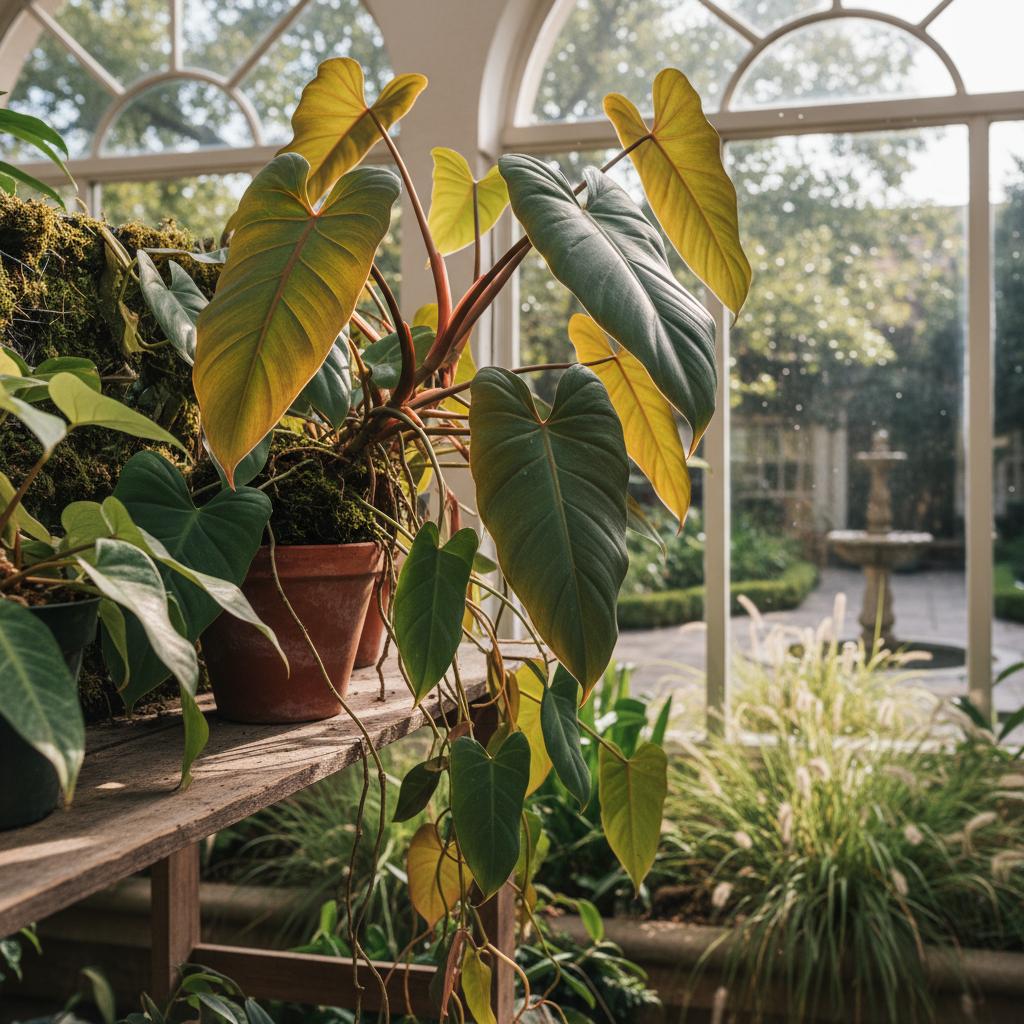
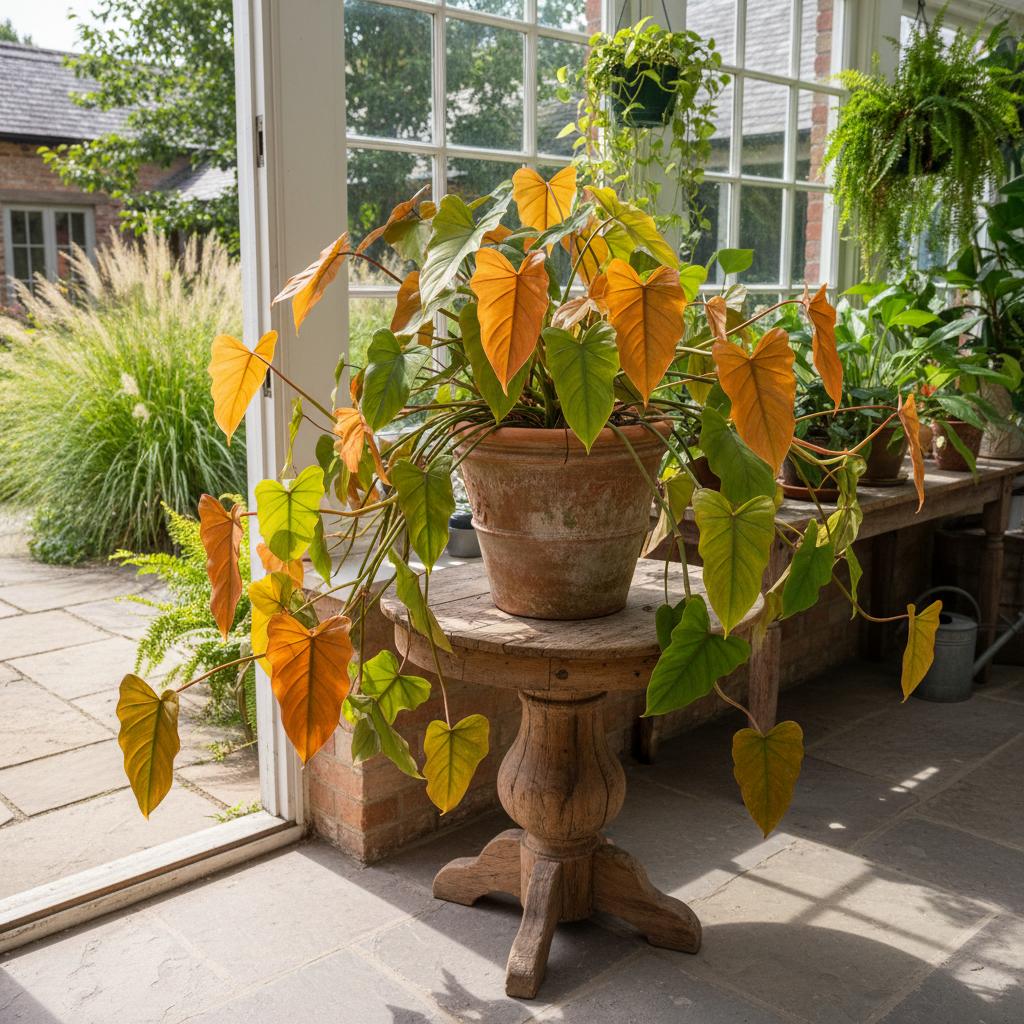
- Leaf: Emerging leaves are bright orange, maturing to bronze then deep green; heart-shaped, glossy, 15–25 cm long
- Stem: Short, thick, reddish-brown stems; aerial roots for anchorage and moisture uptake
- Inflorescence: Spathe and spadix (rare indoors; pale green spathe with white inner surface)
Care Guide
Watering
Keep soil evenly moist but not waterlogged; mist foliage 1–2 times weekly to boost humidity
Fertilization
Diluted balanced liquid feed once monthly. Discontinue fertilization in autumn and winter to avoid nutrient buildup
Banana peel tea:Soak fully composted banana peels in water for 24 hours; dilute 1:20 for root drench to support foliage color development; avoid using uncomposted peels to prevent odor and pest infestationsPruning
- Remove yellow or damaged leaves at the base with clean, sharp shears to maintain plant health
- Trim overgrown stems in early spring to encourage bushier, compact growth
- Wipe leaves regularly with a damp cloth to remove dust and improve light absorption
Toxicity
Warning: this plant may be toxic.
Pets & Humans
Pets: ASPCA: Toxic; ingestion causes oral pain, drooling, vomiting, and difficulty swallowing
Humans: Contains calcium oxalate crystals; ingestion irritates mouth and throat; contact may cause mild skin redness
Garden Uses & Culture
Culture: Symbolizes warmth and positivity due to its vibrant orange emerging foliage
Usage: Ornamental indoor foliage; ideal for tabletop displays or low shelves in living spaces