 PlantFun
Plant Needs
Characteristics
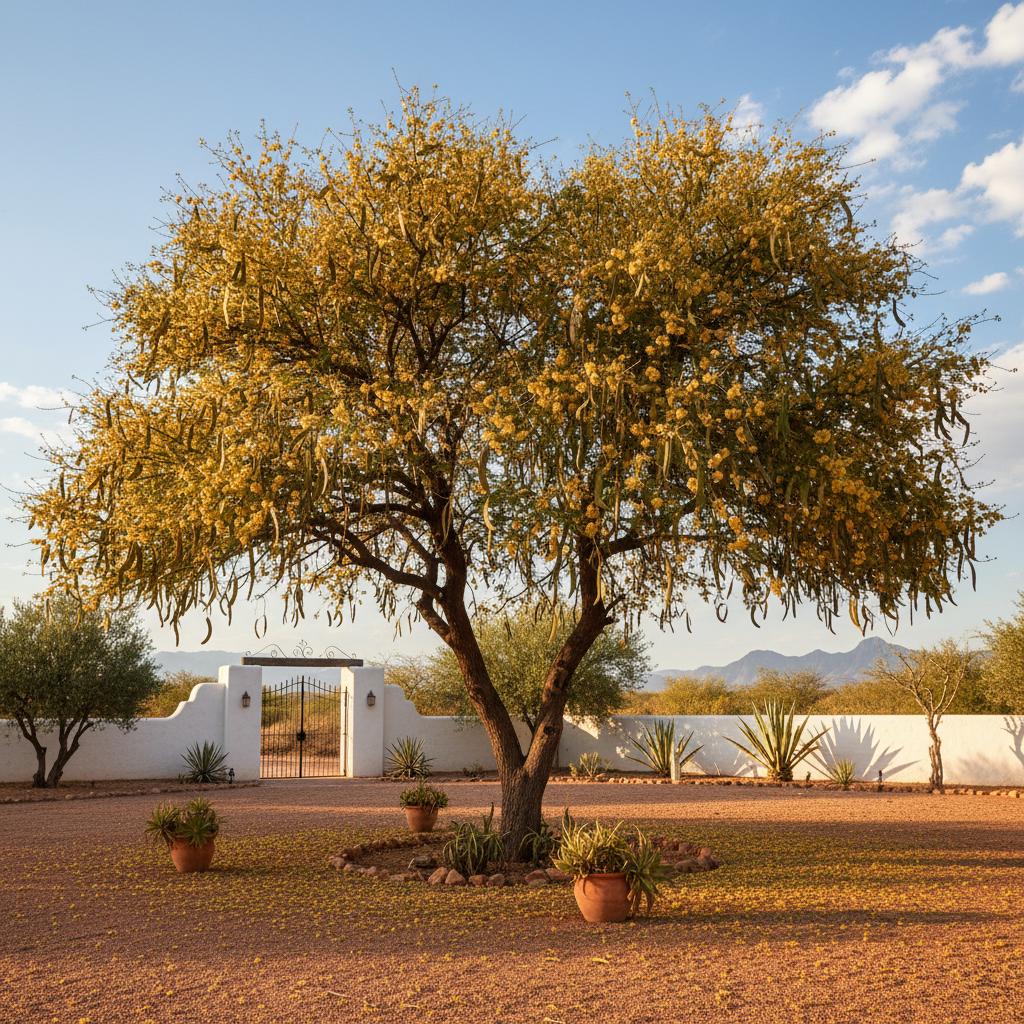
- Leaves: Bipinnate, silvery-grey to glaucous green, finely divided, 5-12 cm long, with numerous small leaflets;
- Flowers: Bright yellow, fluffy spherical flower heads arranged in large racemose panicles, highly fragrant;
- Bark: Smooth, greyish-green to dark grey, becoming fissured and rough with age;
- Fruit: Flattened seed pods, 5-11 cm long, glaucous, containing multiple black seeds.
Care Guide
Water deeply but infrequently, allowing the soil to dry out between waterings.
Apply a low-phosphorus, slow-release fertilizer if soil is extremely poor.. As a legume, it fixes its own nitrogen; avoid high-phosphorus fertilizers which can damage the roots.
Banana Peel Tea:Soak chopped banana peels in water for 24-48 hours, strain, and use the liquid to water the base of the tree to support blooming. Avoid applying raw peels directly to prevent attracting pests.- Prune immediately after flowering finishes in spring to maintain a compact shape;
- Remove dead, damaged, or crossing branches to improve air circulation;
- Avoid cutting into old, leafless wood, as it may not resprout;
- Thin out the canopy to reduce wind resistance, as the tree has brittle branches and a shallow root system.
Toxicity
Warning: this plant may be toxic.
Pets: Non-toxic per ASPCA guidelines.
Humans: Generally considered non-toxic, though the pollen can be a mild respiratory allergen for some individuals.
Garden Uses & Culture
Culture: In Europe, particularly in Italy and France, the flowers (commonly called "mimosa") are the traditional symbol of International Women's Day on March 8th, representing strength, sensibility, and the arrival of spring.
Usage: Widely used as an ornamental tree, in the cut flower industry, and in perfumery for its sweet, powdery absolute.