 PlantFun
Plant Needs
Characteristics
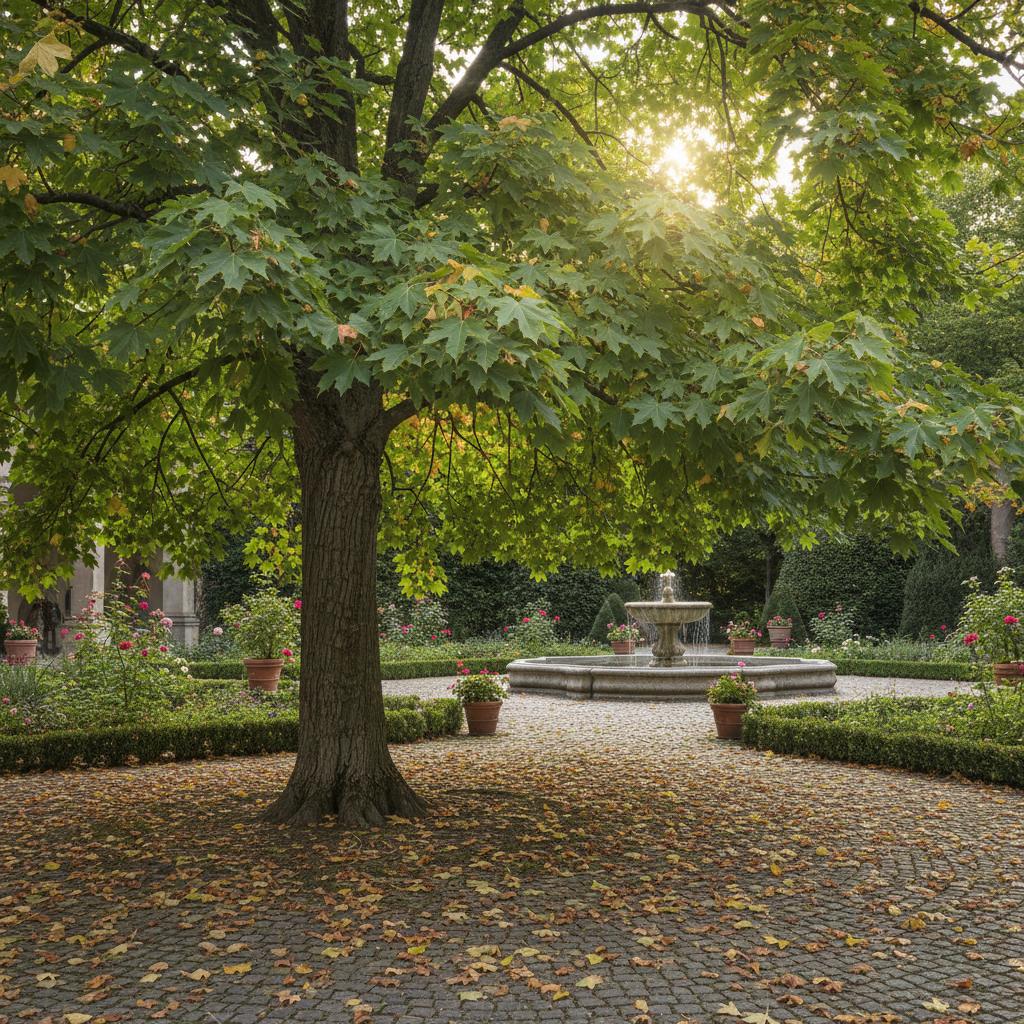
- Leaves: Opposite, palmately lobed with 5 to 7 lobes, each lobe featuring 1 to 3 sharp side teeth; petioles exude a milky sap when broken;
- Flowers: Yellow-green, appearing in erect corymbs of 15 to 30 flowers before the leaves emerge in early spring;
- Fruit: Double samara (winged seed) with wings spreading at a wide angle, nearly 180 degrees;
- Bark: Gray-brown with shallow, neat, intersecting longitudinal ridges, lacking the shaggy appearance of some other maples.
Care Guide
Water deeply during prolonged dry spells, especially for young trees.
Apply a light layer of compost or organic mulch around the base.. Fertilization is rarely necessary for mature trees unless soil is extremely poor.
Composted Leaf Mulch:Gather fallen leaves in autumn, compost them over winter, and apply as a mulch ring around the drip line in spring to retain moisture and slowly release nutrients. Keep mulch away from the trunk to prevent rot.- Prune in late autumn or mid-winter to prevent excessive sap bleeding;
- Remove dead, diseased, or crossing branches to maintain a strong central leader;
- Elevate the canopy for pedestrian clearance if planted as a street tree;
- Avoid heavy pruning, which can stimulate excessive water sprouts.
Toxicity
Warning: this plant may be toxic.
Pets: Non-toxic to cats per ASPCA guidelines.
Humans: Generally non-toxic; sap may cause mild skin irritation in highly sensitive individuals.
Garden Uses & Culture
Culture: Widely planted as a street and shade tree in European and North American cities due to its high tolerance for urban pollution and poor soils. However, its dense canopy and shallow roots often inhibit the growth of grass and native understory plants.
Usage: Urban landscaping, shade tree, windbreaks. The wood is hard and is sometimes used for furniture, flooring, and musical instruments.