 PlantFun
Plant Needs
Sunlight
Prefers partial sun to dappled shade; protect from harsh afternoon sun to prevent leaf scorch.
Watering
Requires consistently moist, well-drained soil; do not allow the soil to dry out completely.
Temperature
Hardy in temperate climates; protect from late spring frosts which can damage new foliage.
Characteristics
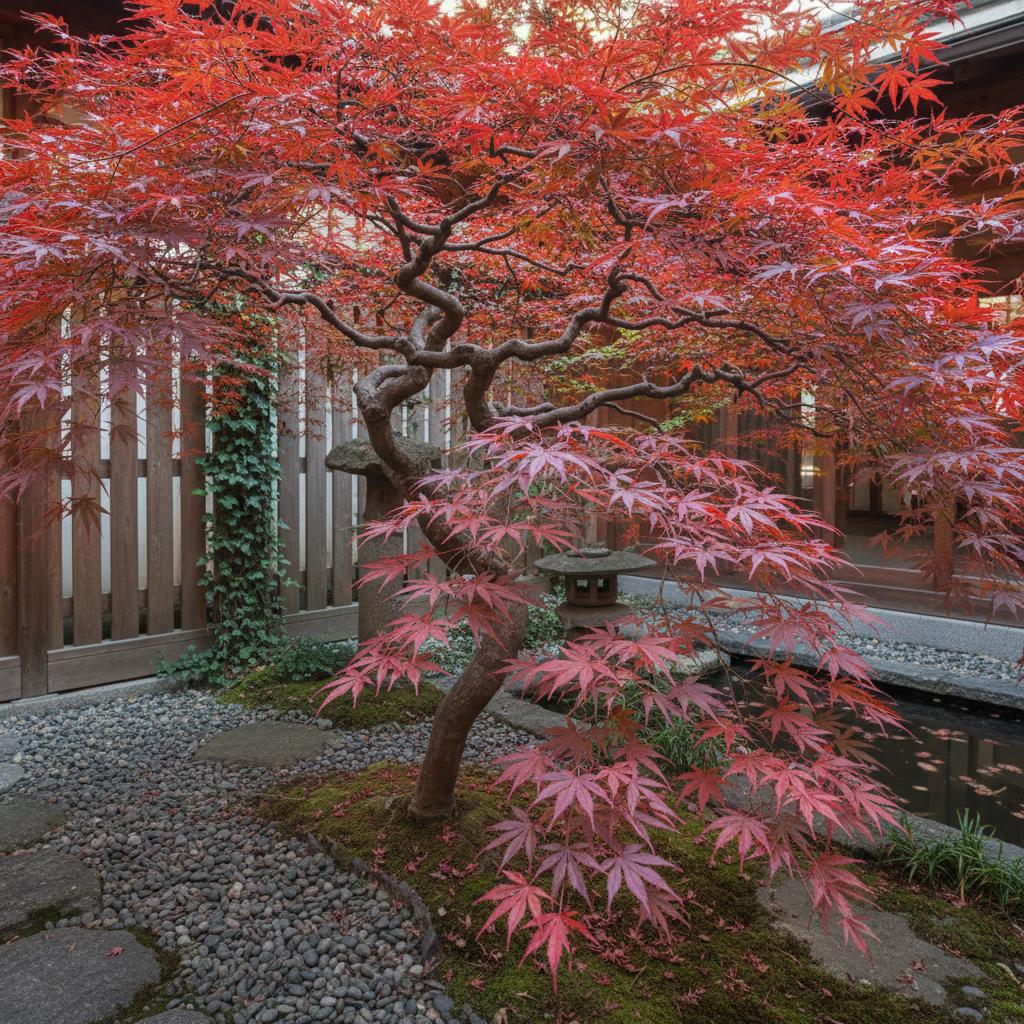
- Leaves: Opposite, deeply palmately lobed with 5 to 9 pointed lobes, margins serrated, turning vibrant red, orange, or yellow in autumn;
- Flowers: Small, reddish-purple, borne in pendulous corymbs;
- Fruit: Paired winged samaras, 2 to 3 cm long, ripening in late summer to autumn;
- Bark: Smooth, greenish-gray to light brown, becoming slightly fissured with age.
Care Guide
Watering
Water deeply once or twice a week, especially during dry spells.
Fertilization
Apply a balanced, slow-release organic fertilizer just as buds begin to swell.. Fertilize sparingly; maples do not require heavy feeding.
Coffee Ground Compost:Mix used coffee grounds into the topsoil or compost pile to provide gentle nitrogen and maintain the slight acidity maples prefer. Avoid applying thick layers directly against the trunk to prevent rot.Pruning
- Prune during late autumn or winter dormancy to prevent sap bleeding;
- Remove dead, diseased, or crossing branches to maintain an open, airy canopy;
- Avoid heavy pruning; focus on enhancing the tree's natural structural form.
Toxicity
Warning: this plant may be toxic.
Pets & Humans
Pets: Non-toxic per ASPCA.
Humans: No known toxicity; generally safe to handle.
Garden Uses & Culture
Culture: In North American and European landscaping, maples are celebrated as the quintessential symbol of autumn, representing endurance and the breathtaking beauty of seasonal transition.
Usage: Widely used as a specimen tree in gardens, woodland landscaping, and as a popular subject for bonsai cultivation.