 PlantFun
Plant Needs
Sunlight
Prefers dappled sunlight or partial shade; protect from harsh afternoon sun to prevent leaf scorch.
Watering
Requires consistently moist, well-drained soil; do not let the soil dry out completely.
Temperature
Hardy in temperate climates; needs protection from extreme heat and dry winds.
Characteristics
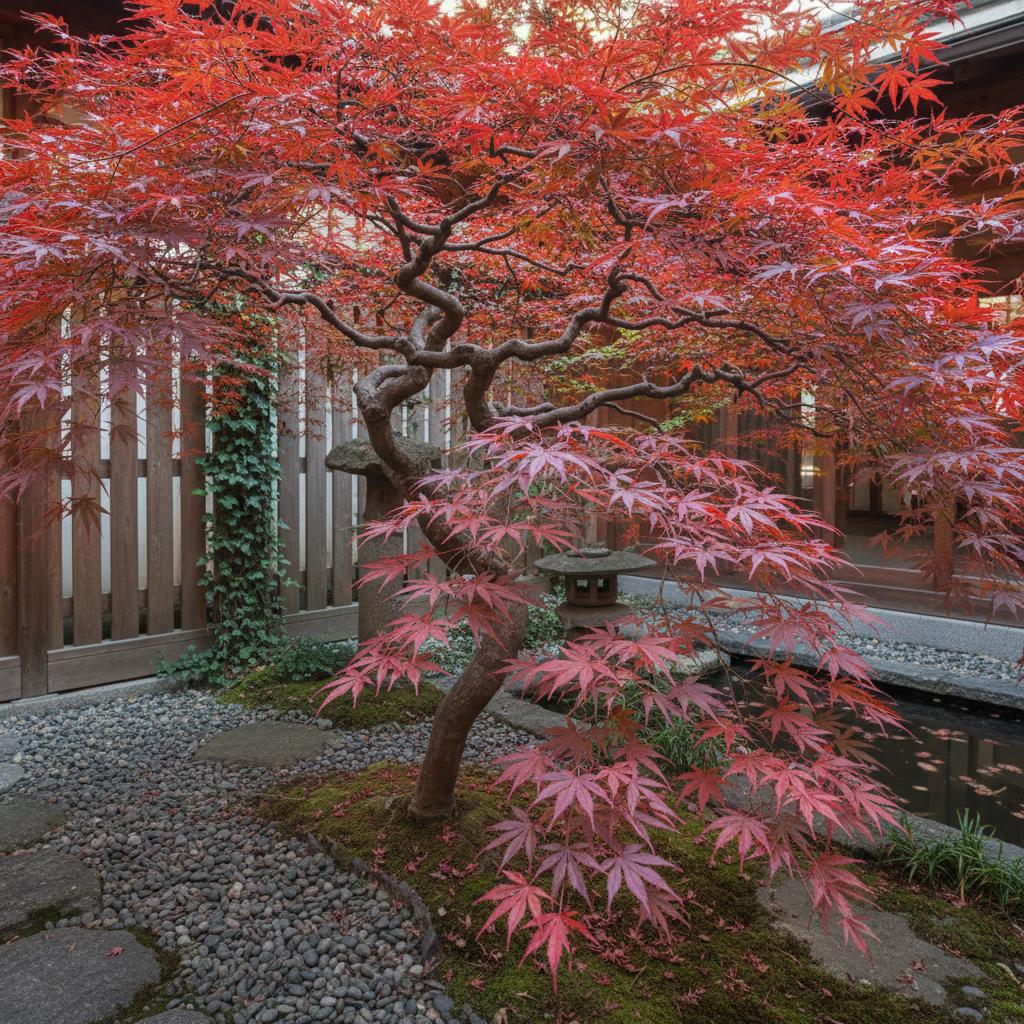
- Leaves: Opposite, deeply palmately lobed with 5-9 pointed lobes, margins serrated, turning vibrant red, orange, or yellow in autumn;
- Flowers: Small, reddish-purple, borne in pendulous corymbs;
- Fruit: Paired winged samaras, 1-2 cm long, ripening in late summer to autumn;
- Bark: Smooth, greenish-gray to light brown, becoming slightly fissured with age.
Care Guide
Watering
Water deeply 2-3 times a week during active growth and hot weather.
Fertilization
Apply a balanced, slow-release organic fertilizer just as buds begin to swell.. Feed sparingly, as over-fertilization can diminish autumn color and cause leggy growth.
Compost Tea and Coffee Grounds:Steep aged compost in water to make a gentle tea; occasionally sprinkle a small amount of used coffee grounds around the base to maintain slight soil acidity. Avoid applying too close to the trunk.Pruning
- Prune during late autumn or winter dormancy to prevent sap bleeding;
- Remove dead, diseased, or crossing branches to maintain an open, airy structure;
- Avoid heavy pruning; focus on enhancing the tree's natural graceful shape.
Toxicity
Warning: this plant may be toxic.
Pets & Humans
Pets: Non-toxic to cats per ASPCA.
Humans: Non-toxic to humans.
Garden Uses & Culture
Culture: In Western landscaping, it is highly prized as a focal point in woodland gardens and modern minimalist landscapes, symbolizing elegance and the fleeting beauty of autumn.
Usage: Widely used as an ornamental specimen tree, in container gardening, and as a classic subject for bonsai cultivation.