 PlantFun
Plant Needs
Sunlight
Requires bright, indirect light or dappled shade; direct sunlight will quickly scorch the delicate fronds.
Watering
High moisture requirement; keep the soil consistently moist but never waterlogged. High ambient humidity is crucial.
Temperature
Prefers warm, stable temperatures and suffers in cold drafts or dry heat.
Characteristics
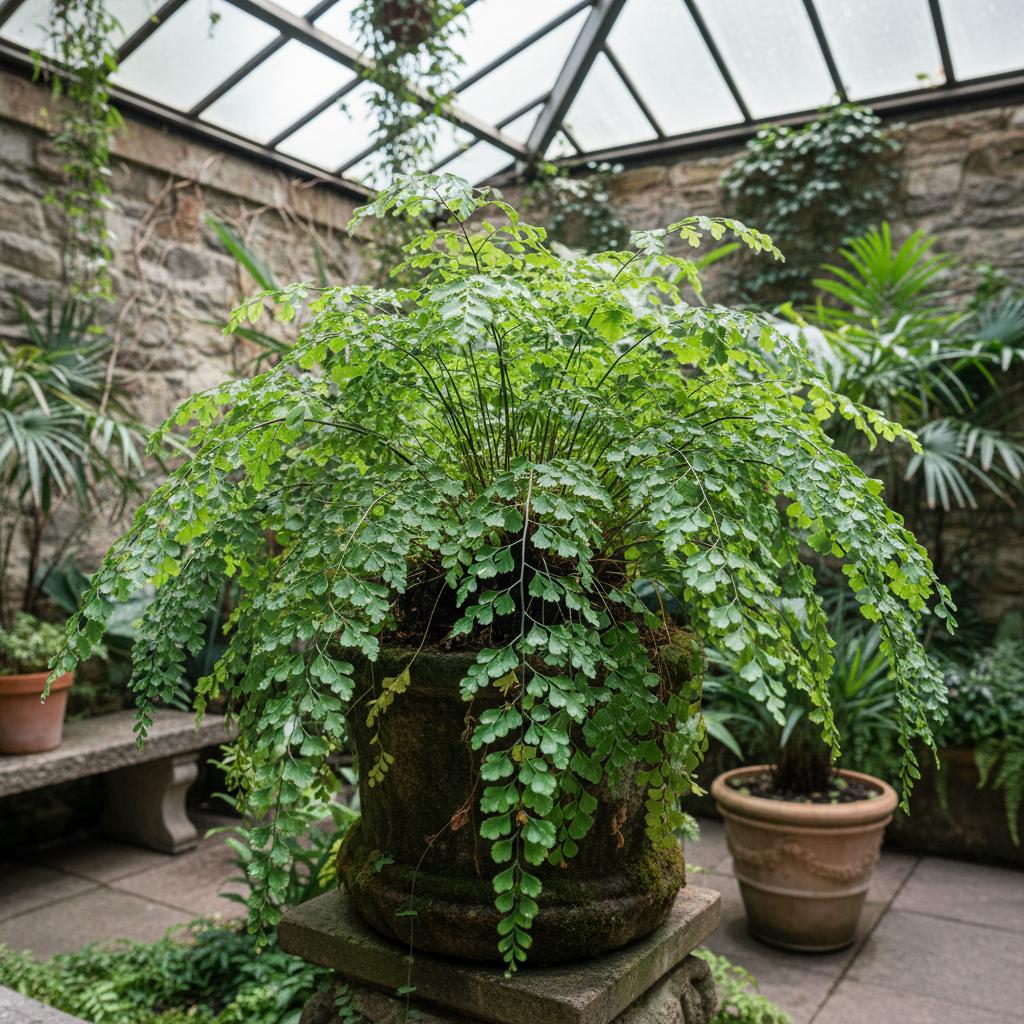
- Leaves: Fronds are bipinnate to tripinnate, featuring delicate, light green, fan-shaped or wedge-shaped pinnules (leaflets) that repel water.
- Stems: Rachis and stipes are distinctively dark brown to purplish-black, wiry, glossy, and hairless.
- Spores: Sori (spore-producing structures) are borne on the reflexed margins of the leaflet undersides, appearing as small brown patches when mature.
- Rhizomes: Creeping, short rhizomes covered in narrow brown scales.
Care Guide
Watering
Keep soil consistently moist, watering as soon as the surface feels slightly dry to the touch.
Fertilization
Apply a diluted, balanced liquid fertilizer monthly to support new frond growth.. Ferns are sensitive to over-fertilization; always dilute to half or quarter strength.
Banana Peel Tea:Steep chopped banana peels in water for 24 hours, strain, and dilute 1:1 with water. Avoid using raw peels directly on the soil to prevent mold in high-humidity environments.Pruning
- Remove dead, browned, or shriveled fronds at the base using sterilized scissors to encourage new growth.
- Do not trim the tips of healthy fronds, as ferns grow from their apical meristems.
- Maintain high ambient humidity to reduce the need for pruning crispy, dried edges.
Toxicity
Warning: this plant may be toxic.
Pets & Humans
Pets: Non-toxic to cats per ASPCA.
Humans: Non-toxic to humans; safe to handle and cultivate indoors.
Garden Uses & Culture
Culture: In Victorian England, Maidenhair ferns were highly prized during the "Pteridomania" (fern craze) and were a staple in Wardian cases, symbolizing delicate beauty and refinement.
Usage: Popular as an indoor ornamental foliage plant, especially suited for terrariums, hanging baskets, and shaded conservatories.