 PlantFun
Plant Needs
Characteristics
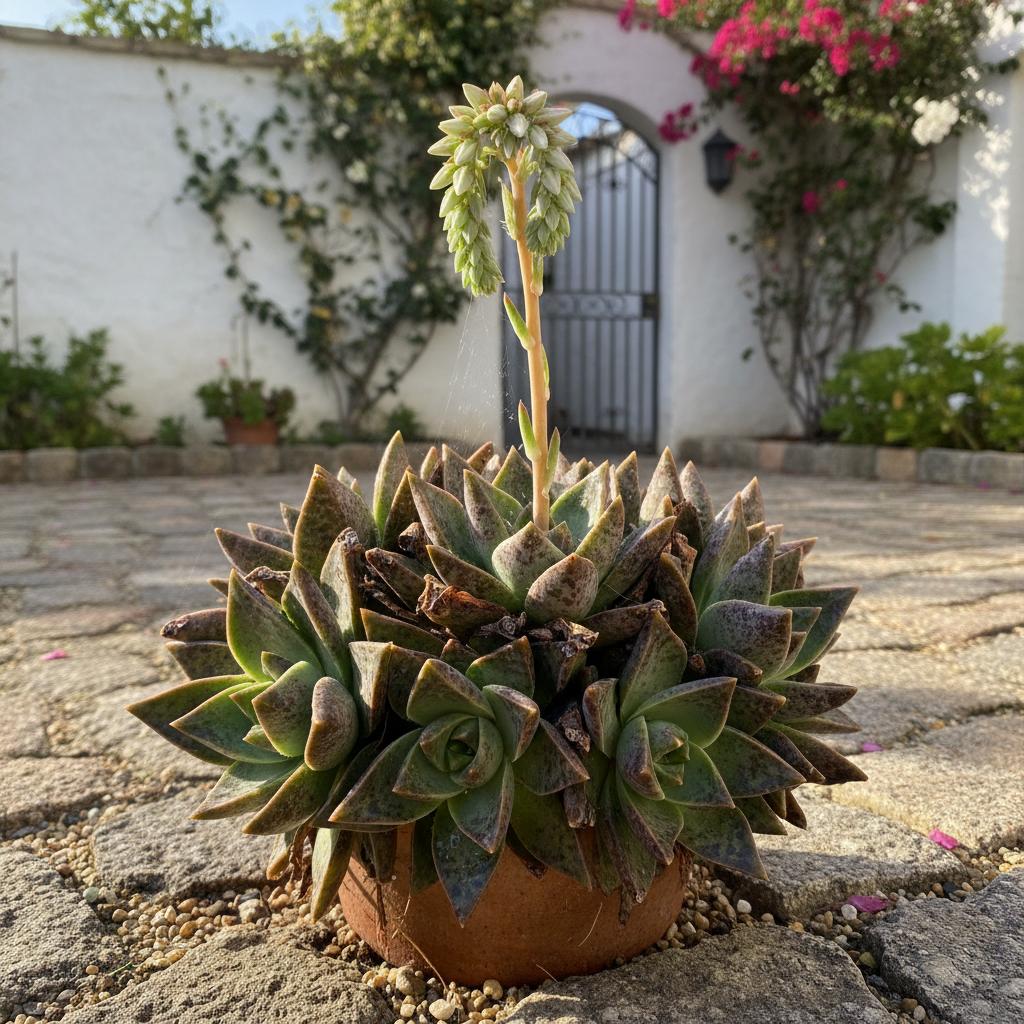
- Leaves: Fleshy, club-shaped to spatulate, grayish-green with prominent purplish-brown mottling, tapering at the base with a slightly wavy or blunt apex;
- Stems: Short, stout, branching from the base to form dense, small clusters;
- Flowers: Tubular, pinkish-green to red with white margins, borne on a tall, erect spike-like thyrse up to 35 cm long;
- Roots: Fibrous, shallow root system adapted to rocky crevices.
Care Guide
Water thoroughly when the soil is completely dry.
Apply a diluted succulent nutrient tea once at the start of the growing season.. Feed sparingly during the active growing season; avoid fertilizing in winter.
Banana Peel Tea:Steep chopped banana peels in water for 24 hours, strain, and dilute 1:1 with water. Use sparingly to avoid attracting pests or causing fungal issues; avoid high salts and do not use raw, uncomposted matter directly on the soil.- Remove spent flower stalks at the base to maintain a tidy appearance;
- Gently pull away any dried or dead basal leaves to prevent rot and pest accumulation;
- Handle carefully as leaves detach easily (fallen leaves can be used for propagation).
Toxicity
Warning: this plant may be toxic.
Pets: Toxic to cats per ASPCA guidelines for related Crassulaceae; ingestion may cause vomiting, lethargy, and gastrointestinal irritation.
Humans: Mildly toxic if ingested; may cause minor gastrointestinal upset.
Garden Uses & Culture
Culture: Highly prized in Western succulent collections for its compact size and striking resemblance to speckled bird eggs, making it a favorite for novelty plant enthusiasts.
Usage: Perfect for small pots, windowsill displays, terrariums (with caution regarding humidity), and miniature rock gardens.