 PlantFun
Plant Needs
Sunlight
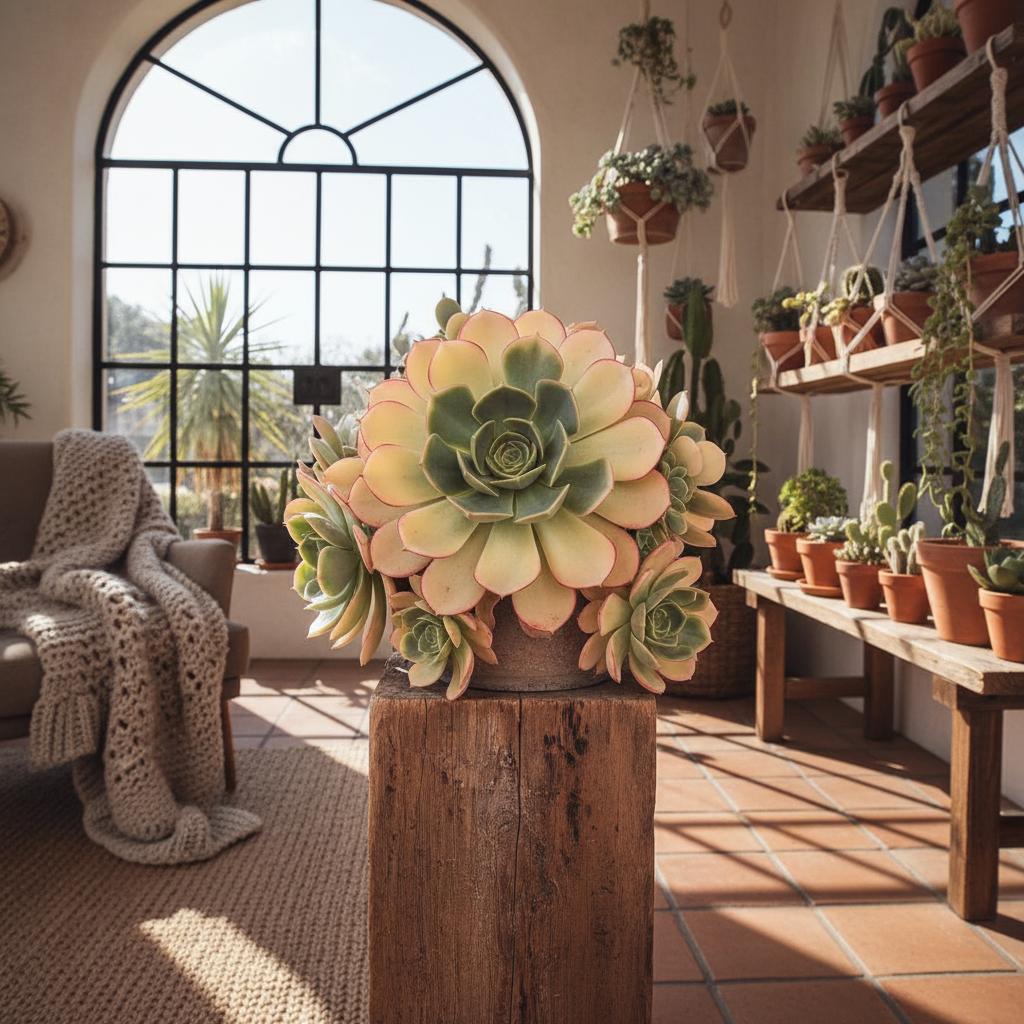
Prefers bright indirect light to partial sun; direct morning sun enhances the pink margins, but requires protection from harsh afternoon sun to prevent leaf scorch.
Watering
Low water requirements; allow the soil to dry out completely between waterings. Aeoniums are winter growers and may require less water during summer dormancy.
Temperature
Thrives in mild temperatures between 18-24°C (65-75°F); not frost-tolerant and should be protected from freezing temperatures.
Characteristics
- Leaves: Fleshy, spoon-shaped leaves forming tight rosettes; strikingly variegated with pale yellow centers, green mid-sections, and bright pink to red margins when exposed to bright sunlight.
- Stems: Woody, branching stems that often produce aerial roots as they mature and spread.
- Flowers: Star-shaped, pale yellow flowers borne on terminal pyramidal panicles; the individual rosette dies after flowering (monocarpic), but the plant continues to grow from side branches.
Care Guide
Watering
Water sparingly in summer as the plant may go dormant; water moderately in spring.
Fertilization
Apply a diluted, balanced fertilizer once a month.. Feed only during the active growing seasons (spring and autumn).
Banana Peel Tea:Steep chopped banana peels in water for 24-48 hours, strain, and use the liquid to water the plant. This provides gentle potassium to support stem strength and root health. Avoid leaving raw peels on the soil surface to prevent gnats.Pruning
- Remove dried, dead basal leaves gently by pulling them away from the stem to prevent rot and pest hiding spots.
- Behead leggy or stretched rosettes with sterile shears to encourage new branching and maintain a compact shape.
- Replant the cut rosettes after allowing the stem to callous for a few days.
Toxicity
Warning: this plant may be toxic.
Pets & Humans
Pets: Non-toxic to cats per ASPCA guidelines.
Humans: Non-toxic to humans; safe to handle.
Garden Uses & Culture
Culture: Highly prized in modern Western xeriscaping and container gardening for its geometric perfection and vibrant, tricolor foliage. It is a staple in Californian and Mediterranean-style drought-tolerant landscapes.
Usage: Excellent for container gardens, rockeries, succulent wreaths, and as a striking indoor windowsill plant.