 PlantFun
Plant Needs
Sunlight
Prefers bright indirect light to partial sun; intense afternoon sun can scorch leaves, while too much shade causes leggy growth.
Watering
Drought tolerant. Water thoroughly only when the top 2-3 inches of soil are completely dry.
Temperature
Thrives in mild, Mediterranean climates. Protect from frost and freezing temperatures.
Characteristics
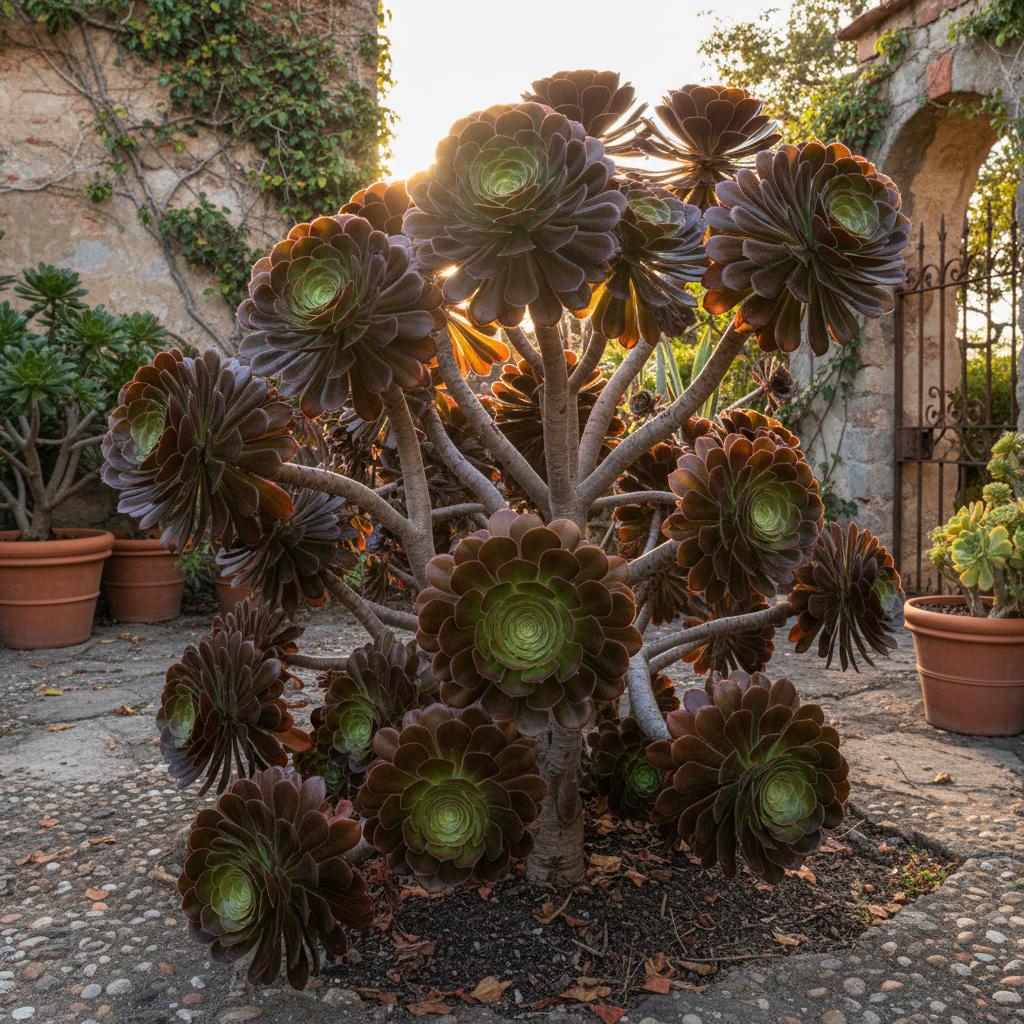
- Leaves: Fleshy, spoon-shaped to spatulate leaves forming tight terminal rosettes; colors range from bright green to deep burgundy, bronze, or variegated depending on the hybrid.
- Stems: Bare, woody, and branching stems that bear the heavy leaf rosettes at their tips, often showing prominent leaf scars.
- Flowers: Large, pyramidal panicles emerging from the center of mature rosettes, bearing numerous small, star-shaped, usually yellow or whitish flowers.
- Roots: Fibrous root system, occasionally producing aerial roots on lower stems for stability and moisture absorption.
Care Guide
Watering
Water moderately in spring; reduce watering significantly in peak summer if the plant enters dormancy.
Fertilization
Apply a diluted, balanced fertilizer once at the beginning of the spring season.. Feed lightly only during the active growing seasons (autumn to spring).
Banana Peel Tea:Soak chopped banana peels in water for 24-48 hours. Strain and dilute 1:1 with water. Use during the active growing season to support root health and leaf vigor. Avoid leaving solid peels on the soil to prevent fungus gnats.Pruning
- Remove dried, dead leaves from the bottom of the rosettes gently to maintain a tidy appearance and prevent pest hiding spots.
- Behead leggy or overgrown stems in autumn or spring to encourage new branching from the cut stem.
- Allow the cut rosettes to callus for a few days, then replant them in dry soil to propagate new plants.
- Remove spent flower stalks, as the blooming rosette will naturally die back (monocarpic).
Toxicity
Warning: this plant may be toxic.
Pets & Humans
Pets: Non-toxic to cats per ASPCA guidelines.
Humans: Generally considered non-toxic to humans, though ingestion is not recommended.
Garden Uses & Culture
Culture: Highly valued in modern Western xeriscaping and container gardening for their geometric, fractal-like appearance and low maintenance requirements.
Usage: Excellent for rock gardens, succulent bowls, coastal gardens, and as striking architectural focal points in drought-tolerant landscapes.