 PlantFun
Plant Needs
Sunlight
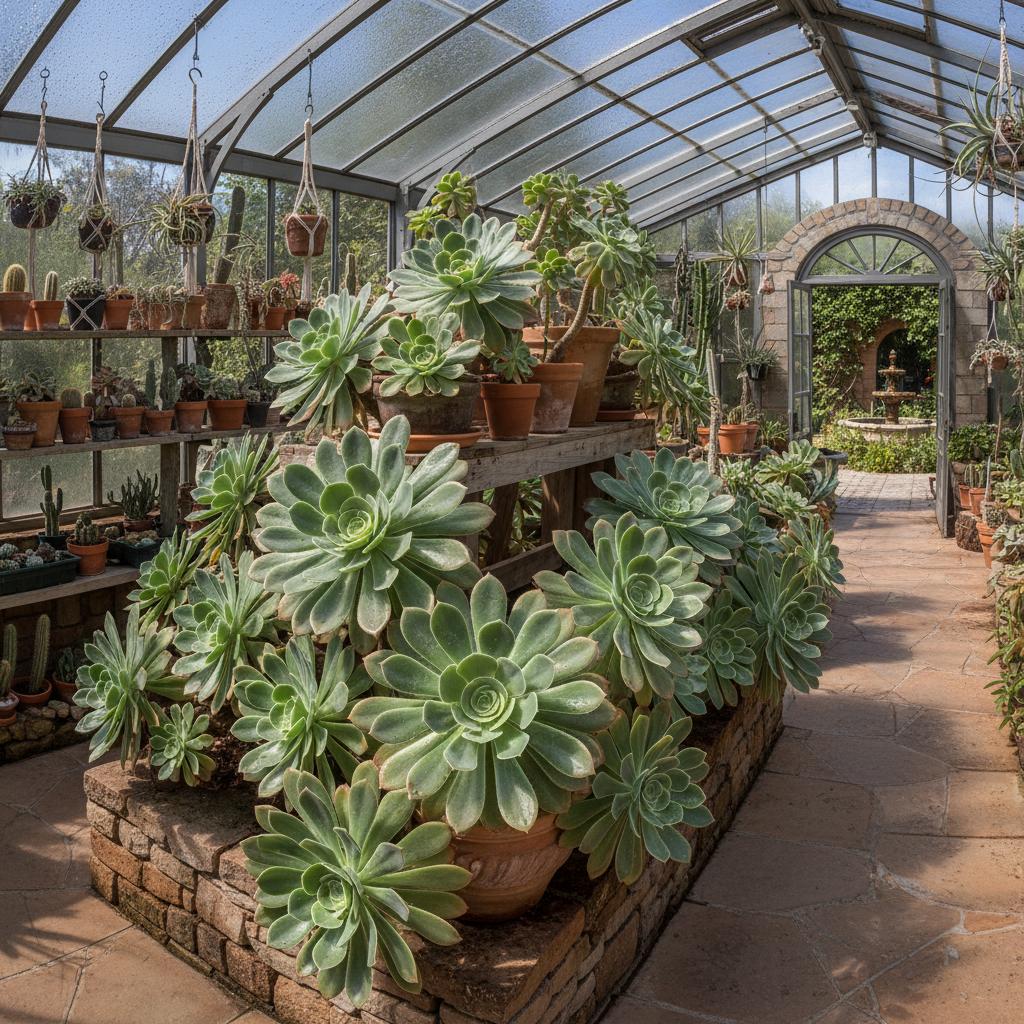
Requires bright, direct sunlight to maintain its compact rosette shape and vibrant pink leaf margins; can tolerate partial afternoon shade in extremely hot climates.
Watering
Highly drought-tolerant. Allow the soil to dry out completely between waterings. Overwatering easily leads to root rot.
Temperature
Prefers mild, Mediterranean temperatures. It is not frost-hardy and should be protected from freezing temperatures.
Characteristics
- Leaves: Fleshy, obovate to lanceolate, forming large terminal rosettes, green with distinct pink to dark red ciliate margins;
- Stem: Stout, branching, becoming woody at the base, marked with prominent diamond-shaped leaf scars;
- Flowers: Star-shaped, pale pink to whitish, borne on a large, dome-shaped or pyramidal terminal panicle;
- Roots: Fibrous, shallow root system typical of xerophytic succulents.
Care Guide
Watering
Water thoroughly when the soil is completely dry, ensuring excess water drains away.
Fertilization
Apply a light, diluted succulent fertilizer once a month to support active growth and blooming.. Fertilization recommendations description
Banana Peel Tea:Soak chopped banana peels in water for 24-48 hours, strain the liquid, and dilute 1:1 with water before applying to the soil. Discard the solid peels in the compost to avoid attracting fungus gnats. This provides gentle potassium to strengthen the plant's cellular structure.Pruning
- Remove dried, dead basal leaves gently by pulling them away from the stem to maintain a tidy appearance and prevent pest hiding spots;
- If stems become too leggy, behead the rosettes in spring, let the cut callous for a few days, and replant to propagate;
- Cut back the flower stalk completely down to the base once the blooms have faded, as the flowering rosette will naturally die back (monocarpic behavior of the blooming branch).
Toxicity
Warning: this plant may be toxic.
Pets & Humans
Pets: Non-toxic to cats per ASPCA guidelines for the Aeonium genus.
Humans: Generally considered non-toxic to humans, though ingestion is not recommended.
Garden Uses & Culture
Culture: In Western horticulture, Aeoniums are highly prized in xeriscaping and modern architectural garden designs, particularly in California and Mediterranean Europe, for their striking geometric forms.
Usage: Excellent as a focal point in container gardens, rockeries, and drought-tolerant coastal landscapes.