 PlantFun
Plant Needs
Sunlight
Prefers full sun to partial shade; intense summer sun may require light afternoon shading to prevent leaf scorch.
Watering
Drought tolerant; water thoroughly only when the top two inches of soil are completely dry.
Temperature
Thrives in mild climates; not frost-tolerant and should be protected from temperatures below freezing.
Characteristics
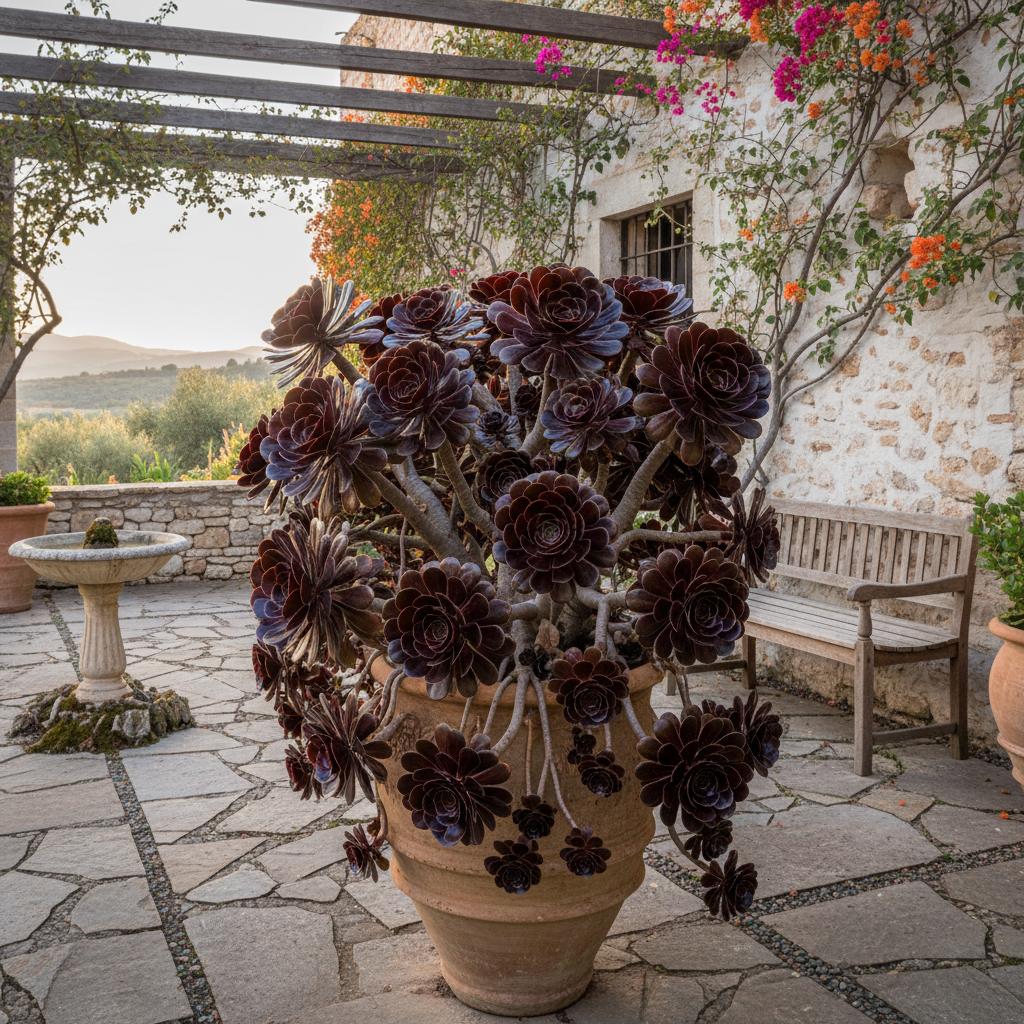
- Leaves: Fleshy, spoon-shaped, glossy green, arranged in dense terminal rosettes at the ends of branches; margins often have fine cilia.
- Flowers: Bright yellow, star-shaped, borne on large, dense pyramidal panicles rising from the center of mature rosettes.
- Stems: Bare, thick, fleshy, branching, grayish-brown with prominent diamond-shaped leaf scars from shed leaves.
Care Guide
Watering
Water moderately, allowing the soil to dry out completely between waterings.
Fertilization
Apply a diluted, balanced fertilizer once a month.. Feed lightly during the active growing season (spring and autumn).
Banana Peel Tea:Soak chopped banana peels in water for 24-48 hours, strain, and dilute 1:1 with water. Apply to the soil base. Discard the solid peels in compost to avoid attracting pests or causing mold on the soil surface.Pruning
- Gently pull away dried, dead leaves from the bottom of the rosettes to maintain a tidy appearance and prevent pest hiding spots.
- Cut back leggy or top-heavy stems to encourage branching and a bushier growth habit.
- Use sterilized shears when taking stem cuttings for propagation.
Toxicity
Warning: this plant may be toxic.
Pets & Humans
Pets: Non-toxic to cats per ASPCA guidelines.
Humans: Generally considered non-toxic to humans; safe to handle.
Garden Uses & Culture
Culture: Highly valued in Mediterranean and Californian coastal gardens for its striking architectural form, often used as a focal point in xeriscaping.
Usage: - Ornamental container plant for patios and balconies. - Rock gardens and drought-tolerant landscaping. - Excellent subject for succulent tapestries and mixed bowls.