 PlantFun
Plant Needs
Sunlight
Bright, indirect light; avoid harsh direct afternoon sun.
Watering
Keep evenly moist during the growing season, allowing the top inch of soil to dry out between waterings.
Temperature
Prefers warm household temperatures; avoid drafts below 15°C.
Characteristics
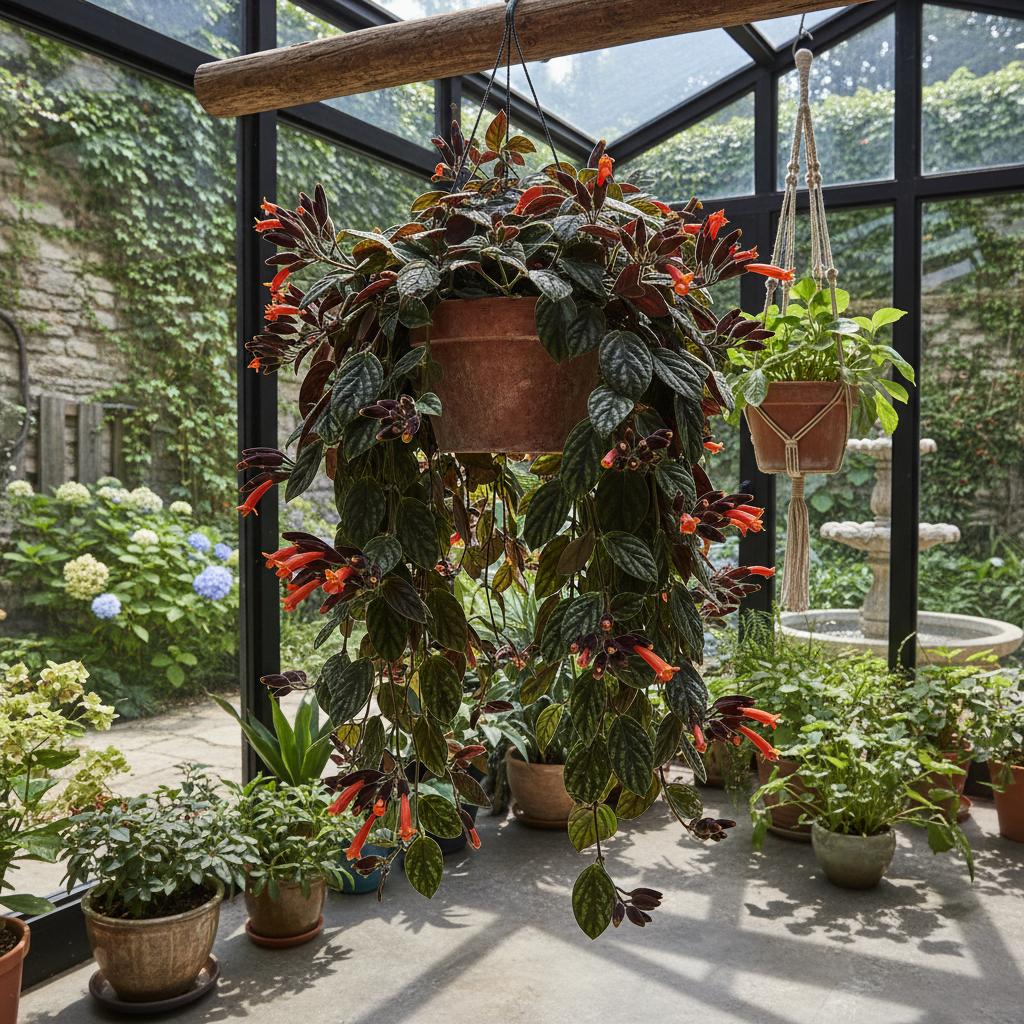
- Leaves: Fleshy, lanceolate to ovate, dark green with striking purple-black mottling underneath and lighter green marbling on top;
- Flowers: Tubular, emerging from dark calyces, typically greenish-yellow to orange, clustered at stem tips;
- Stems: Trailing, cascading, woody at the base, rooting at nodes.
Care Guide
Watering
Water thoroughly when the top inch of soil feels dry.
Fertilization
Apply a balanced liquid fertilizer diluted to half strength.. Fertilize regularly during the active growing season, but withhold fertilizer during the winter dormancy period.
Banana Peel Tea:Steep chopped banana peels in water for 24 hours, strain, and use the liquid to water the plant. This provides potassium to encourage blooming. Discard peels in compost to avoid fruit flies and odors.Pruning
- Prune stems back by a third after flowering to encourage bushier growth;
- Remove any dead, yellowing, or damaged leaves regularly;
- Propagate healthy stem cuttings in water or moist sphagnum moss.
Toxicity
Warning: this plant may be toxic.
Pets & Humans
Pets: Non-toxic to cats (per ASPCA).
Humans: Non-toxic to humans.
Garden Uses & Culture
Culture: Gained immense popularity in North America and Europe during the 1970s houseplant boom, cherished for its dramatic cascading habit in macramé hanging baskets.
Usage: - Ideal for hanging baskets or elevated plant stands; - Suitable for large terrariums or humid indoor greenhouses.