 PlantFun
Plant Needs
Sunlight
Requires bright, indirect light to maintain variegation and promote blooming; avoid harsh direct afternoon sun.
Watering
Keep soil consistently moist but not waterlogged; allow the top inch of soil to dry out between waterings.
Temperature
Prefers warm, humid environments; protect from cold drafts and temperatures below 15°C.
Characteristics
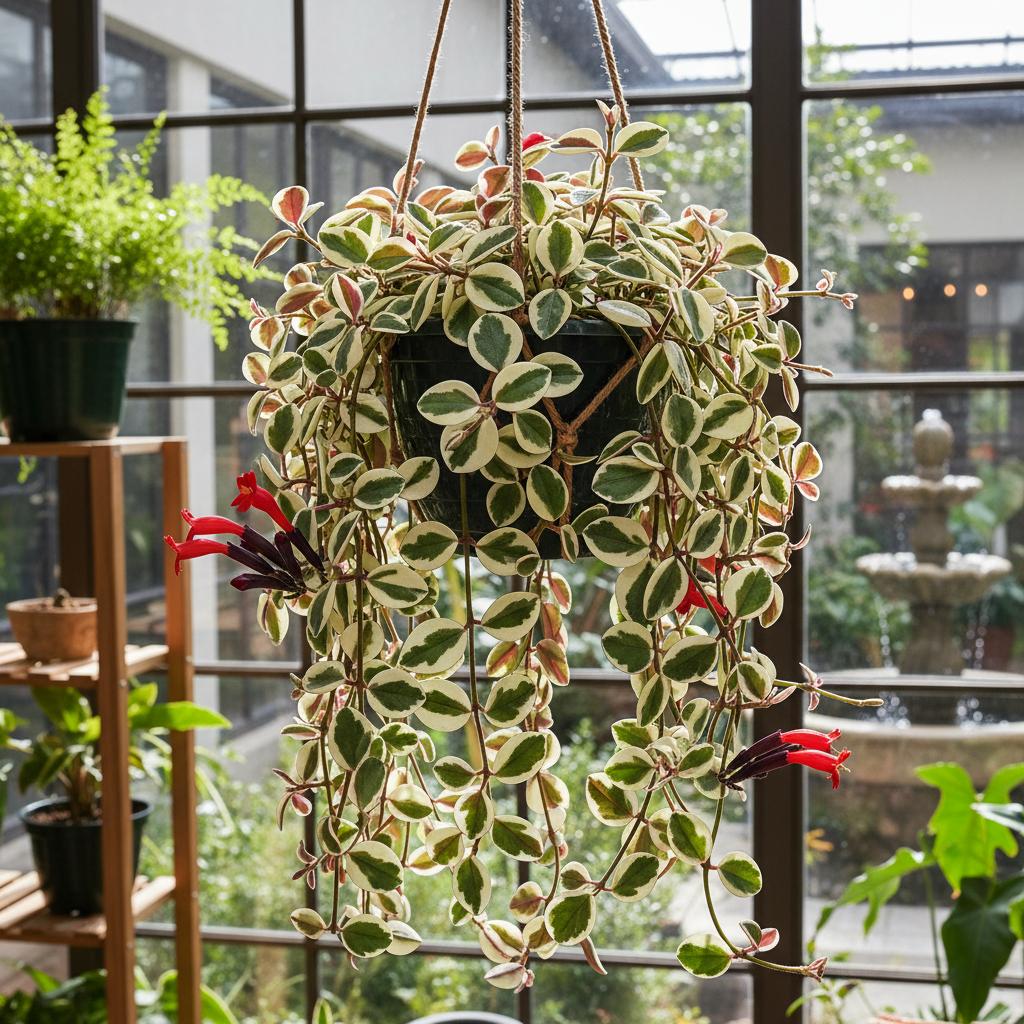
- Leaves: Small, fleshy, ovate to lanceolate, green with striking creamy white or yellow variegation along the margins;
- Flowers: Bright red, tubular corollas emerging from dark maroon or purplish tubular calyces, resembling lipstick twisting out of a tube;
- Stems: Slender, cascading vines that root at the nodes when in contact with moisture.
Care Guide
Watering
Water thoroughly when the top inch of soil feels dry.
Fertilization
Apply a balanced, water-soluble fertilizer diluted to half strength.. Do not fertilize during the winter dormancy period.
Banana Peel Tea:Steep chopped banana peels in water for 24-48 hours, strain, and use the liquid to water the plant. The potassium encourages vibrant blooms. Discard peels in compost to avoid attracting gnats.Pruning
- Prune stems back by about one-third after flowering to encourage branching and a bushier appearance;
- Remove any dead, damaged, or entirely green (reverted) vines to maintain the variegated aesthetic;
- Propagate healthy stem cuttings in water or moist sphagnum moss.
Toxicity
Warning: this plant may be toxic.
Pets & Humans
Pets: Non-toxic to cats per ASPCA.
Humans: Non-toxic to humans; safe to handle.
Garden Uses & Culture
Culture: Popularized in Western indoor gardening during the 1970s houseplant boom, cherished for its unique floral display and suitability for macramé hanging baskets.
Usage: Excellent for hanging baskets, elevated shelves, or indoor green walls where its cascading foliage can be fully appreciated.