 PlantFun
Plant Needs
Sunlight
Prefers bright, indirect light; direct harsh sun can scorch the mottled leaves, while too little light prevents blooming.
Watering
Keep the soil evenly moist but never waterlogged. Allow the top inch of soil to dry out between waterings.
Temperature
Thrives in warm household temperatures and high humidity; protect from cold drafts below 15°C.
Characteristics
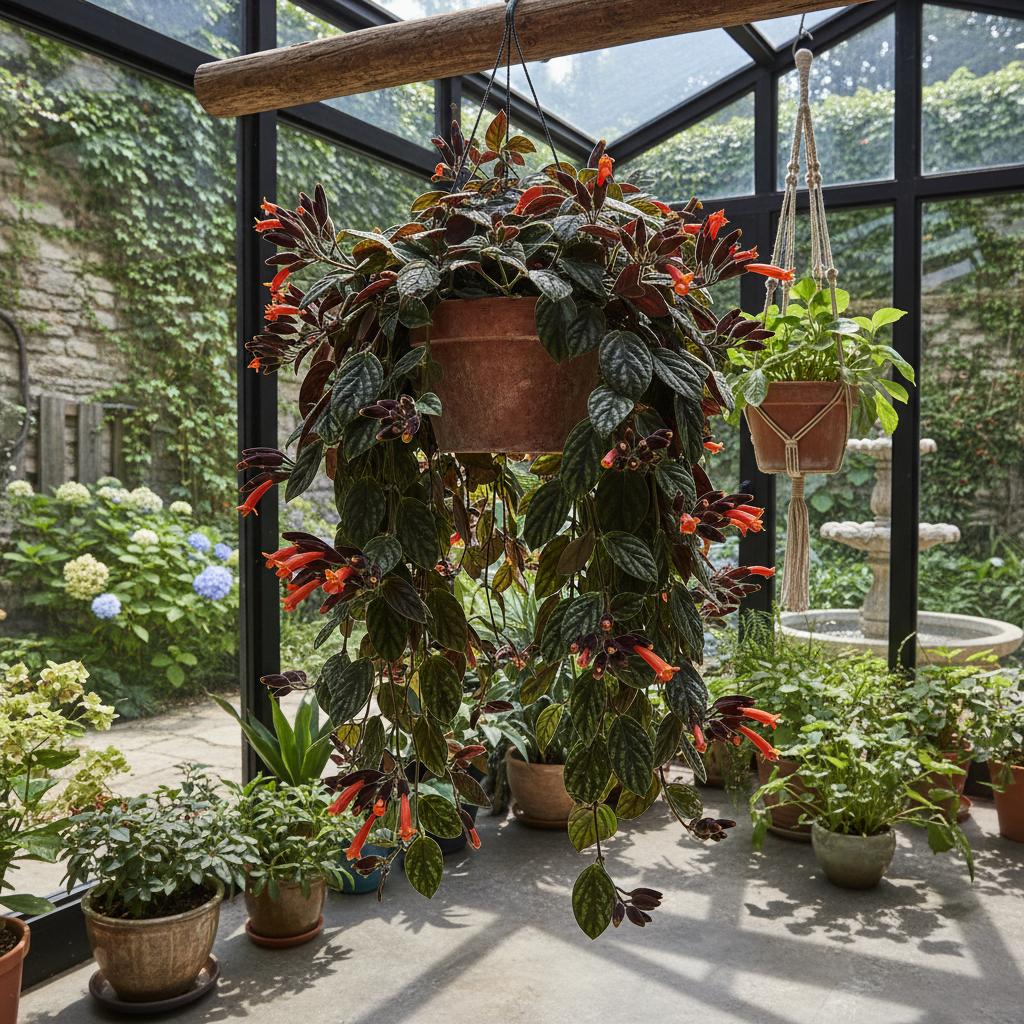
- Leaves: Fleshy, lanceolate to ovate, striking dark green with prominent dark purple to almost black mottling on both the upper and lower surfaces;
- Flowers: Tubular and slightly curved, emerging from dark tubular calyces, typically greenish-yellow to orange, clustered at the stem tips;
- Stems: Trailing and cascading, woody at the base, purplish-brown, producing adventitious roots in high humidity.
Care Guide
Watering
Water thoroughly when the top inch of soil feels dry, ensuring excellent drainage.
Fertilization
Apply a balanced, water-soluble fertilizer diluted to half strength.. Do not fertilize during the winter dormancy period.
Banana Peel Tea:Steep chopped banana peels in water for 24 hours, strain, and dilute 1:1 with fresh water. Use as a soil drench to encourage blooming. Discard the solid peels in compost to avoid attracting fungus gnats indoors.Pruning
- Prune back leggy stems in early spring to encourage bushier growth;
- Remove spent flowers to keep the plant looking tidy;
- Cuttings from pruning can be easily propagated in water or moist sphagnum moss.
Toxicity
Warning: this plant may be toxic.
Pets & Humans
Pets: Non-toxic to cats per ASPCA guidelines.
Humans: Non-toxic to humans; safe to handle.
Garden Uses & Culture
Culture: Popularized in Western indoor gardening during the 1970s houseplant boom, highly valued for hanging baskets in sunrooms and conservatories.
Usage: Primarily grown as an ornamental indoor hanging plant or greenhouse specimen for its striking foliage and unique flowers.