 PlantFun
Plant Needs
Sunlight
Prefers bright, indirect sunlight; direct harsh sun can scorch the leaves.
Watering
Keep the soil evenly moist but not waterlogged; allow the top inch of soil to dry out between waterings.
Temperature
Thrives in warm, humid environments; protect from cold drafts and temperatures below 15°C.
Characteristics
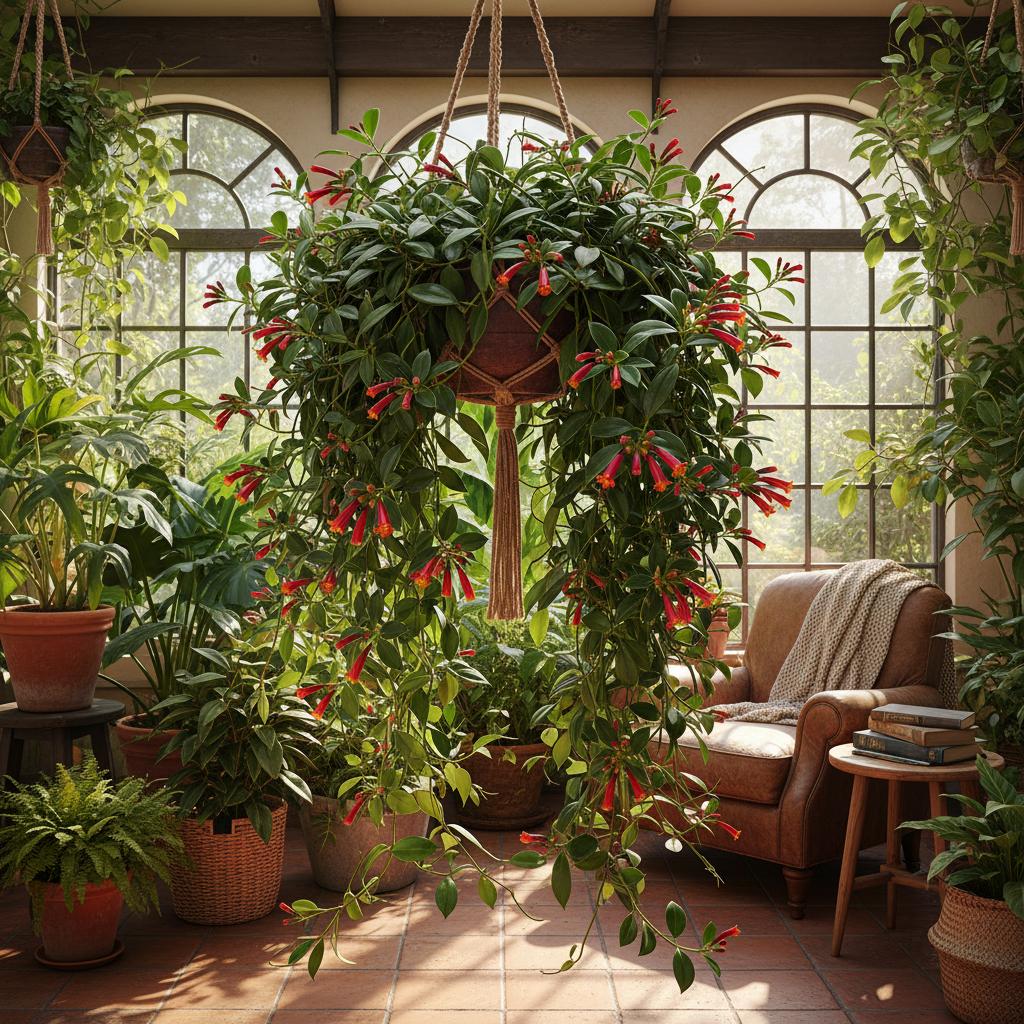
- Leaves: Opposite, fleshy, lanceolate to ovate, glossy dark green, 4-8 cm long;
- Flowers: Tubular, bright red to orange-red corolla emerging from a dark purplish-brown tubular calyx, resembling lipstick in a tube;
- Stems: Slender, trailing or cascading, rooting at the nodes in high humidity.
Care Guide
Watering
Water thoroughly when the top inch of soil feels dry.
Fertilization
Apply a balanced, water-soluble fertilizer diluted to half strength.. Avoid fertilizing during the winter dormancy period.
Banana Peel Tea:Steep chopped banana peels in water for 24-48 hours. Strain and use the liquid to water the plant. This provides a gentle potassium boost to encourage blooming. Discard the peels in compost to avoid attracting fruit flies.Pruning
- Prune the vines back by about one-third after flowering to encourage branching and a bushier appearance;
- Remove any dead, yellowing, or damaged leaves to maintain plant health;
- Cuttings taken during pruning can be easily propagated in water or moist soil.
Toxicity
Warning: this plant may be toxic.
Pets & Humans
Pets: Non-toxic per ASPCA.
Humans: Generally considered non-toxic to humans.
Garden Uses & Culture
Culture: Popularized in Western indoor horticulture during the mid-20th century, it became a staple for hanging baskets in mid-century modern homes due to its striking architectural form and vibrant colors.
Usage: Primarily grown as an ornamental indoor plant in hanging baskets or elevated pots where its trailing stems can cascade freely.