 PlantFun
Plant Needs
Sunlight
Prefers full sun for optimal blooming, but tolerates partial shade in very hot climates.
Watering
Requires regular watering during the active growing season, but highly drought-tolerant once established.
Temperature
Thrives in warm climates; requires winter mulch or indoor overwintering in frost-prone regions.
Characteristics
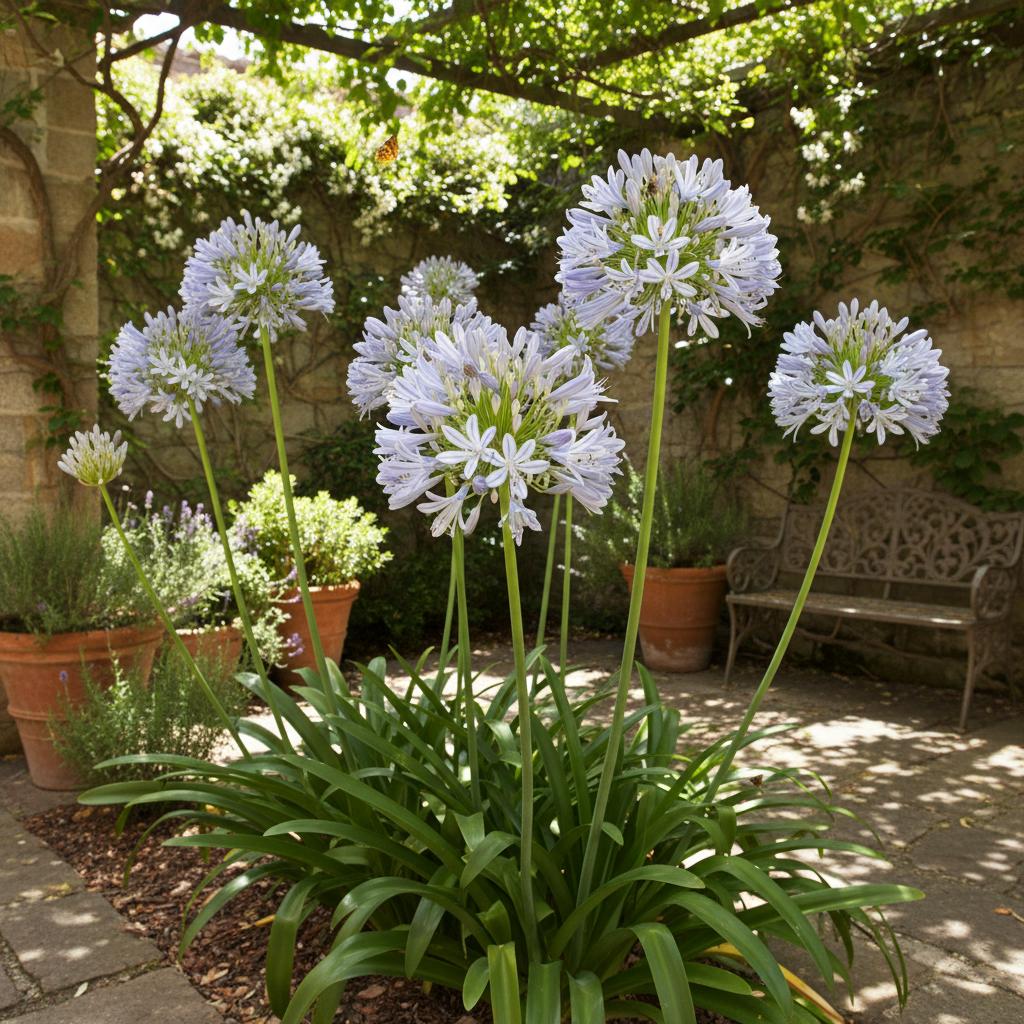
- Leaves: Strap-shaped, leathery, bright green, deciduous, forming a dense basal clump;
- Flowers: Large, dense umbels atop tall, sturdy scapes, featuring tubular to bell-shaped deep blue to purplish-blue florets;
- Roots: Thick, fleshy rhizomes adapted for nutrient and water storage;
- Fruit: Three-valved capsules containing flat, black, winged seeds.
Care Guide
Watering
Water deeply when the top inch of soil feels dry.
Fertilization
Apply a balanced organic feed as new growth emerges.. Avoid excessive nitrogen, which promotes foliage at the expense of flowers.
Banana Peel Tea:Steep chopped banana peels in water for 24-48 hours. Strain and use the liquid to water the base of the plant to boost bloom size and color. Discard solids in compost to avoid attracting pests.Pruning
- Remove spent flower stalks at the base to direct energy back into the rhizome;
- Clear away dead or yellowing foliage in late autumn;
- Divide overcrowded clumps every 3-4 years in early spring to maintain vigor.
Toxicity
Warning: this plant may be toxic.
Pets & Humans
Pets: Toxic per ASPCA; ingestion of leaves or rhizomes causes gastrointestinal irritation.
Humans: Sap may cause skin irritation; ingestion can cause mouth pain and gastrointestinal upset.
Garden Uses & Culture
Culture: Introduced to Europe in the 17th century, Agapanthus became a staple in grand estate gardens, symbolizing exotic elegance and enduring love in Victorian floriography.
Usage: Excellent as a structural border plant, architectural focal point, and long-lasting cut flower.