 PlantFun
Plant Needs
Characteristics
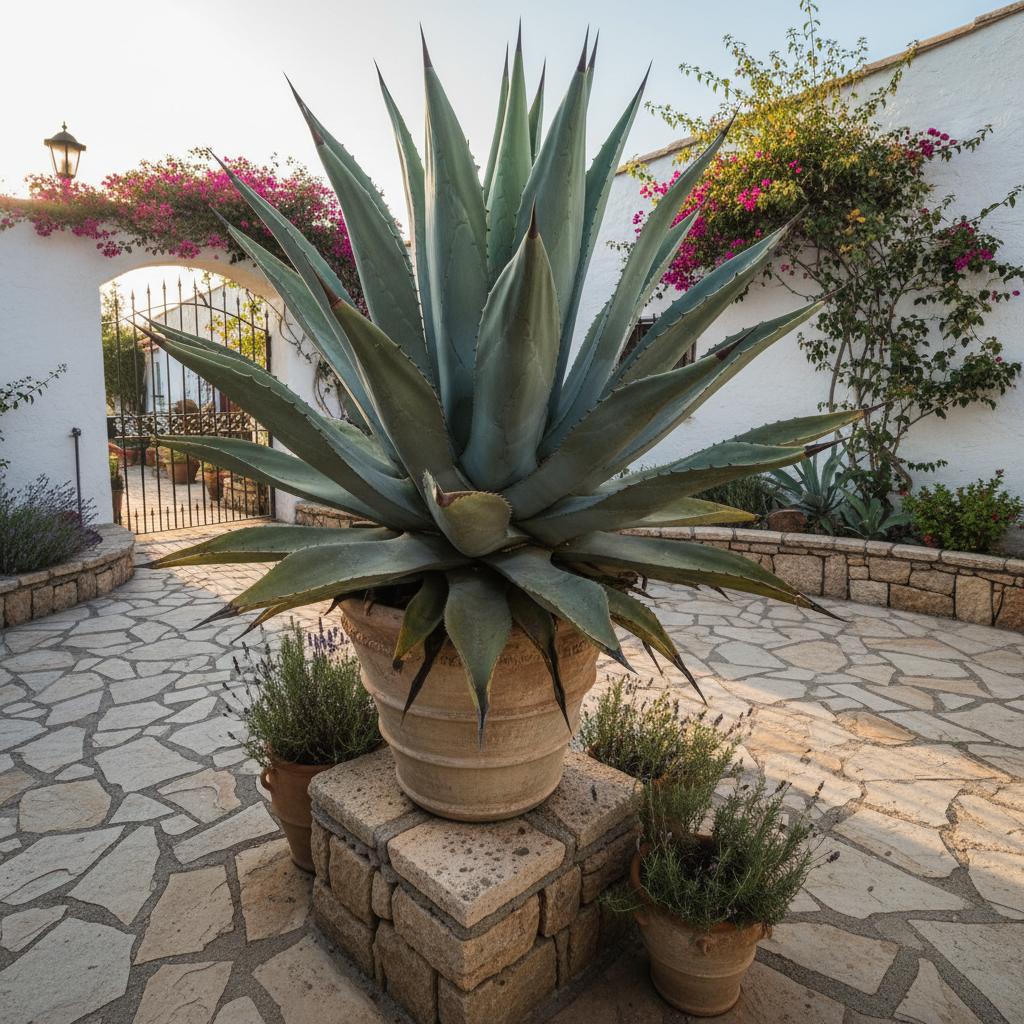
- Leaves: Large, lanceolate, grayish-green to glaucous blue, distinctly rough (scabrous) on both surfaces like sandpaper, with prominent marginal teeth and a dark, sharp terminal spine;
- Flowers: Tall paniculate inflorescence, bearing clusters of yellow, tubular flowers on lateral branches;
- Stem: Acaulescent (stemless) or forming a very short, stout basal stem.
Care Guide
Water deeply once every 3 to 4 weeks during active growth
Apply a very light dose if grown in sterile pots. Agaves generally do not require supplemental fertilization when planted in the ground.
Eggshell powder:Crush dried, washed eggshells into a fine powder and sprinkle sparingly around the base to provide slow-release calcium, supporting cell wall structure without excess nitrogen.- Wear thick protective gloves and use long-handled tools to avoid sharp spines and irritating sap;
- Prune only completely dead, dried basal leaves for aesthetic purposes;
- Carefully cut down the massive flower stalk at the base only after the plant has finished blooming and died.
Toxicity
Warning: this plant may be toxic.
Pets: Toxic principles (oxalates) can cause oral irritation and gastrointestinal upset per ASPCA guidelines for general Agave species.
Humans: Sap contains calcium oxalate crystals and saponins which can cause contact dermatitis and skin irritation.
Garden Uses & Culture
Culture: Historically utilized by indigenous peoples of the Chihuahuan Desert and early North American settlers for extracting tough fibers (istle) to make rope, and for producing traditional fermented beverages.
Usage: - **Ornamental**: Striking architectural specimen for xeriscapes and rock gardens; - **Practical**: Used as an impenetrable barrier plant due to its formidable spines; - **Economic**: Traditional source of istle fiber.