 PlantFun
Plant Needs
Characteristics
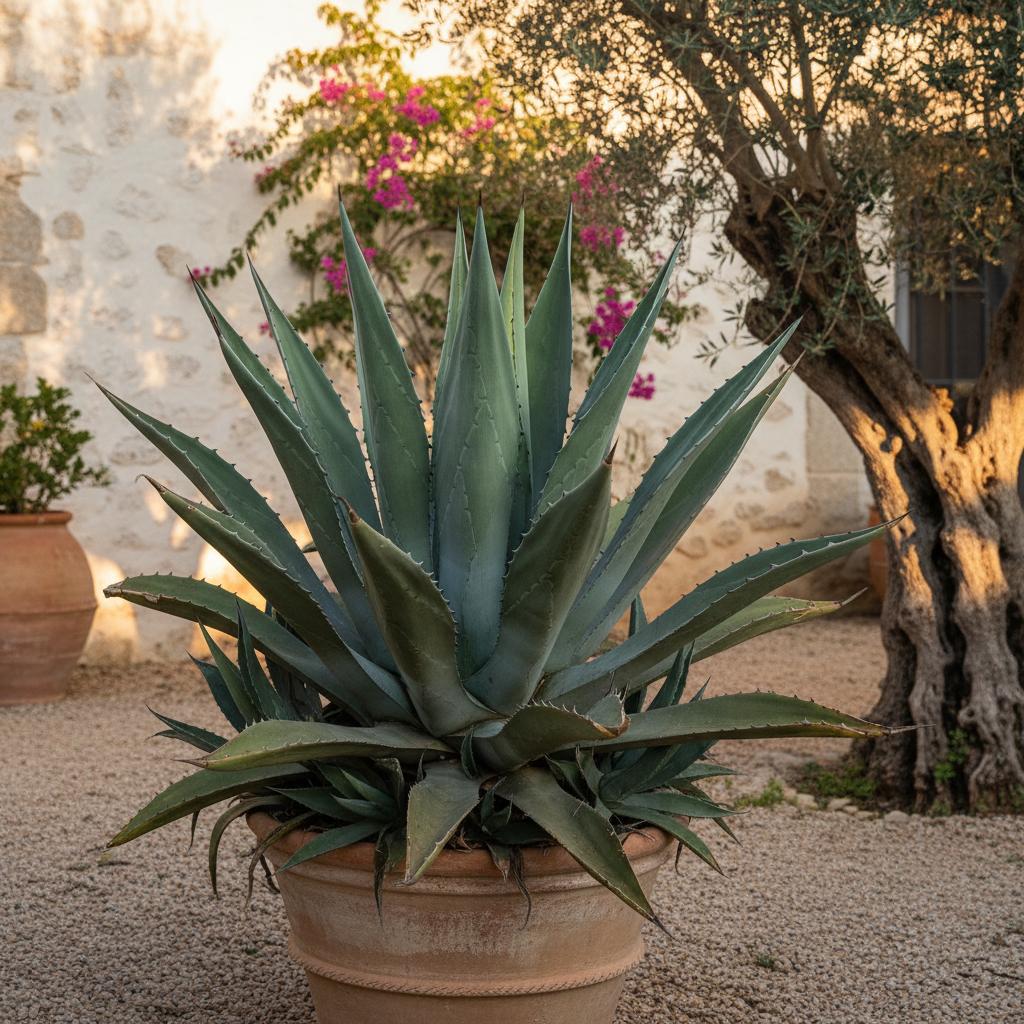
- Leaves: Massive, thick, fleshy rosette; gray-green to blue-green, up to 2 meters long, with sharp marginal teeth and a heavy, piercing terminal spine;
- Flowers: Monocarpic; produces a towering branching inflorescence (up to 8m) bearing clusters of yellow-green tubular flowers;
- Stem: Acaulescent (stemless) or with a very short, thick basal stem hidden by leaves.
Care Guide
Water deeply but infrequently, allowing the soil to dry out entirely between waterings.
Apply a light dose of diluted fertilizer at the start of the growing season.. Agaves require very little fertilization; excess nutrients can cause weak, unnatural growth.
Banana Peel Tea:Steep dried banana peels in water for 24 hours. Dilute 1:1 with water. Apply to the soil around the base, strictly avoiding the center of the rosette to prevent fungal rot.- Wear heavy leather gloves and protective eyewear when working near the plant;
- Use long-handled, sterilized loppers to remove dead or dying basal leaves;
- For safety in high-traffic areas, the sharp terminal spines can be carefully snipped off with heavy clippers.
Toxicity
Warning: this plant may be toxic.
Pets: Ingestion of plant parts or sap can cause oral irritation and mild gastrointestinal upset.
Humans: Sap contains calcium oxalate crystals and acrid oils that can cause contact dermatitis and skin irritation.
Garden Uses & Culture
Culture: In Western landscaping, the Century Plant symbolizes endurance, patience, and the rugged beauty of the desert, often serving as a dramatic architectural focal point in xeriscaping and modernist gardens.
Usage: - Ornamental landscaping and xeriscaping; - Erosion control on dry, rocky slopes; - Historically, the tough leaf fibers were used for making rope and coarse fabrics.