 PlantFun
Plant Needs
Characteristics
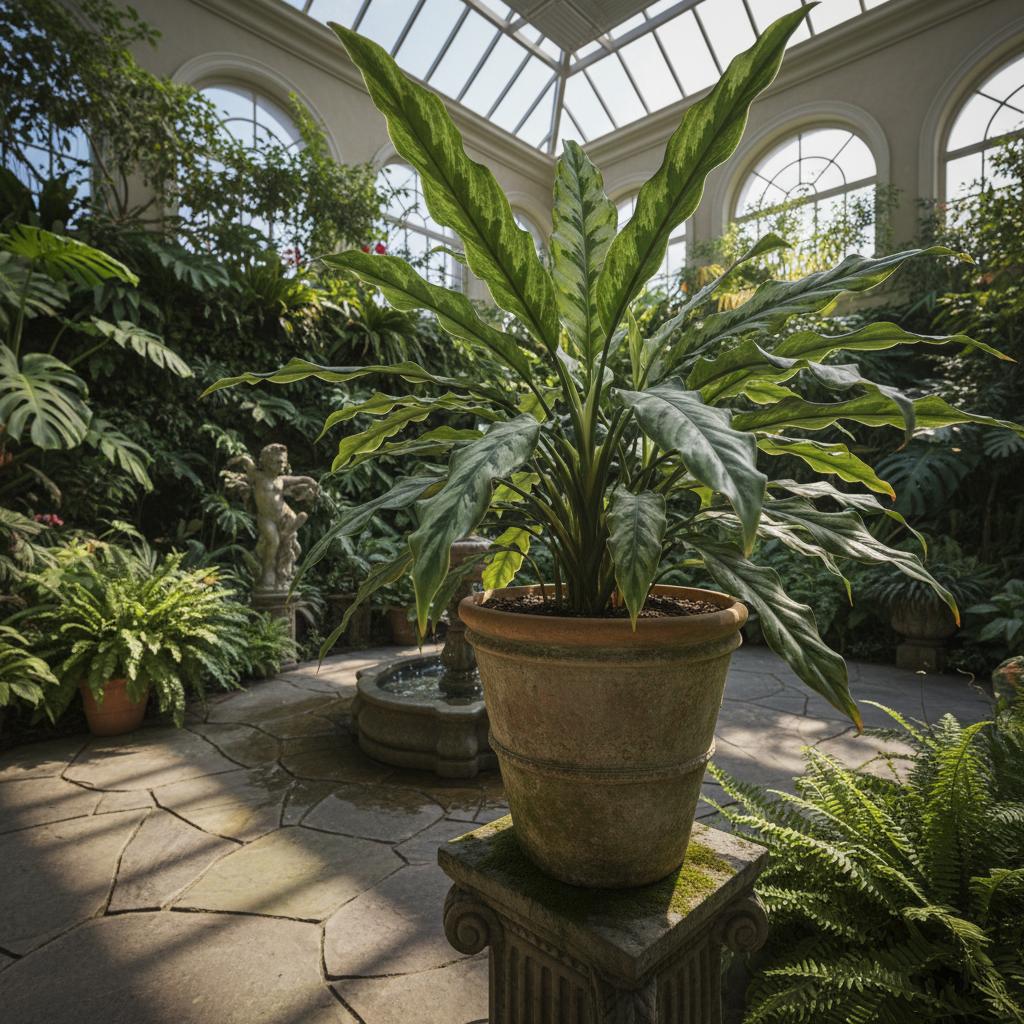
- Leaves: Lanceolate to narrowly elliptic, heavily variegated with bright white or cream centers and dark green margins, glossy and smooth;
- Stems: Short, fleshy, often hidden by the overlapping bases of the leaf petioles;
- Flowers: Inflorescence consists of a greenish-white spathe surrounding a white to pale yellow spadix, rarely blooming indoors;
- Roots: Fibrous root system adapted to shallow, well-aerated forest floor soils.
Care Guide
Water thoroughly until water drains from the bottom, allowing the top inch of soil to dry out between waterings.
Apply a balanced liquid houseplant fertilizer diluted to half strength.. Do not fertilize during the winter months when plant growth naturally slows down.
Banana Peel Tea:Steep chopped banana peels in a jar of water for 24 to 48 hours. Strain the liquid and dilute 1:1 with fresh water to use as a gentle soil drench. Discard the solid peels in the compost to avoid attracting fungus gnats indoors.- Grooming: Wipe leaves regularly with a damp cloth to remove dust and allow for better photosynthesis;
- Maintenance: Snip off any yellowing or dying lower leaves at the base of the stem using sterilized shears;
- Inflorescence: Remove flowers if they appear, as they drain energy from the plant's foliage production.
Toxicity
Warning: this plant may be toxic.
Pets: Toxic to cats per ASPCA due to insoluble calcium oxalate crystals causing oral and GI irritation.
Humans: Contains insoluble calcium oxalate crystals which can cause irritation if chewed or swallowed.
Garden Uses & Culture
Culture: Popularized in Western interior design during the mid-20th century, the Chinese Evergreen became a staple of office buildings and shopping malls due to its exceptional tolerance of artificial lighting and neglect.
Usage: Cultivated primarily as an indoor ornamental foliage plant. It is also recognized for its ability to help filter indoor air pollutants.