 PlantFun
Plant Needs
Characteristics
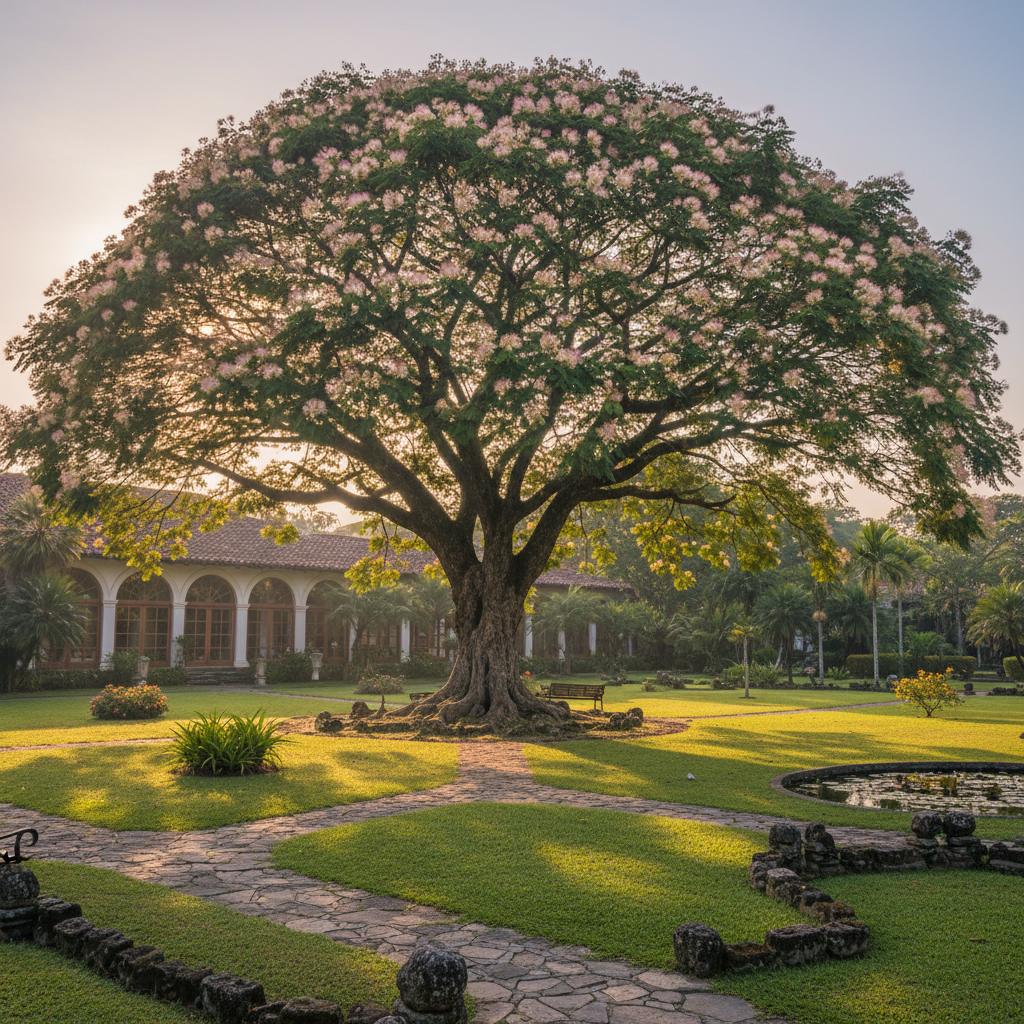
- Leaves: Bipinnately compound, leaflets rhombic-oblong, exhibiting nyctinasty (folding at night or during rain);
- Flowers: Umbel-like inflorescences with numerous long, showy pink and white stamens resembling powder puffs;
- Bark: Grayish-brown, rough and deeply fissured in older trees;
- Fruit: Dark brown to blackish indehiscent pods, 10-20 cm long, containing sweet, sticky brown pulp.
Care Guide
Water deeply once a week for young trees; mature trees rely entirely on rainfall.
Apply a layer of compost or organic mulch around the base of young trees.. Mature trees fix their own nitrogen and rarely require supplemental feeding.
Compost Tea:Steep vegetable scraps and coffee grounds in water for a few days, strain, and use the liquid to water young saplings. Avoid using uncomposted materials directly on the roots to prevent odor and pests.- Prune young trees to establish a strong, single central leader;
- Remove dead, diseased, or crossing branches during the dry season;
- Ensure clearance pruning for vehicles or pedestrians if planted near pathways or roads.
Toxicity
Warning: this plant may be toxic.
Pets: Non-toxic to cats per ASPCA guidelines; no known severe hazards.
Humans: Generally safe; the sweet pulp inside the pods is sometimes consumed locally, though not a staple food.
Garden Uses & Culture
Culture: Highly valued in the Americas and Hawaii for its beautiful, durable wood (Monkeypod wood), which is extensively used for crafting bowls, furniture, and carvings. It is a classic shade tree in tropical pastures.
Usage: - **Timber**: Premium wood for furniture, cabinetry, and carving; - **Agroforestry**: Provides excellent shade for livestock and crops like coffee or cacao; - **Fodder**: Nutritious pods are fed to cattle and pigs.