 PlantFun
Plant Needs
Sunlight
Requires bright, indirect light; direct sun can scorch the leaves.
Watering
Keep soil consistently moist but not waterlogged; requires high ambient humidity.
Temperature
Prefers warm tropical temperatures and is highly sensitive to cold drafts or frost.
Characteristics
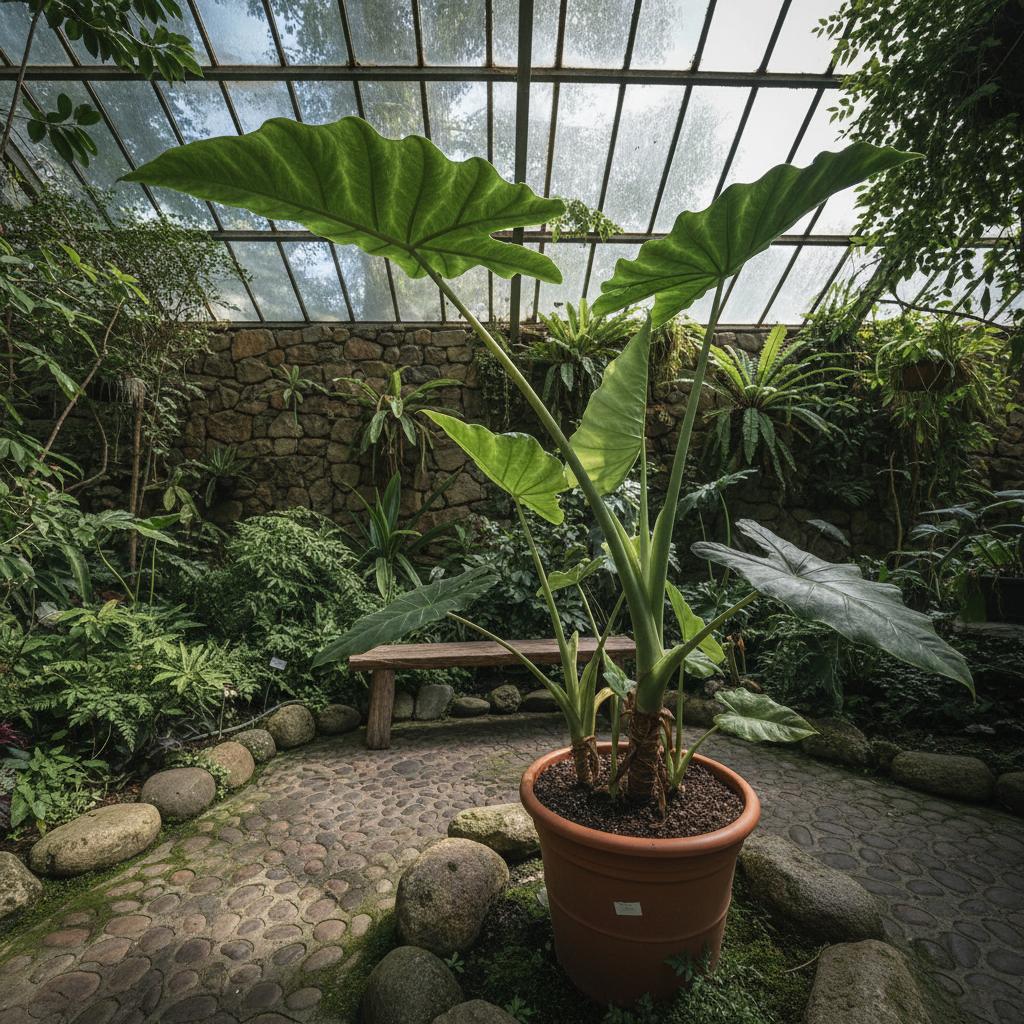
- Leaves: Upward-pointing, leathery, emerald green leaves with prominent ribbing, rounded wings, and a distinct, elongated, whip-like tail at the apex;
- Stems: Long, sturdy petioles featuring striking brownish-purple mottling or banding;
- Flowers: Typical aroid inflorescence with a pale green to yellowish-white spathe and spadix, rarely seen in indoor cultivation.
Care Guide
Watering
Water thoroughly when the top inch of soil feels dry.
Fertilization
Apply a balanced liquid fertilizer diluted to half strength.. Feed regularly during the active growing season.
Aquarium Water Fertilizer:Use dirty aquarium water during routine water changes to water the plant. It provides a gentle, natural source of nitrogen. Ensure the water does not contain added salts or fish medications.Pruning
- Remove older, yellowing leaves at the base of the petiole using sterilized shears;
- Wipe leaves regularly with a damp cloth to remove dust and prevent spider mites;
- Do not cut healthy green leaves, as the plant relies on them for energy.
Toxicity
Warning: this plant may be toxic.
Pets & Humans
Pets: Toxic to cats per ASPCA due to calcium oxalate crystals, causing oral pain, drooling, and vomiting.
Humans: Contains insoluble calcium oxalate crystals causing severe oral irritation, swelling, and gastrointestinal upset if ingested.
Garden Uses & Culture
Culture: Highly prized in modern Western houseplant communities for its architectural, zoomorphic foliage that adds a dramatic, sculptural element to interior design.
Usage: Cultivated primarily as an ornamental indoor specimen or a striking focal point in shaded tropical gardens.