 PlantFun
Plant Needs
Characteristics
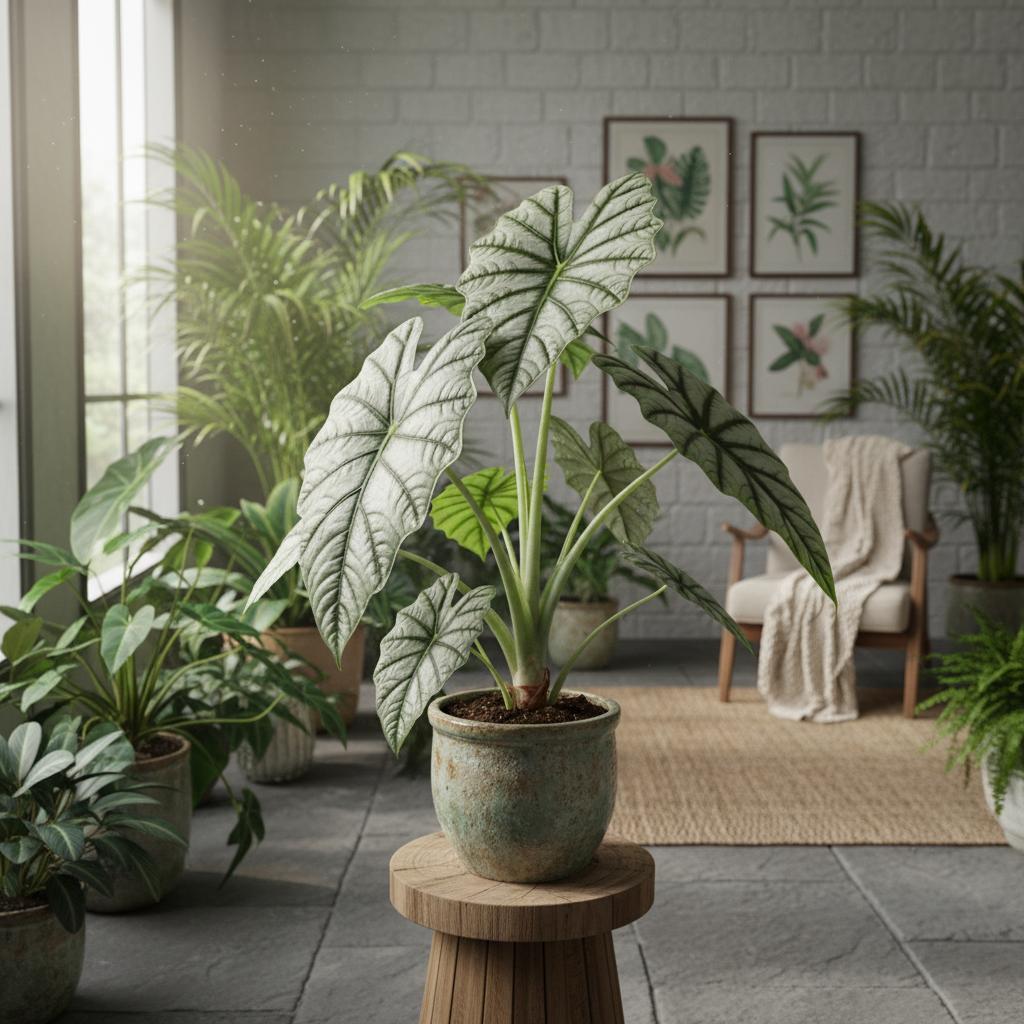
- Leaves: Heart-shaped to ovate, thick and heavily textured. The upper surface is silvery-green with contrasting dark green, sunken venation resembling dragon scales. The underside is pale with prominent reddish-brown veins.
- Stems: Short, pale green petioles that emerge from a central rhizome.
- Flowers: Inflorescence consists of a pale green spathe and a white spadix, typical of aroids, though visually insignificant compared to the foliage.
- Roots: Thick, fleshy rhizomatous root system adapted to well-aerated soils.
Care Guide
Water thoroughly when the top inch of soil feels dry, maintaining consistent moisture.
Apply a diluted, balanced liquid fertilizer once a month.. Do not fertilize during the winter dormancy period.
Aquarium Water:Use dirty water from routine freshwater aquarium changes. It provides a gentle, natural source of nitrogen without the risk of chemical burn. Ensure the water has no added aquarium salts or medications.- Remove old, yellowing, or dead leaves at the base of the petiole using sterilized shears.
- Do not cut healthy leaves, as the plant relies on them for energy.
- Wipe leaves gently with a damp cloth to remove dust and deter pests.
Toxicity
Warning: this plant may be toxic.
Pets: Toxic to cats per ASPCA. Ingestion causes intense burning of the mouth, tongue, and lips, excessive drooling, vomiting, and difficulty swallowing.
Humans: Contains insoluble calcium oxalate crystals. Chewing or biting can cause severe oral irritation, swelling, and gastrointestinal discomfort.
Garden Uses & Culture
Culture: Highly prized in Western houseplant communities, its mythical "dragon scale" appearance makes it a favorite for modern, fantasy-themed interior decor and rare plant collections.
Usage: Cultivated primarily as an indoor ornamental plant, perfect for tabletops, terrariums, and indoor plant cabinets.