 PlantFun
Plant Needs
Characteristics
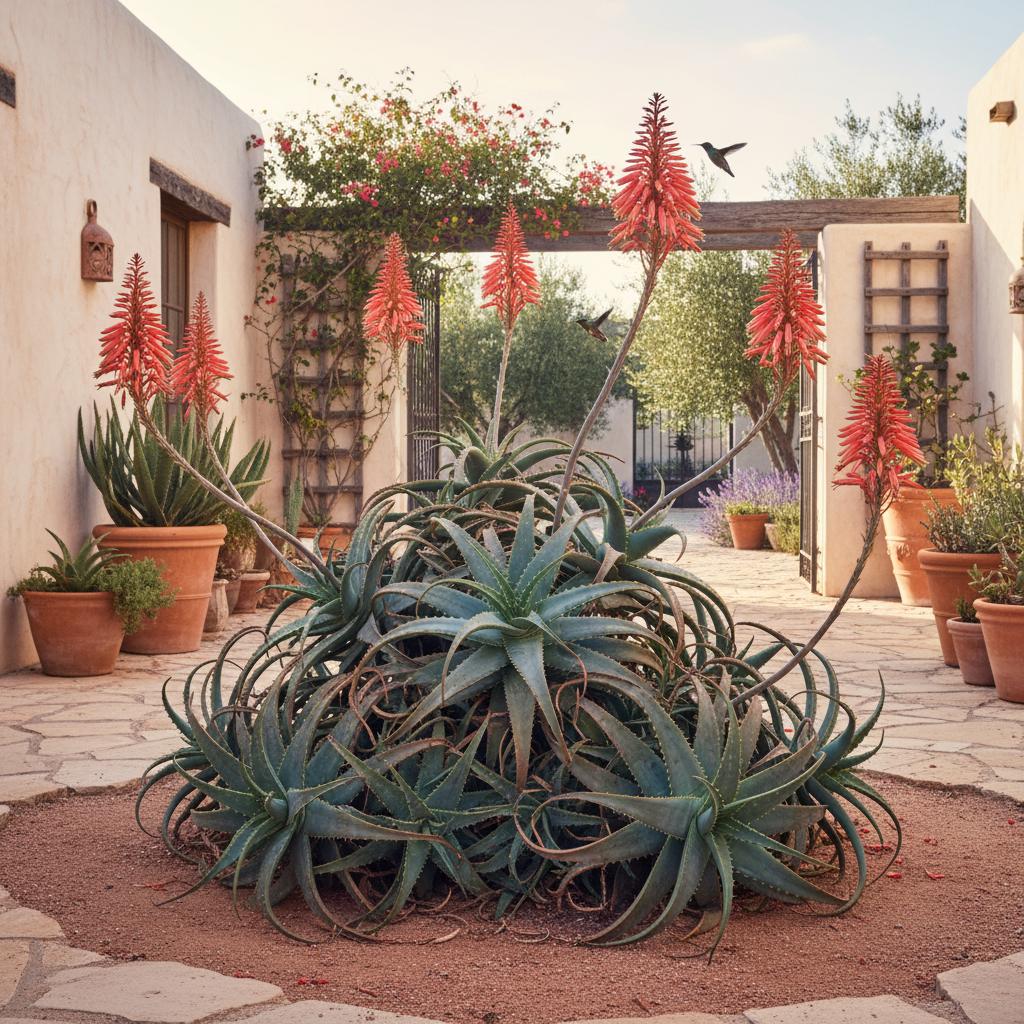
- Leaves: Fleshy, lanceolate, grayish-green to bluish-green, arranged in a dense rosette, margins armed with small, reddish-brown teeth;
- Flowers: Tall, usually unbranched racemes up to 1.5 meters; tubular flowers that can be bi-colored (red in bud, turning yellow) or solid yellow/red;
- Stem: Acaulescent (stemless) or with a very short, hidden stem.
Care Guide
Water deeply but infrequently, allowing the soil to completely dry out before watering again.
Apply a diluted, low-nitrogen succulent fertilizer once at the beginning of the growing season.. Aloes require very little feeding; excess fertilizer can cause weak, leggy growth.
Banana peel tea:Soak chopped banana peels in water for 24-48 hours, strain, and dilute 1:1 with water. Apply during the active growing season to support flower development. Avoid leaving raw peels on the soil to prevent pests.- Remove spent flower stalks by cutting them cleanly at the base once they have completely dried;
- Carefully pull or cut away dead, dried lower leaves to maintain a tidy appearance and prevent pest hiding spots;
- Do not trim healthy green leaves, as this will scar the plant.
Toxicity
Warning: this plant may be toxic.
Pets: Toxic to cats per ASPCA. Ingestion of the latex can cause vomiting, lethargy, and diarrhea.
Humans: The yellowish leaf exudate (latex) contains anthraquinones which can cause gastrointestinal upset if ingested.
Garden Uses & Culture
Culture: In Western xeriscaping and succulent gardening, Aloes are highly prized for their architectural geometry and their ability to provide striking winter color when most other garden plants are dormant.
Usage: Excellent as a focal point in rock gardens, desert landscapes, and large container plantings.