 PlantFun
Plant Needs
Sunlight
Bright, indirect sunlight to partial direct sun.
Watering
Allow the soil to dry out completely between waterings.
Temperature
Prefers warm temperatures; protect from frost.
Characteristics
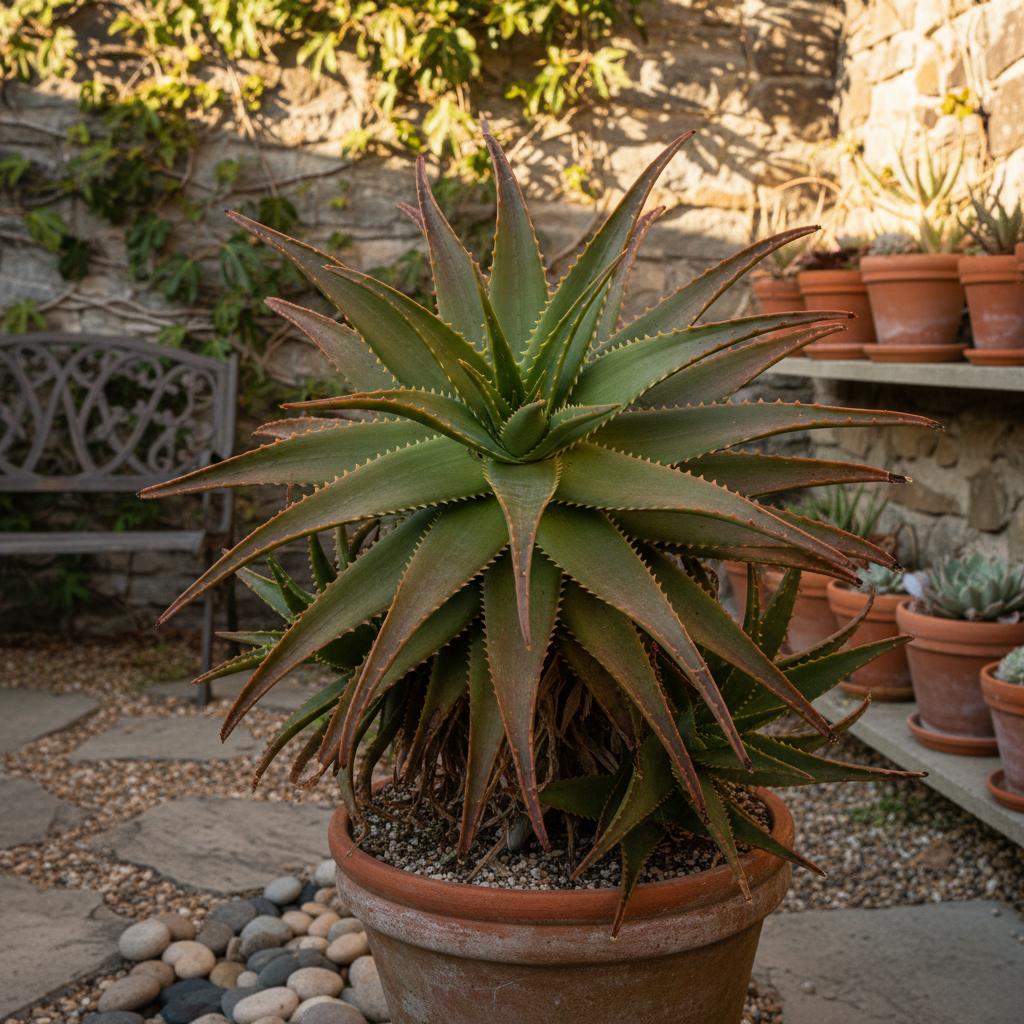
- Leaves: Dark green, lanceolate leaves arranged in a compact rosette, heavily textured with raised white tubercles and soft marginal teeth, resembling reptilian skin;
- Flowers: Tubular, coral-pink to orange flowers borne on slender, unbranched racemes rising above the foliage;
- Stem: Acaulescent (stemless) or very short-stemmed, freely offsetting to form dense clumps.
Care Guide
Watering
Water thoroughly when the soil is completely dry.
Fertilization
Apply a diluted, low-nitrogen succulent fertilizer once.. Fertilize sparingly during the active growing season.
Banana Peel Tea:Soak chopped banana peels in water for 24 hours. Dilute 1:1 with water. Use sparingly to avoid over-watering and fungal issues.Pruning
- Remove spent flower stalks at the base;
- Gently pull away dead or dried lower leaves to prevent rot;
- Separate offsets (pups) when they are large enough to handle for propagation.
Toxicity
Warning: this plant may be toxic.
Pets & Humans
Pets: Toxic per ASPCA. Ingestion can cause vomiting, diarrhea, and lethargy.
Humans: The latex beneath the skin contains aloin, which can cause gastrointestinal upset if ingested.
Garden Uses & Culture
Culture: Aloes have long been cultivated in Western horticulture as architectural and medicinal plants, though this specific hybrid is prized purely for its ornamental, reptilian aesthetic.
Usage: Excellent for small pots, terrariums (if well-ventilated and dry), and succulent dish gardens.