 PlantFun
Plant Needs
Sunlight
Requires bright indirect light or partial direct sun to maintain its vibrant colors and compact shape.
Watering
Drought tolerant. Allow the soil to dry out completely between waterings.
Temperature
Prefers warm temperatures and is not frost-tolerant; protect from freezing.
Characteristics
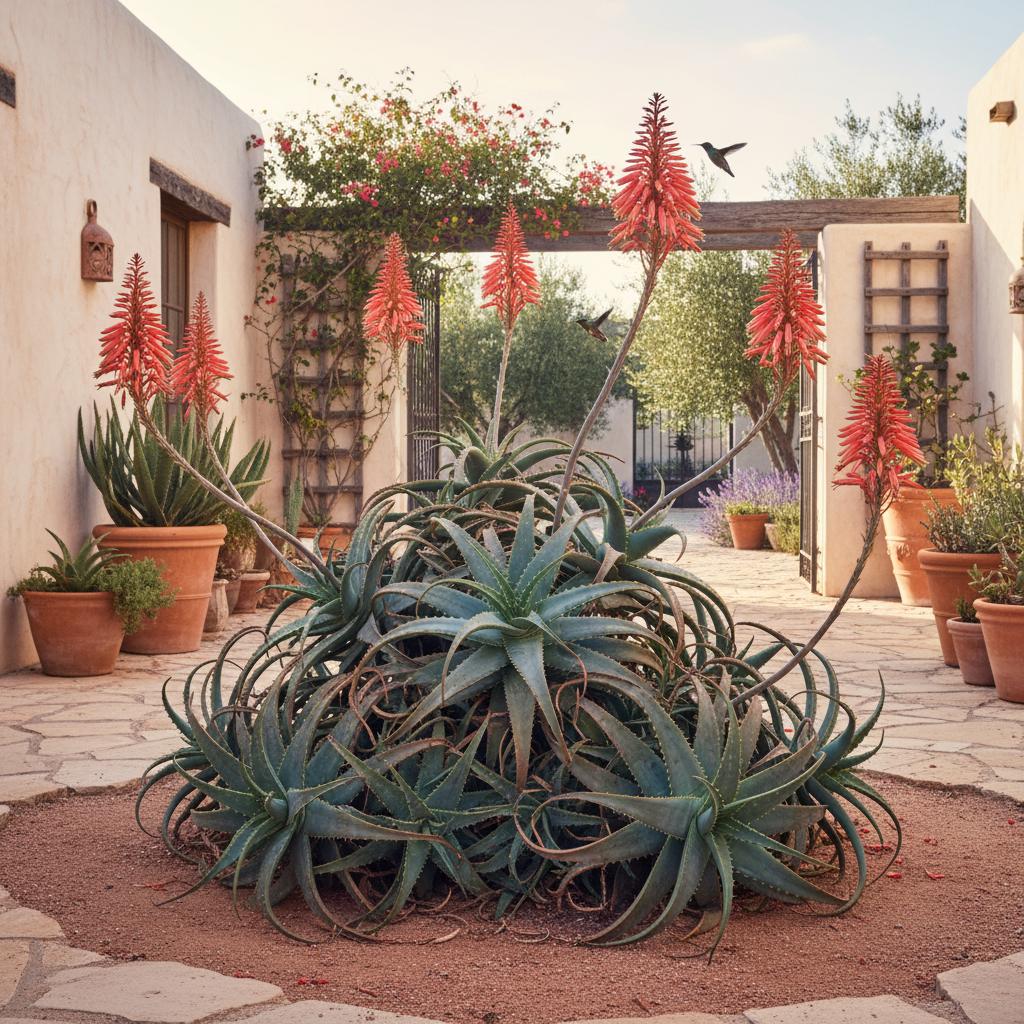
- Leaves: Thick, fleshy, triangular leaves forming a tight rosette, featuring a light green to grayish-green base with raised, elongated white to pinkish tubercles (bumps) and toothed margins;
- Flowers: Tall, slender racemes bearing tubular, coral-orange to reddish flowers;
- Stem: Acaulescent (stemless) or very short-stemmed, clustering over time to form offsets.
Care Guide
Watering
Water thoroughly when the soil is completely dry.
Fertilization
Apply a diluted, balanced succulent fertilizer once.. Fertilize sparingly during the active growing season.
Banana Peel Tea:Soak chopped banana peels in water for 24 hours, strain, and use the liquid to water the plant. Avoid leaving organic matter on the soil surface to prevent fungus gnats.Pruning
- Remove spent flower stalks at the base once they have completely dried;
- Gently pull away any dead or dried basal leaves to maintain a tidy appearance and prevent pest hiding spots.
Toxicity
Warning: this plant may be toxic.
Pets & Humans
Pets: Toxic to cats per ASPCA. Ingestion can cause vomiting, lethargy, and diarrhea.
Humans: The latex beneath the skin contains aloin, which can cause gastrointestinal upset if ingested.
Garden Uses & Culture
Culture: Complex Aloe hybrids have become highly sought-after collector plants in Western horticulture, celebrated for their architectural forms and intricate leaf textures.
Usage: Excellent as a potted specimen for sunny windowsills, patios, or in water-wise rock gardens in mild climates.