 PlantFun
Plant Needs
Sunlight
Prefers bright, indirect light or dappled shade; can tolerate some morning sun.
Watering
Water when the top inch of soil feels dry; ensure excellent drainage to prevent root rot.
Temperature
Thrives in cooler temperatures than typical Scheffleras; frost-hardy down to about -5°C (23°F) once established.
Characteristics
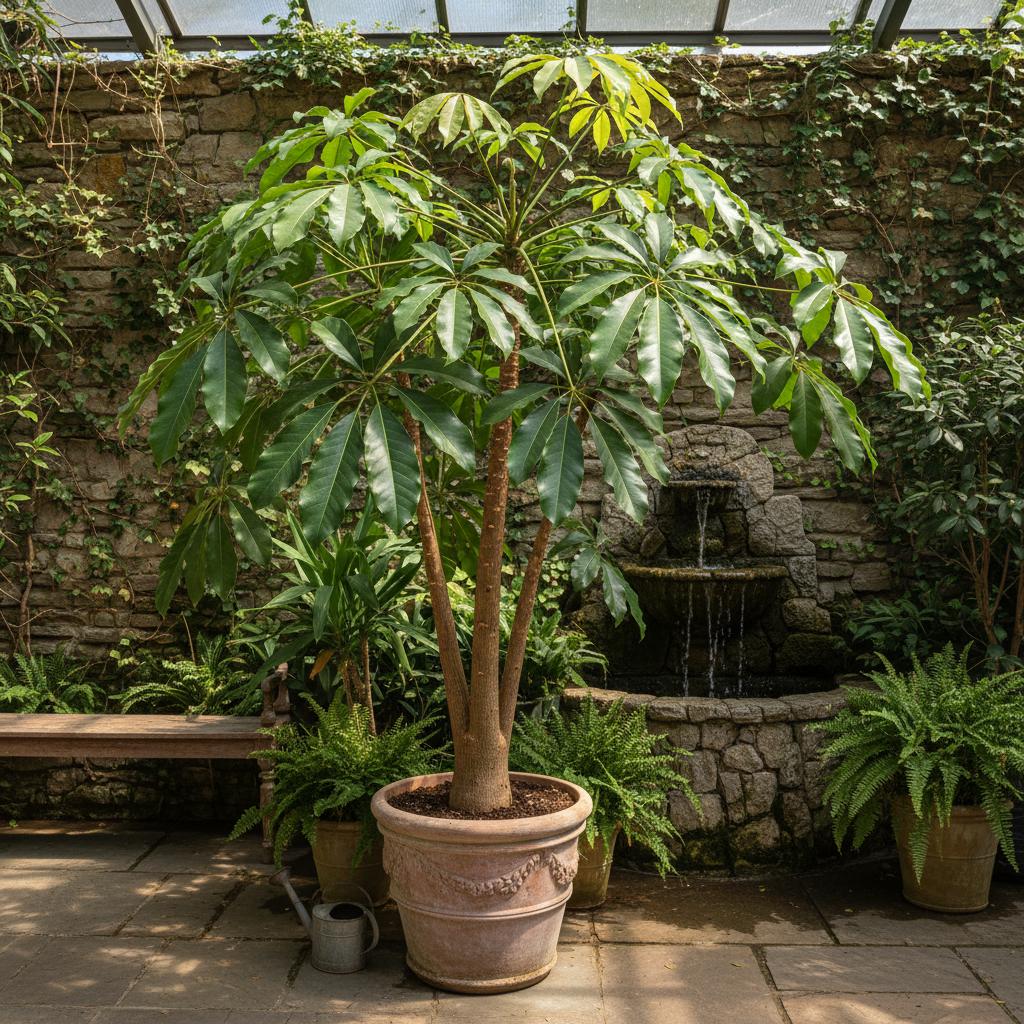
- Leaves: Palmately compound, leathery, dark green leaflets radiating from a central stalk, typically 5-7 leaflets per leaf;
- Stems: Upright, woody, branching stems with a relatively compact growth habit compared to tropical relatives;
- Flowers: Small, pale green to yellowish flowers arranged in terminal panicles, though rarely flowering indoors.
Care Guide
Watering
Water thoroughly when topsoil is dry
Fertilization
Apply a balanced fertilizer monthly. Feed during the active growing season; halt in winter.
Banana Peel Tea:Steep chopped banana peels in water for 24 hours. Strain and use the liquid to water the plant. Discard peels in compost to avoid attracting pests.Pruning
- Prune in early spring to maintain shape and encourage bushier growth;
- Remove any dead, damaged, or yellowing leaves at the base of the petiole;
- Pinch back growing tips on young plants to promote branching.
Toxicity
Warning: this plant may be toxic.
Pets & Humans
Pets: Toxic per ASPCA (calcium oxalate crystals); causes oral irritation, excessive drooling, vomiting, and difficulty swallowing.
Humans: Contains calcium oxalate crystals; chewing or ingesting can cause mild oral irritation, burning sensation, and possible contact dermatitis from sap.
Garden Uses & Culture
Culture: Often utilized in modern Western interior design and temperate woodland gardens for its bold, architectural foliage.
Usage: Excellent as a specimen plant in woodland gardens, patio containers, or as a robust indoor houseplant in cooler rooms.