 PlantFun
Plant Needs
Characteristics
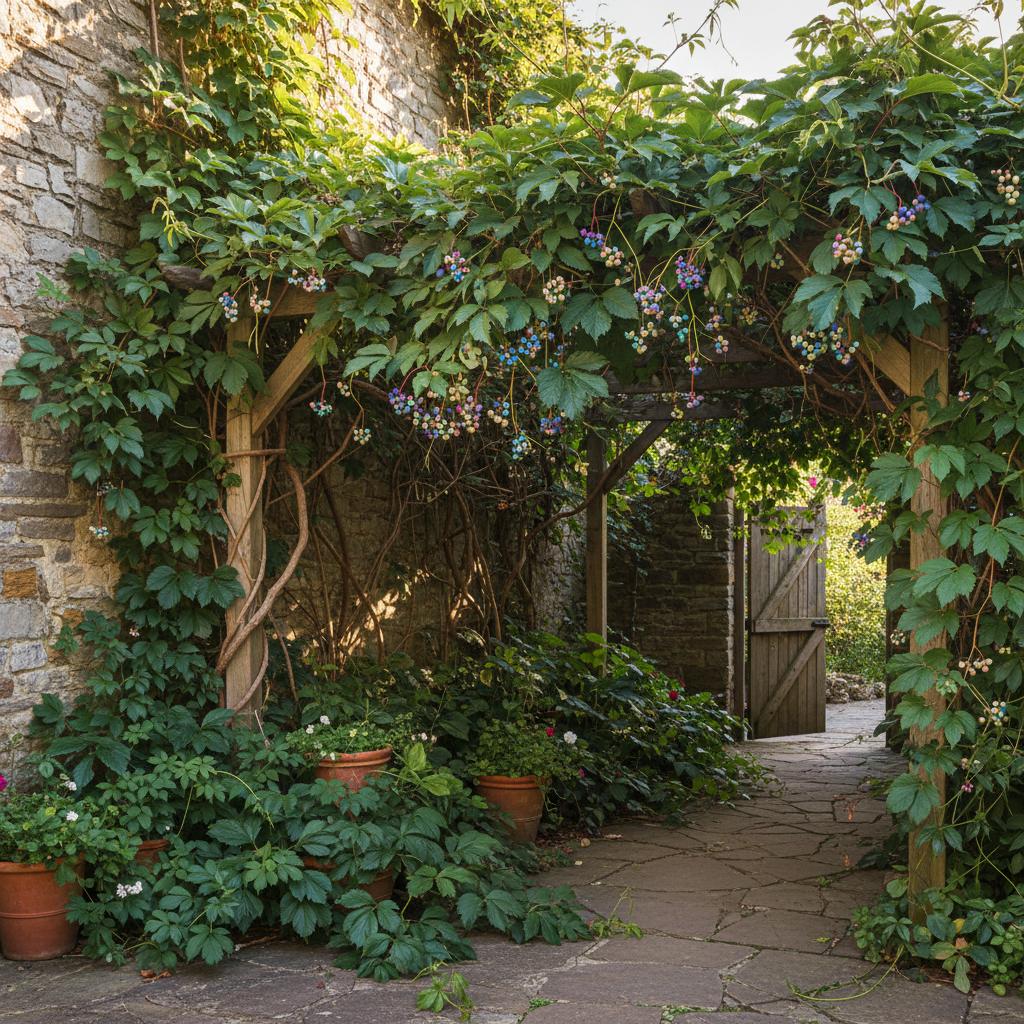
- Leaves: Alternate, simple, deeply 3-5 lobed with coarsely toothed margins, dark green above and slightly hairy beneath;
- Flowers: Small, greenish-white, borne in cymes opposite the leaves during mid-summer;
- Fruit: Distinctive spherical berries (5-8 mm) ripening through shades of green, white, pink, lilac, and bright blue, speckled with dark dots;
- Stem: Woody climbing vine utilizing non-adhesive tendrils occurring opposite the leaves.
Care Guide
Water regularly to establish, then provide moderate watering during active growth.
Apply a light layer of compost or mild organic fertilizer as new growth begins.. Requires very little fertilization once established due to its vigorous nature.
Banana Peel Tea:Steep chopped banana peels in water for 24-48 hours. Dilute 1:1 with water and apply to the base to support vibrant fruiting. Discard solids in compost to avoid attracting pests.- Prune aggressively in late winter or early spring to control its vigorous, potentially invasive growth;
- Remove dead, damaged, or diseased vines to maintain airflow and plant health;
- Cut back lateral shoots to encourage more prolific fruiting on new wood;
- Monitor and remove unwanted seedlings nearby to prevent unwanted spread.
Toxicity
Warning: this plant may be toxic.
Pets: Non-toxic to cats, though ingestion of plant material may cause mild, self-limiting gastrointestinal upset.
Humans: Berries are not considered highly toxic but are generally unpalatable and not recommended for consumption.
Garden Uses & Culture
Culture: Introduced to the United States in the 1870s as a Victorian-era ornamental landscape plant, it has since become a notorious invasive species in many Eastern states, aggressively blanketing native vegetation.
Usage: Grown on strong trellises, arbors, or fences for its ornamental autumn berries; however, planting is strongly discouraged or banned in regions where it is invasive.