 PlantFun
Plant Needs
Characteristics
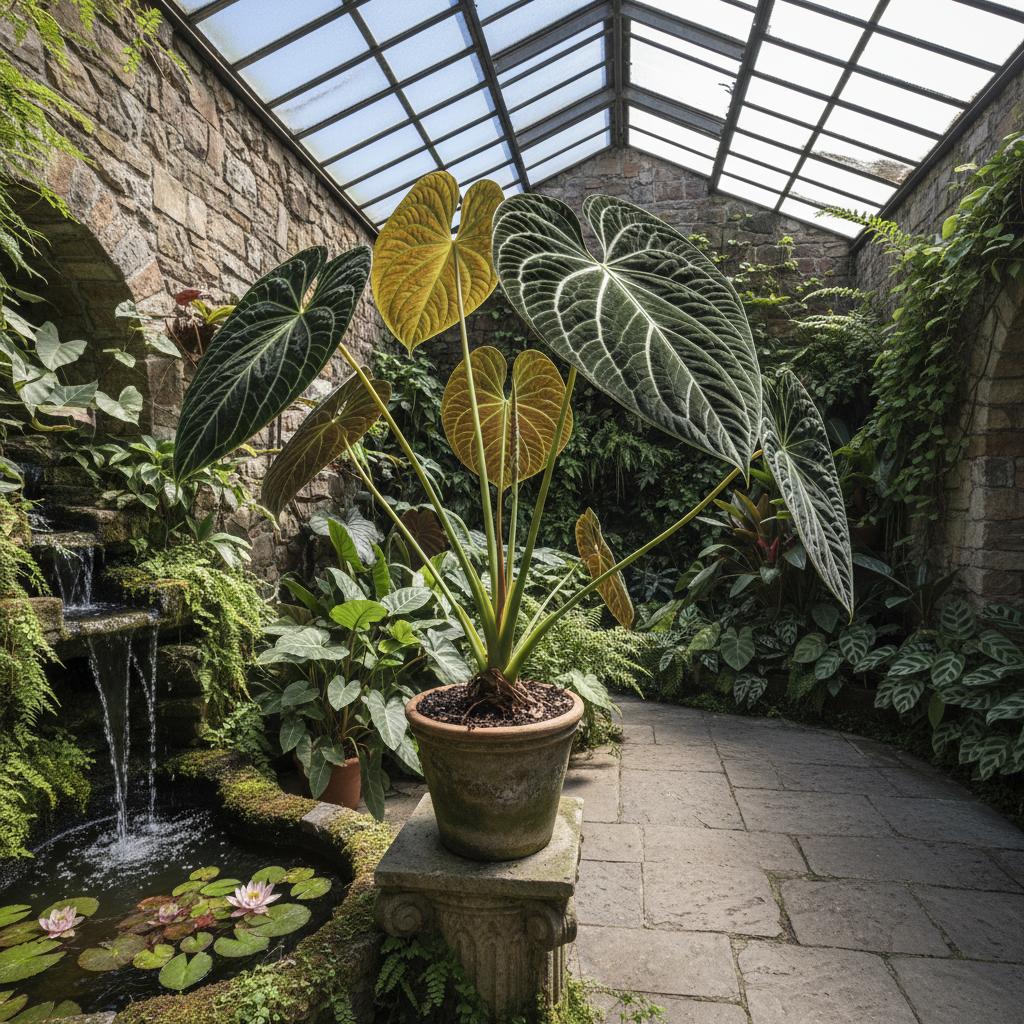
- Leaves: Large, ovate to cordate (heart-shaped), velvety dark green surface with prominent, contrasting silvery-white or pale green veins;
- Flowers: Inflorescence consists of a slender, green to purplish spathe and a pale green to yellowish spadix, generally inconspicuous compared to the foliage;
- Stems: Short, thick stems that frequently produce thick, fleshy aerial roots for climbing and anchoring.
Care Guide
Water thoroughly when the top inch of soil feels dry, maintaining high humidity.
Apply a diluted, balanced fertilizer to support active foliage growth.. Feed monthly during the growing season; pause fertilization during the winter dormancy period.
Aquarium Water:Use dirty aquarium water during routine tank changes to water the plant. It provides a gentle, natural source of nitrogen and beneficial microbes without the risk of chemical burn. Ensure the water is fresh-water only, with no added salts or medications.- Remove yellowing, dead, or damaged leaves at the base of the petiole using sterilized shears;
- Trim back overly long or unruly aerial roots only if necessary, though it is better to guide them into the soil;
- Wipe the velvety leaves gently with a damp cloth to remove dust and maintain their shimmering appearance.
Toxicity
Warning: this plant may be toxic.
Pets: Toxic per ASPCA. Chewing or biting into the plant releases crystals causing oral irritation, intense burning of the mouth, tongue and lips, excessive drooling, vomiting, and difficulty swallowing.
Humans: Contains calcium oxalate crystals; ingestion can cause irritation of the mouth and digestive tract, and sap may cause contact dermatitis.
Garden Uses & Culture
Culture: Highly prized in Western indoor gardening and aroid collector communities, it became a symbol of exotic greenhouse cultivation during the Victorian era's fascination with tropical foliage.
Usage: Cultivated primarily as an ornamental houseplant, greenhouse specimen, or in large terrariums when juvenile.