 PlantFun
Plant Needs
Characteristics
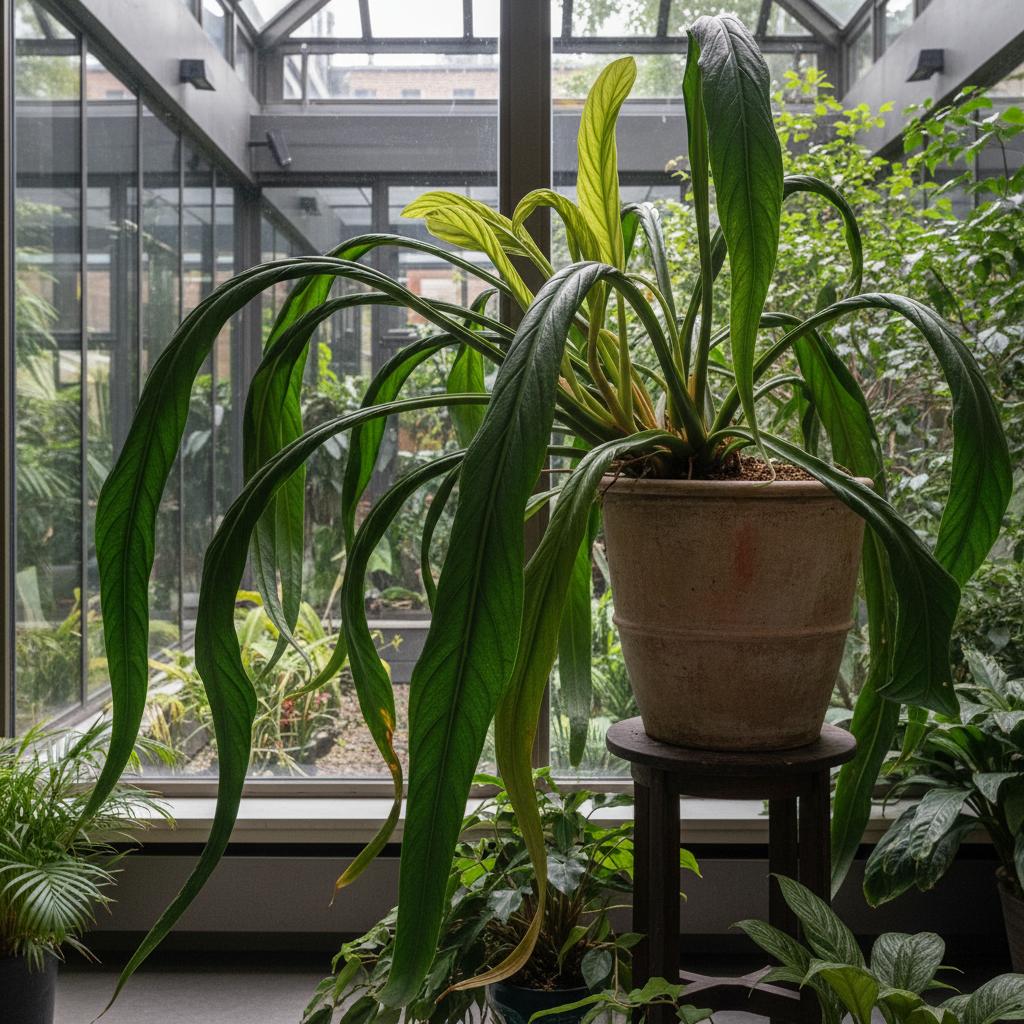
- Leaves: Long, narrow, strap-like, pendant, dark green with a matte or slightly velvety texture, reaching up to 2 meters long.
- Flowers: Inflorescence consists of a slender, greenish to purplish spathe and a matching spadix, typical of aroids but not highly showy.
- Stem: Short rhizomatous stem with thick, fleshy aerial roots adapted for epiphytic clinging.
Care Guide
Water thoroughly when the top inch of the potting mix feels dry.
Apply a balanced liquid fertilizer diluted to half strength.. Feed regularly during the active growing season, reducing to once a month in winter.
Banana Peel Tea:Soak chopped banana peels in water for 24 hours, strain, and dilute 1:1 with water. Use as a soil drench. Discard solid peels in the compost to avoid attracting fungus gnats.- Remove yellowing or dead leaves at the base using sterilized shears to maintain aesthetics.
- Trim brown, crispy leaf tips (often caused by low humidity) following the natural shape of the leaf.
- Prune excessively long aerial roots only if they become unmanageable, though they are best left intact or tucked into the pot.
Toxicity
Warning: this plant may be toxic.
Pets: Toxic per ASPCA. Causes oral irritation, intense burning of the mouth, tongue and lips, excessive drooling, vomiting, and difficulty swallowing.
Humans: Contains insoluble calcium oxalate crystals; chewing causes severe mouth pain, swelling, and gastrointestinal irritation.
Garden Uses & Culture
Culture: Highly prized in Western houseplant communities and aroid collector circles for its dramatic, cascading foliage, often featured as a statement piece in modern interior design.
Usage: Excellent for hanging baskets, tall plant stands, or mounted on cork bark in indoor displays and large terrariums.