 PlantFun
Plant Needs
Sunlight
Requires bright, indirect light; avoid harsh direct afternoon sun which can scorch the leaves.
Watering
Water thoroughly when the top 1-2 inches of the potting medium feel dry.
Temperature
Prefers warm, stable temperatures and high humidity (above 60%).
Characteristics
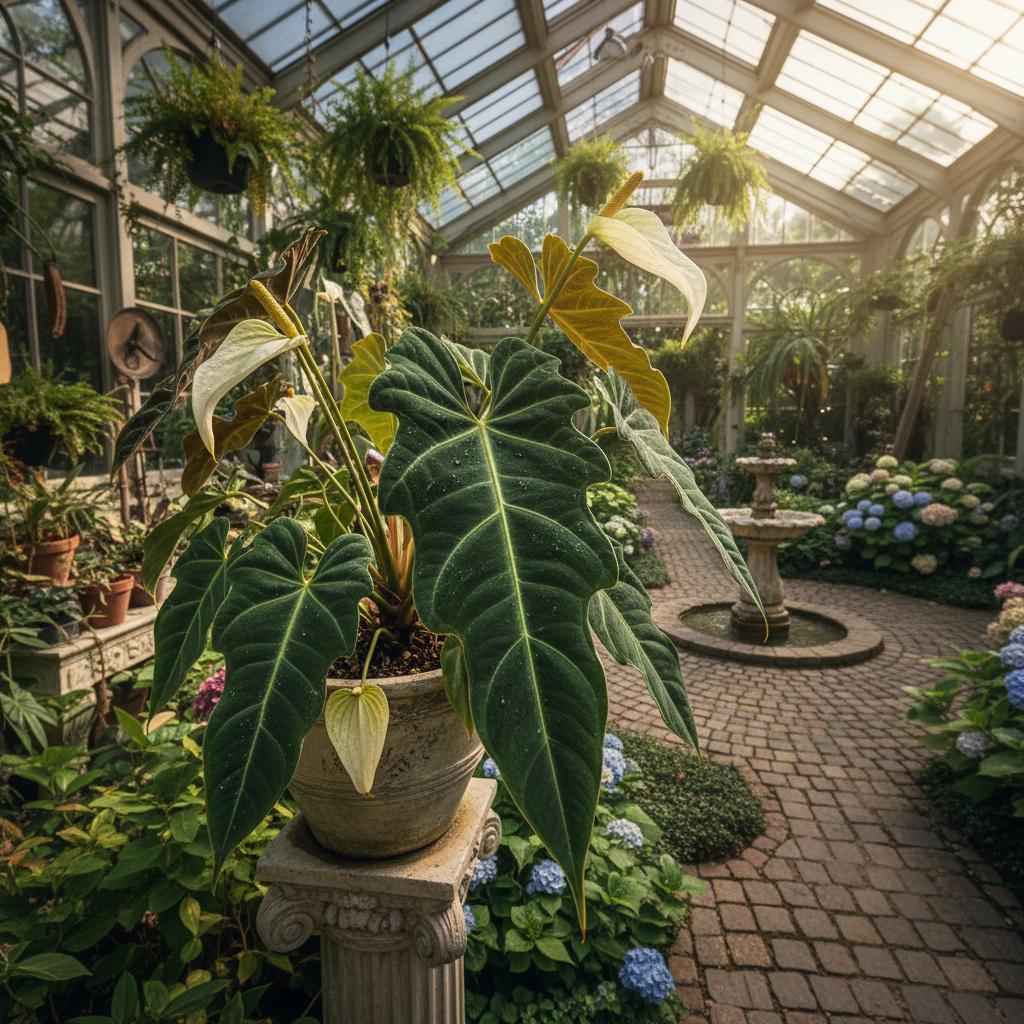
- Leaves: Elongated, pendant, strap-like dark green leaves with a slightly corrugated or ribbed texture and prominent midrib;
- Stem: Short internodes, epiphytic growth habit with thick, fleshy aerial roots;
- Flowers: Inflorescence consists of a narrow, often greenish or purplish spathe and a slender spadix.
Care Guide
Watering
Water thoroughly, keeping the medium evenly moist but never waterlogged.
Fertilization
Apply a diluted, balanced liquid fertilizer.. Use a fertilizer formulated for aroids or orchids at half strength.
Aquarium Water:Use water from routine freshwater aquarium changes to provide gentle, natural nutrients. Ensure the water does not contain fish medications or added salts.Pruning
- Remove yellowing or dead leaves at the base using sterilized shears;
- Trim aerial roots only if they are mushy or rotting; otherwise, let them grow or guide them into the potting medium;
- Wipe leaves regularly with a damp cloth to remove dust and deter pests.
Toxicity
Warning: this plant may be toxic.
Pets & Humans
Pets: Toxic per ASPCA due to insoluble calcium oxalates; causes oral irritation, pain, and swelling.
Humans: Contains insoluble calcium oxalate crystals; chewing or biting can cause painful irritation of the mouth and throat.
Garden Uses & Culture
Culture: Highly prized in Western indoor plant collector communities for its architectural, cascading foliage, often displayed on tall pedestals or in hanging baskets.
Usage: Ideal as a statement houseplant, in hanging baskets, or mounted on cork bark in a greenhouse or conservatory.