 PlantFun
Plant Needs
Sunlight
Requires bright, indirect light; avoid direct afternoon sun which can scorch the textured leaves.
Watering
Water thoroughly when the top 2-3 inches of soil feel dry, ensuring excellent drainage.
Temperature
Prefers warm, stable tropical temperatures and high humidity (above 60%).
Characteristics
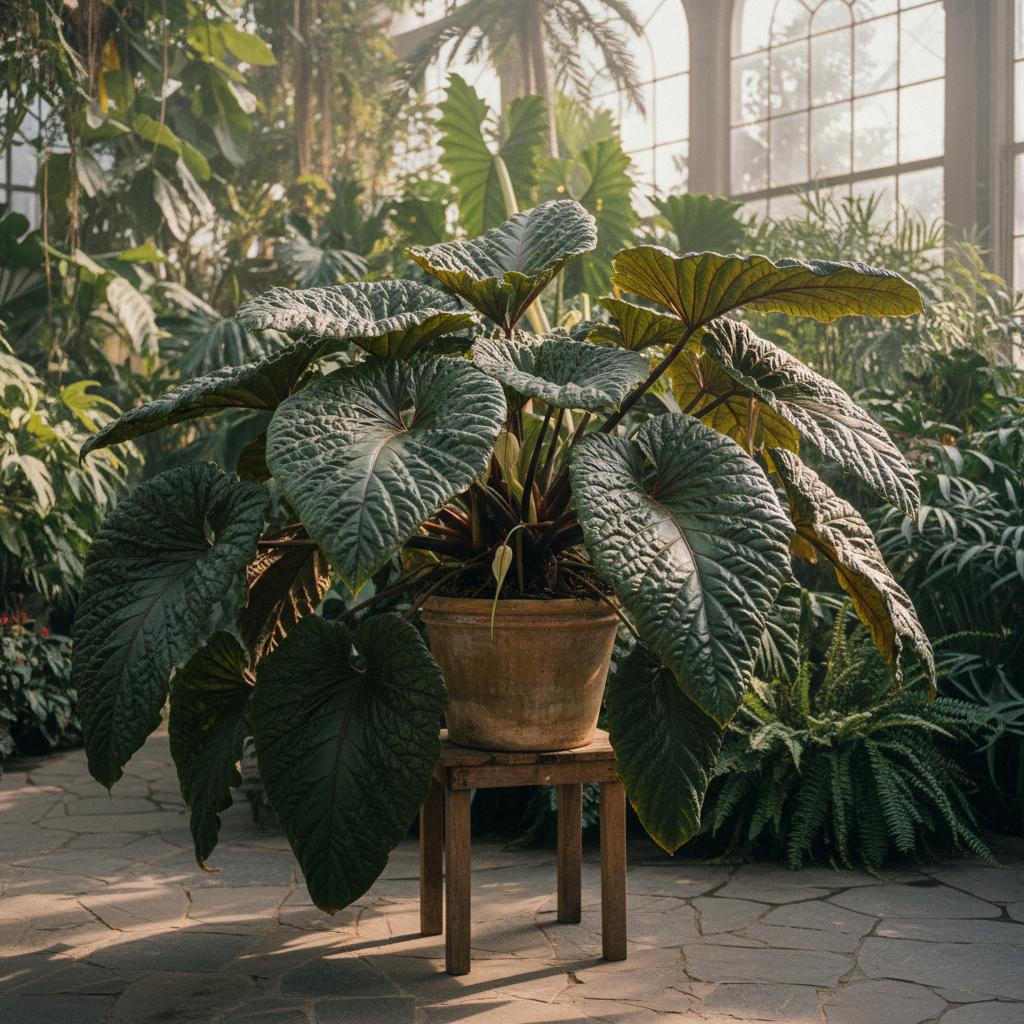
- Leaves: Arranged in a dense rosette, elliptic to oblanceolate, dark green, stiff, and deeply corrugated (bullate) with purplish undersides;
- Flowers: Inflorescence features a pale green to purplish reflexed spathe and a purplish-brown spadix;
- Stem: Short, thick rhizome, growing epiphytically or terrestrially with a thick root system.
Care Guide
Watering
Water thoroughly once a week, allowing excess to drain.
Fertilization
Apply a balanced liquid fertilizer diluted to half strength.. Feed regularly during the active growing season.
Aquarium Water:Use diluted, untreated aquarium change water to provide gentle, natural nitrogen. Ensure water is at room temperature and free of aquatic medications.Pruning
- Remove dead or yellowing basal leaves with sterilized shears;
- Wipe the large, corrugated leaves regularly with a damp cloth to remove dust;
- Trim spent inflorescences at the base to redirect energy to foliage.
Toxicity
Warning: this plant may be toxic.
Pets & Humans
Pets: Toxic per ASPCA; causes oral irritation, excessive drooling, vomiting, and difficulty swallowing.
Humans: Contains calcium oxalate crystals; ingestion causes oral irritation, burning sensation, and swelling.
Garden Uses & Culture
Culture: In Western indoor gardening, bird's nest Anthuriums are prized as architectural statement plants, bringing a prehistoric, sculptural aesthetic to modern interiors and conservatories.
Usage: Cultivated primarily as an ornamental houseplant or conservatory specimen for its dramatic, textured foliage.