 PlantFun
Plant Needs
Characteristics
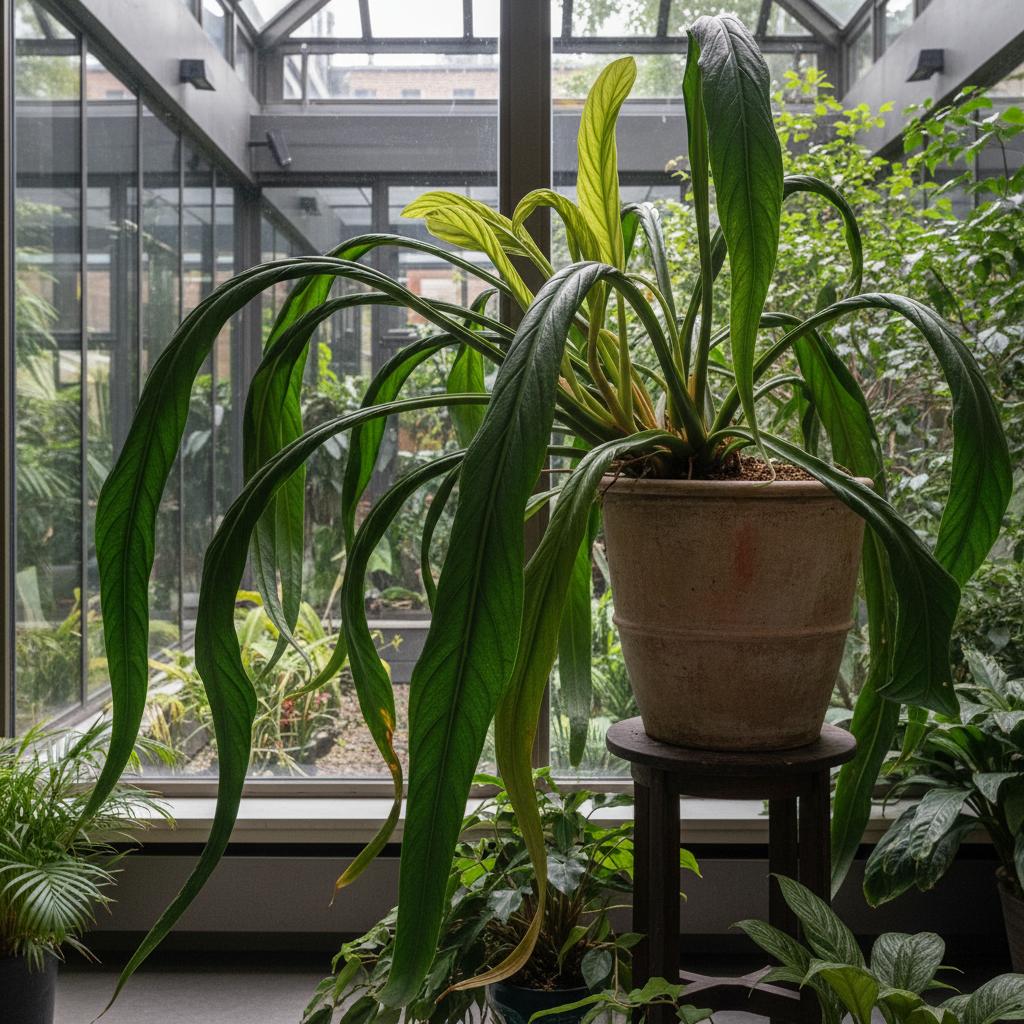
- Leaves: Pendant, strap-like, narrow and elongated, dark green with a matte to slightly velvety texture, growing up to 2 meters long;
- Flowers: Inflorescence features a narrow, reflexed green to purplish spathe and a slender, tapering spadix;
- Roots: Thick, fleshy aerial roots adapted for clinging to tree bark and absorbing atmospheric moisture;
- Fruits: Small, fleshy berries that turn pink or reddish-purple when mature.
Care Guide
Water thoroughly when the top inch of the substrate feels dry, ensuring rapid drainage.
Apply a diluted, balanced liquid fertilizer to support active foliage growth.. Use a weak fertilizer solution, as epiphytes are sensitive to heavy mineral concentrations.
Aquarium Water:Use untreated water from routine freshwater aquarium changes. It provides a very mild, organic source of nitrogen perfect for sensitive epiphytic roots. Ensure the water contains no added aquarium salts or chemical medications.- Remove yellowing or dead leaves at the base using sterilized shears;
- Trim away dried or spent inflorescences to redirect the plant's energy into foliage growth;
- Do not remove healthy aerial roots, as they are essential for moisture uptake.
Toxicity
Warning: this plant may be toxic.
Pets: Toxic per ASPCA due to calcium oxalate crystals; causes oral irritation and gastrointestinal upset.
Humans: Contains insoluble calcium oxalate crystals causing oral and gastrointestinal irritation.
Garden Uses & Culture
Culture: Highly sought after in Western indoor horticulture and biophilic design for its dramatic, cascading architectural form, often used as a statement piece in modern homes.
Usage: Cultivated primarily as an ornamental houseplant, specifically suited for hanging baskets, mounted displays, or tall pedestals where its leaves can drape freely.