 PlantFun
Plant Needs
Characteristics
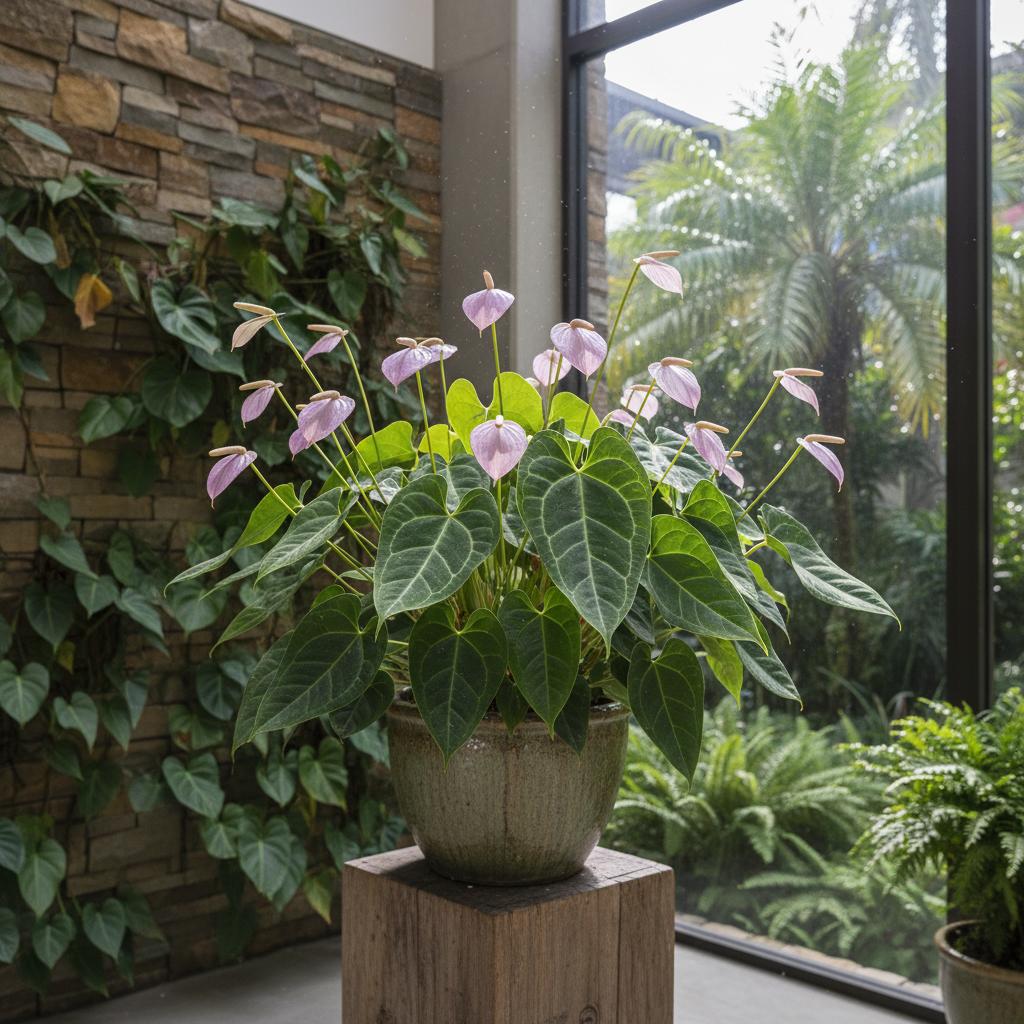
- Leaves: Dark green, lanceolate to narrowly ovate, relatively small and compact, growing in a rosette-like fashion;
- Flowers: Inflorescence features a small, cupped, tulip-like spathe (typically lavender, pale purple, or pinkish) and a dark purple to blackish spadix;
- Stem: Short, often producing multiple offsets, adapted to growing on rocks near streams (rheophytic);
- Roots: Thick, fleshy aerial roots adapted for clinging to wet rocks in its native habitat.
Care Guide
Water thoroughly when the top inch of soil feels dry, maintaining high ambient humidity.
Apply a balanced, water-soluble fertilizer diluted to 1/4 strength.. Feed monthly during the active growing season; flush soil periodically with plain water to prevent salt buildup.
Banana Peel Tea:Steep chopped banana peels in water for 24-48 hours, strain, and dilute 1:1 with water. Apply to soil to support spathe development. Discard solids in compost to avoid attracting pests.- Remove spent flowers (spathes and spadices) at the base of the stem to redirect energy;
- Trim away any yellowing or dead leaves using sterilized shears;
- Divide offsets during repotting to maintain a compact shape and propagate the plant.
Toxicity
Warning: this plant may be toxic.
Pets: Toxic per ASPCA: Oral irritation, intense burning and irritation of mouth, tongue and lips, excessive drooling, vomiting, difficulty swallowing.
Humans: Contains insoluble calcium oxalate crystals; chewing or biting into the plant releases these crystals, causing tissue penetration and irritation.
Garden Uses & Culture
Culture: In Western indoor gardening, Anthuriums symbolize hospitality and abundance, often gifted to bring a sense of tropical elegance into modern homes.
Usage: Popular as a compact flowering houseplant, terrarium specimen, and parent species for many miniature Anthurium hybrids.