 PlantFun
Plant Needs
Characteristics
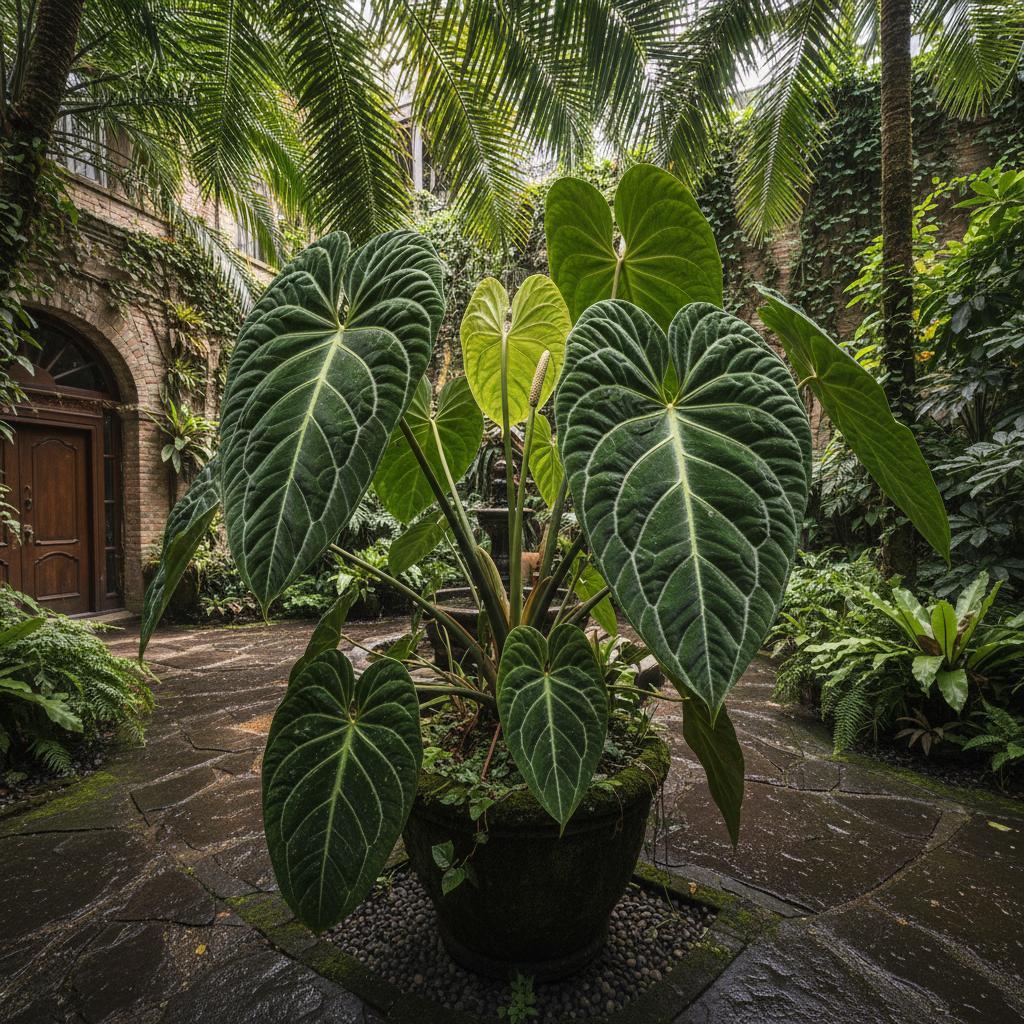
- Leaves: Broadly ovate to deeply cordate, dark green with a thick, velvety (coriaceous) texture, featuring prominent, contrasting silvery-white primary and secondary veins;
- Flowers: Inflorescence consists of a slender, pale green to purplish spathe and a darker, elongated spadix, lacking significant ornamental value;
- Stems: Short, thick, and often producing robust aerial roots for epiphytic or epilithic attachment.
Care Guide
Water thoroughly when the top inch of soil feels dry, ensuring excess water drains completely.
Apply a diluted balanced fertilizer to support new foliage growth.. Feed monthly during the active growing season; pause fertilization during winter.
Aquarium Water Fertilizer:Use untreated, dirty aquarium change water to hydrate the plant. It provides gentle, natural nitrogen without the risk of chemical burn. Avoid using if the fish tank has been treated with medications or high salts.- Remove yellowing or damaged leaves at the base of the petiole to maintain aesthetics and prevent disease;
- Snip off spent inflorescences to redirect the plant's energy back into foliage production;
- Trim any rotting or dried aerial roots during repotting, using sterilized shears.
Toxicity
Warning: this plant may be toxic.
Pets: Toxic per ASPCA due to calcium oxalate crystals, causing severe oral pain and digestive issues.
Humans: Contains insoluble calcium oxalate crystals which cause intense oral irritation and gastrointestinal upset if ingested.
Garden Uses & Culture
Culture: Highly prized in modern Western houseplant culture and botanical interior design for its striking, architectural foliage and velvety texture.
Usage: Cultivated primarily as an ornamental houseplant, ideal for indoor greenhouses, large terrariums, and shaded tropical patios.