 PlantFun
Plant Needs
Sunlight
Bright, indirect light; avoid direct afternoon sun which can scorch the textured leaves.
Watering
Keep the potting medium consistently moist but never waterlogged.
Temperature
Thrives in warm, tropical temperatures and requires high ambient humidity.
Characteristics
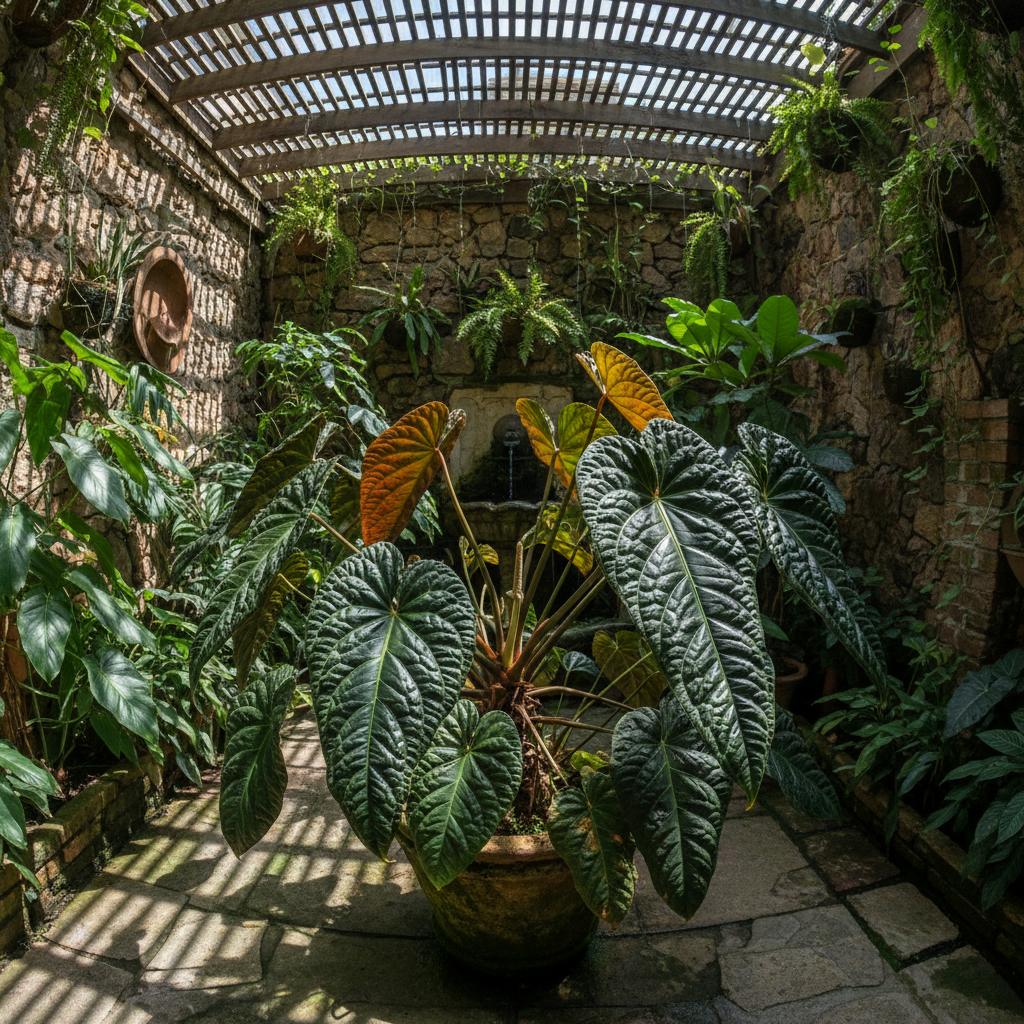
- Leaves: Deeply bullate (pebbled/corrugated), cordate (heart-shaped), dark green, leathery, with prominent veins;
- Stems: Creeping rhizome, rooting at the nodes along the soil surface;
- Flowers: Inflorescence features a reflexed greenish to maroon spathe and a stout, purplish spadix;
- Roots: Thick aerial roots that anchor into the substrate or climb slightly.
Care Guide
Watering
Water thoroughly when the top inch of soil feels dry.
Fertilization
Apply a balanced, diluted liquid fertilizer.. Feed monthly during the active growing season, pausing in winter.
Aquarium Water:Use dirty aquarium change water to hydrate the plant; it provides gentle, natural nitrogen without the risk of chemical burn. Ensure the water is room temperature and free of aquarium salt.Pruning
- Remove yellowing or dead leaves at the base of the petiole with sterilized shears;
- Trim back unruly creeping stems to maintain shape or contain growth;
- Propagate stem cuttings with attached aerial roots to create new plants.
Toxicity
Warning: this plant may be toxic.
Pets & Humans
Pets: Toxic to cats per ASPCA; contains insoluble calcium oxalate crystals causing oral irritation and swelling.
Humans: Contains calcium oxalate crystals which can cause oral and gastrointestinal irritation if ingested.
Garden Uses & Culture
Culture: Highly prized in Western indoor horticulture and terrarium communities for its unique, deeply corrugated foliage and creeping growth habit.
Usage: Cultivated as an ornamental houseplant, terrarium specimen, or tropical greenhouse groundcover.