 PlantFun
Plant Needs
Characteristics
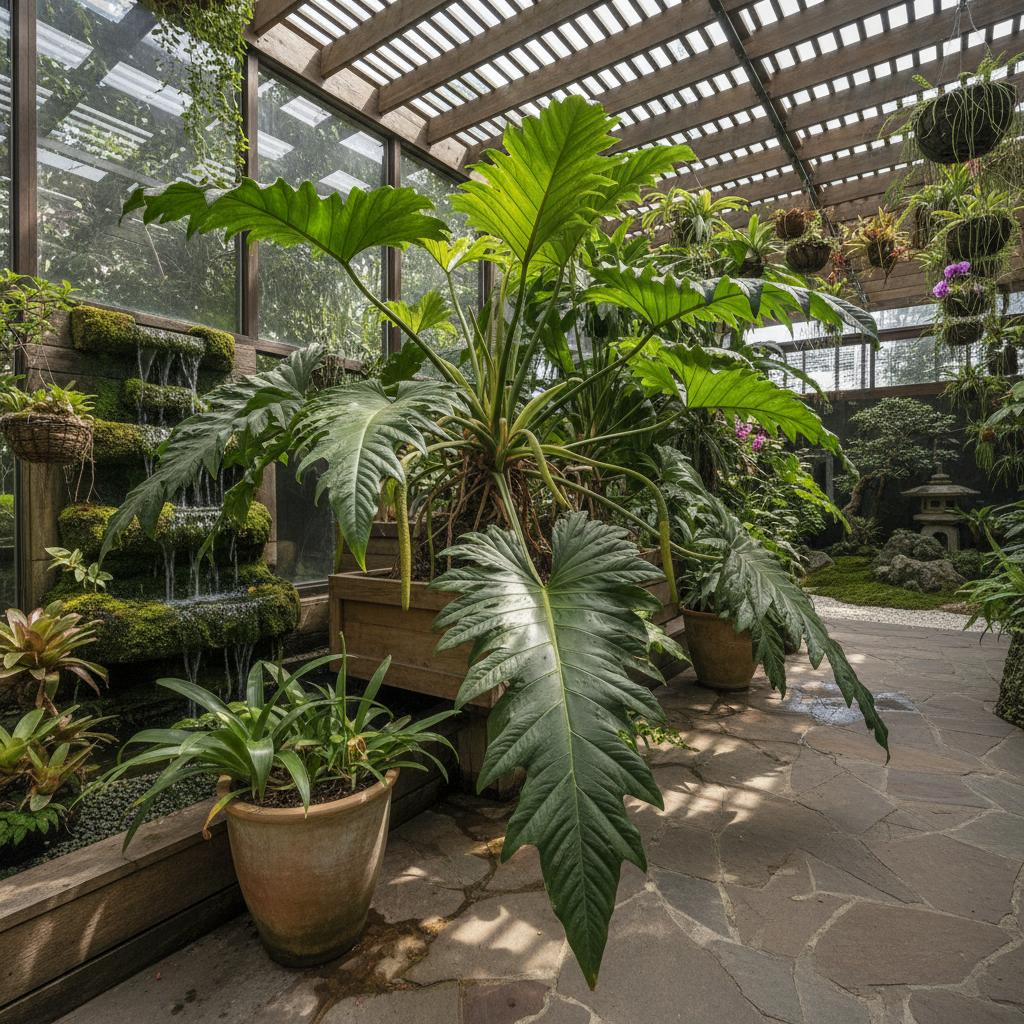
- Leaves: Large, leathery, dark green, broadly lanceolate to elliptic with undulate (wavy) margins, arranged in a rosette forming a "bird's nest" shape;
- Flowers: Inflorescence consists of a dark purple to reddish-brown reflexed spathe and a long, purplish spadix;
- Roots: Thick, fleshy aerial roots adapted for an epiphytic or epilithic lifestyle.
Care Guide
Water thoroughly once a week, allowing excess to drain.
Apply a balanced liquid fertilizer diluted to half strength.. Feed during the active growing season; pause in winter.
Banana Peel Tea:Soak chopped banana peels in water for 24 hours, strain, and dilute 1:1 with water. Use to boost root and foliage health. Discard solids in compost to avoid attracting pests.- Remove dead or yellowing lower leaves near the base using sterilized shears;
- Snip off spent flower stalks to redirect energy to foliage growth;
- Wipe leaves regularly with a damp cloth to remove dust and support photosynthesis.
Toxicity
Warning: this plant may be toxic.
Pets: Toxic per ASPCA: Oral irritation, intense burning and irritation of mouth, tongue and lips, excessive drooling, vomiting, and difficulty swallowing.
Humans: Contains insoluble calcium oxalate crystals; chewing or biting into the plant releases these crystals, causing tissue penetration and irritation of the mouth and GI tract.
Garden Uses & Culture
Culture: In Western indoor gardening, large "bird's nest" anthuriums are prized as architectural statement plants that bring a bold, tropical aesthetic to modern interiors and conservatories.
Usage: Primarily cultivated as an ornamental houseplant or conservatory specimen.