 PlantFun
Plant Needs
Characteristics
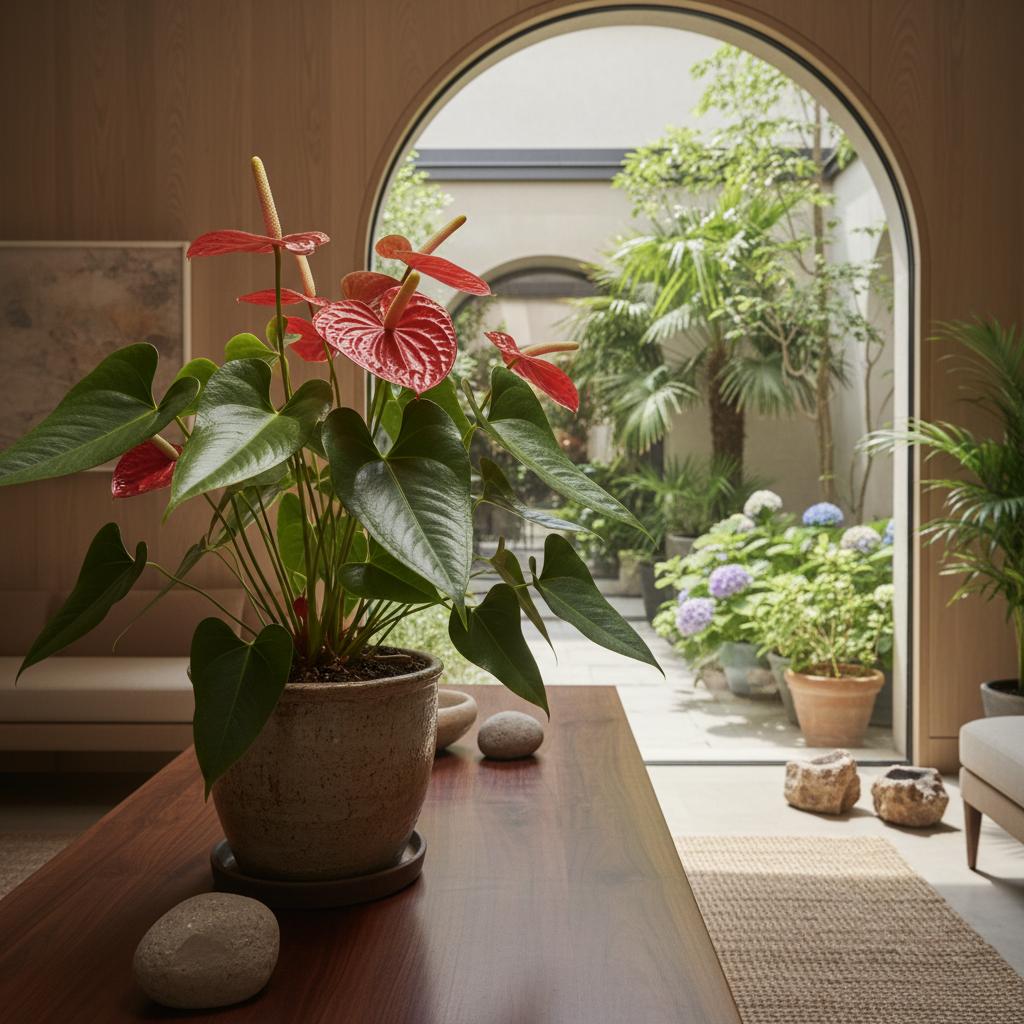
- Leaves: Dark green, highly glossy, deeply cordate (heart-shaped) with prominent venation, held on long, stiff petioles;
- Flowers: Inflorescence consists of a brightly colored, waxy, heart-shaped spathe (often red, pink, or white) and a straight or slightly curved yellow-to-white spadix covered in tiny true flowers;
- Stem: Short, erect stem that frequently produces thick aerial roots for epiphytic attachment.
Care Guide
Water thoroughly when the top inch of soil feels dry, maintaining high ambient humidity.
Apply a balanced or high-phosphorus liquid fertilizer diluted to half strength.. Regular feeding during the growing season promotes vibrant and frequent blooms.
Banana Peel Tea:Steep chopped banana peels in water for 24-48 hours. Strain and dilute 1:1 with water before applying to the soil to encourage blooming. Discard the solid peels in an outdoor compost bin to avoid attracting fungus gnats indoors.- Remove yellowing or dead leaves at the base of the stem using sterilized shears;
- Snip off faded or browning spathes at the base of their stalk to redirect energy to new growth;
- Trim away any mushy or dried aerial roots during repotting.
Toxicity
Warning: this plant may be toxic.
Pets: Toxic per ASPCA. Chewing results in release of calcium oxalate crystals causing intense oral irritation.
Humans: Contains insoluble calcium oxalate crystals that cause immediate pain and irritation upon chewing.
Garden Uses & Culture
Culture: In Western floral design, the Anthurium's open, heart-shaped spathe is widely regarded as a symbol of abundant hospitality, exotic beauty, and enduring happiness.
Usage: Extensively cultivated as a premium indoor ornamental plant and highly valued in the florist trade as a long-lasting cut flower.