 PlantFun
Plant Needs
Sunlight
Requires bright, indirect light; direct sunlight will scorch the textured leaves.
Watering
Keep the soil consistently moist but never waterlogged; requires high humidity.
Temperature
Thrives in warm tropical temperatures; intolerant of frost and cold drafts.
Characteristics
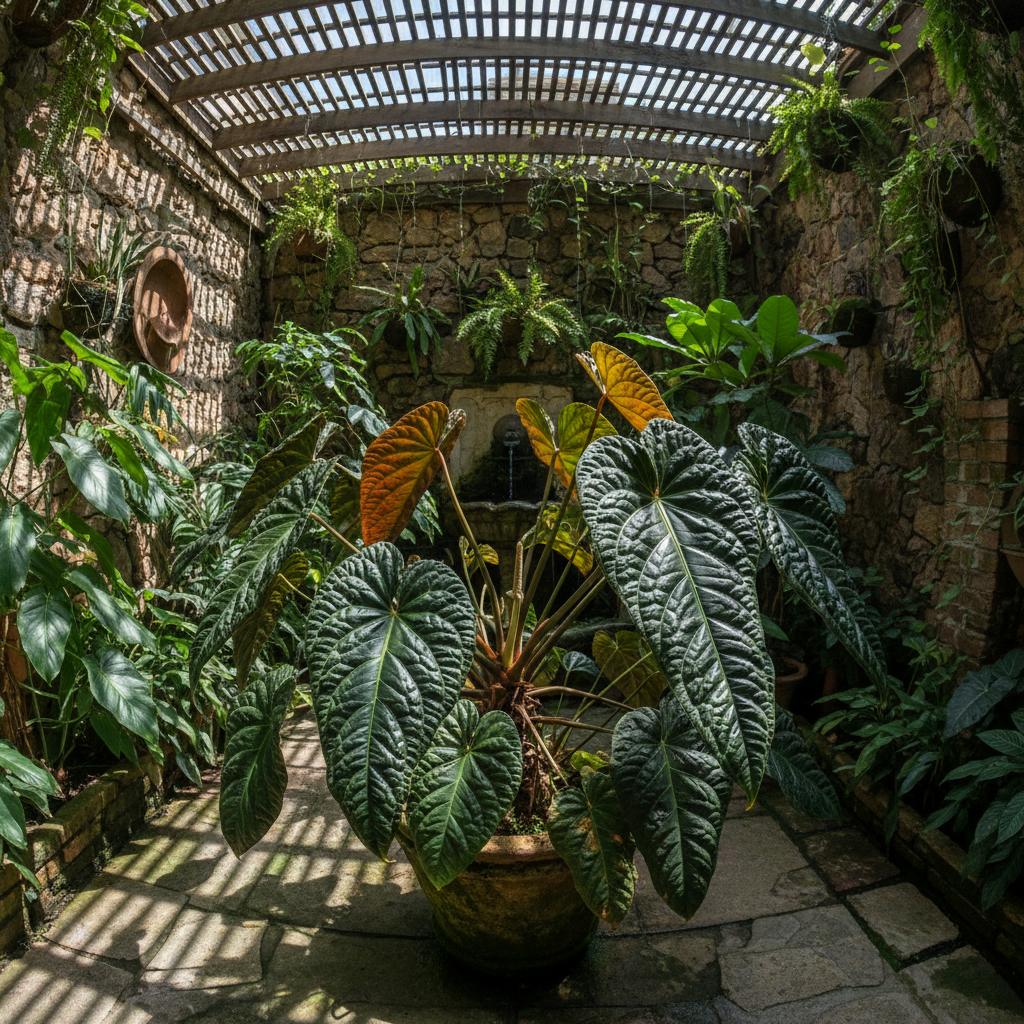
- Leaves: Deeply bullate (corrugated) and cordate (heart-shaped), dark green, leathery, with prominent veins and a pebbled texture;
- Stems: Creeping rhizomes that root at the nodes, allowing the plant to spread horizontally;
- Flowers: Inflorescence features a small, greenish to maroon spathe and a stout, purplish-green spadix;
- Roots: Adventitious aerial roots emerge from nodes along the creeping stem to anchor into soil or moss.
Care Guide
Watering
Water thoroughly when the top inch of the soil feels dry to the touch.
Fertilization
Apply a balanced liquid fertilizer diluted to half strength.. Avoid over-fertilizing, which can cause mineral buildup and burn the sensitive roots.
Banana Peel Tea:Soak chopped banana peels in water for 24 hours. Strain the liquid and dilute 1:1 with water before applying to the soil. Discard the raw peels in compost to avoid attracting fungus gnats or causing odors indoors.Pruning
- Sanitation: Remove yellowing, dead, or damaged leaves at the base of the petiole;
- Form: Trim overly long creeping stems if the plant outgrows its container;
- Propagation: Cut stem sections with at least one node and aerial root to propagate new plants;
- Hygiene: Always use sterilized shears to prevent the spread of bacterial or fungal infections.
Toxicity
Warning: this plant may be toxic.
Pets & Humans
Pets: Toxic per ASPCA; chewing or ingestion causes oral irritation, pain, and swelling.
Humans: Contains calcium oxalate crystals which can cause oral and gastrointestinal irritation if ingested.
Garden Uses & Culture
Culture: Highly prized in Western indoor gardening and aroid collector communities for its unique, deeply textured foliage and suitability for terrariums.
Usage: Cultivated primarily as an ornamental houseplant, terrarium specimen, or understory groundcover in tropical conservatories.