 PlantFun
Plant Needs
Sunlight
Bright, indirect light; avoid direct afternoon sun which can scorch the leaves.
Watering
Water thoroughly when the top 1-2 inches of soil feel dry to the touch.
Temperature
Prefers warm, tropical temperatures and high humidity; protect from drafts below 15°C.
Characteristics
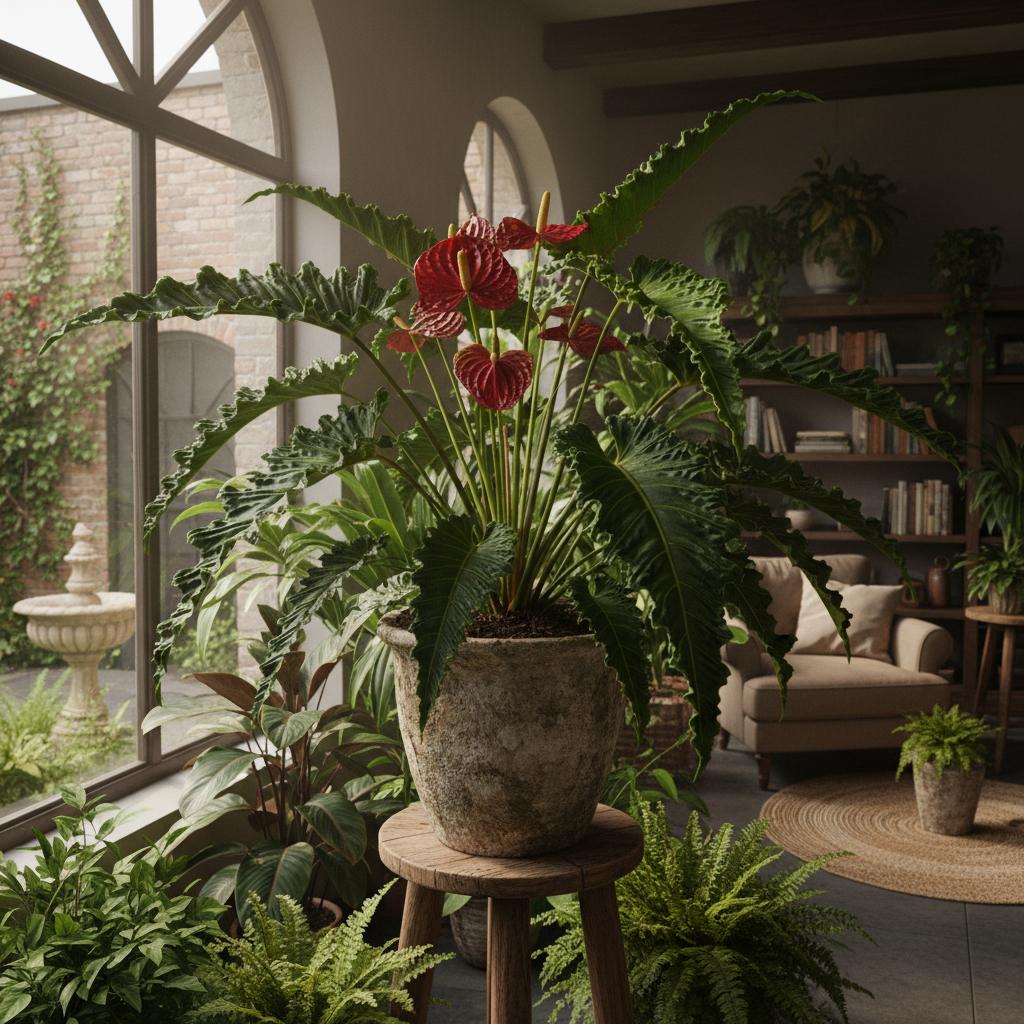
- Leaves: Large, elongated, leathery, dark green leaves with highly undulate (ruffled) margins, forming a rosette or bird's nest habit;
- Flowers: Inflorescence consists of a spadix and a narrow, often greenish or purplish spathe, partially hidden by foliage;
- Stem: Short, thick stem, often producing thick aerial roots.
Care Guide
Watering
Water thoroughly when the top layer of soil dries out.
Fertilization
Apply a balanced, water-soluble fertilizer diluted to half strength.. Feed during the active growing season; withhold fertilizer during winter dormancy.
Aquarium Water Fertilizer:Use untreated water from routine aquarium changes; apply directly to soil to provide gentle, natural nitrogen. Avoid if water contains aquarium medications or added salts.Pruning
- Remove dead or yellowing leaves at the base using sterilized shears;
- Trim away spent inflorescences to redirect energy to foliage growth;
- Wipe leaves regularly with a damp cloth to remove dust and support photosynthesis.
Toxicity
Warning: this plant may be toxic.
Pets & Humans
Pets: Toxic to cats per ASPCA; causes oral irritation, intense burning and irritation of mouth, tongue and lips, excessive drooling, vomiting, and difficulty swallowing.
Humans: Contains calcium oxalate crystals; chewing or biting can cause oral irritation, pain, and swelling.
Garden Uses & Culture
Culture: Popular in modern Western interior design for its architectural, sculptural foliage that adds a dramatic tropical flair to living spaces.
Usage: Indoor houseplant, tropical landscape understory, patio container plant.