 PlantFun
Plant Needs
Sunlight
Requires bright, indirect light; direct sun will scorch the leaves.
Watering
Keep the potting medium consistently moist but allow the top inch to dry out between waterings.
Temperature
Prefers warm, tropical temperatures and high humidity.
Characteristics
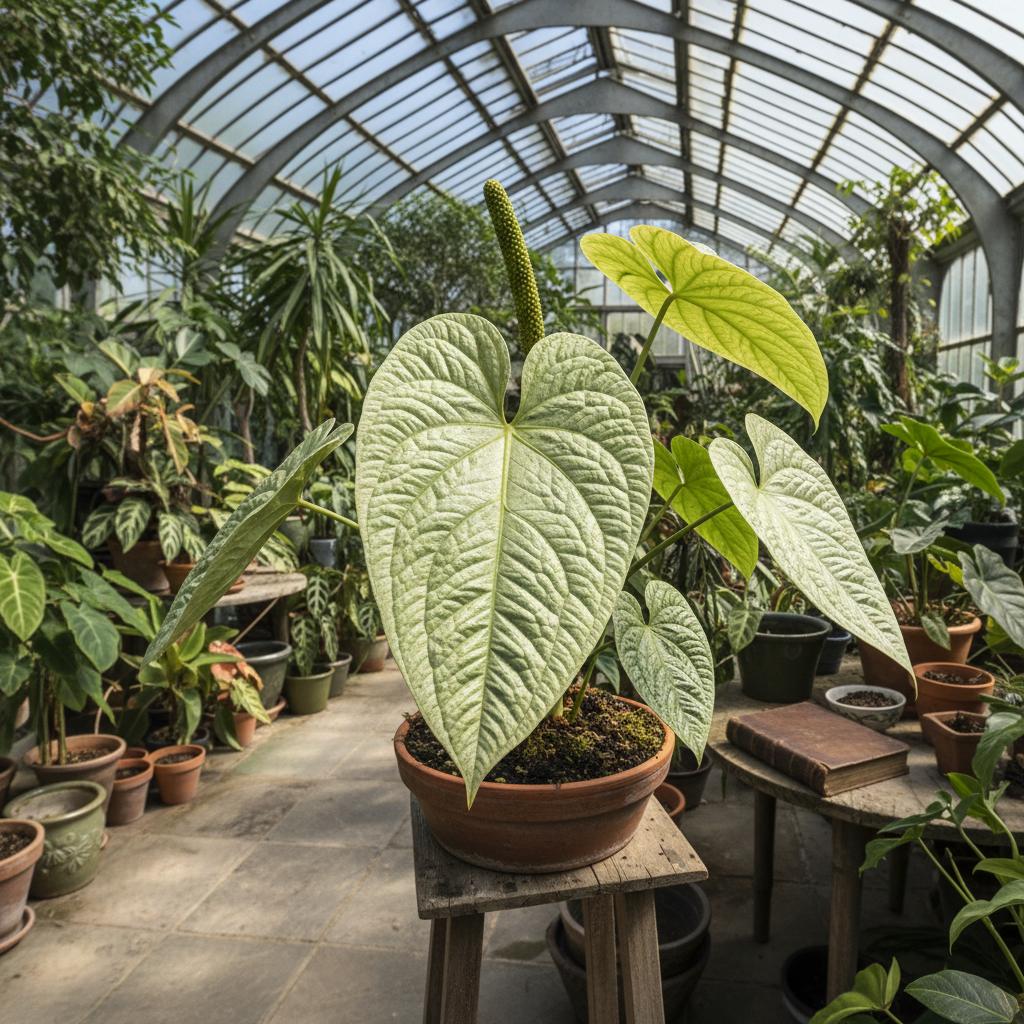
- Leaves: Coriaceous, ovate to lanceolate, with prominent venation and a glossy green surface;
- Flowers: Inflorescence features a greenish-white spathe and a slender, tapering spadix;
- Stem: Short internodes with thick, fleshy aerial roots adapted for epiphytic growth.
Care Guide
Watering
Water thoroughly when the top inch of soil feels dry.
Fertilization
Apply a balanced liquid fertilizer diluted to half strength.. Feed monthly during the growing season.
Aquarium Water Fertilizer:Use untreated water from routine aquarium changes to water the plant. Ensure the water is at room temperature and free of added aquarium medications or high salts.Pruning
- Remove yellowing or dead leaves at the base to maintain plant hygiene;
- Trim away any dried or rotting aerial roots during repotting;
- Wipe leaves with a damp cloth to remove dust and improve photosynthesis.
Toxicity
Warning: this plant may be toxic.
Pets & Humans
Pets: Toxic per ASPCA. Ingestion causes intense burning and irritation of the mouth, tongue, and lips.
Humans: Contains calcium oxalate crystals which can cause oral and gastrointestinal irritation if ingested.
Garden Uses & Culture
Culture: In Western floral design and interior landscaping, Anthuriums are often used to symbolize hospitality, exotic beauty, and enduring abundance.
Usage: Cultivated primarily as an ornamental houseplant or greenhouse specimen for its attractive foliage and unique inflorescence.