 PlantFun
Plant Needs
Characteristics
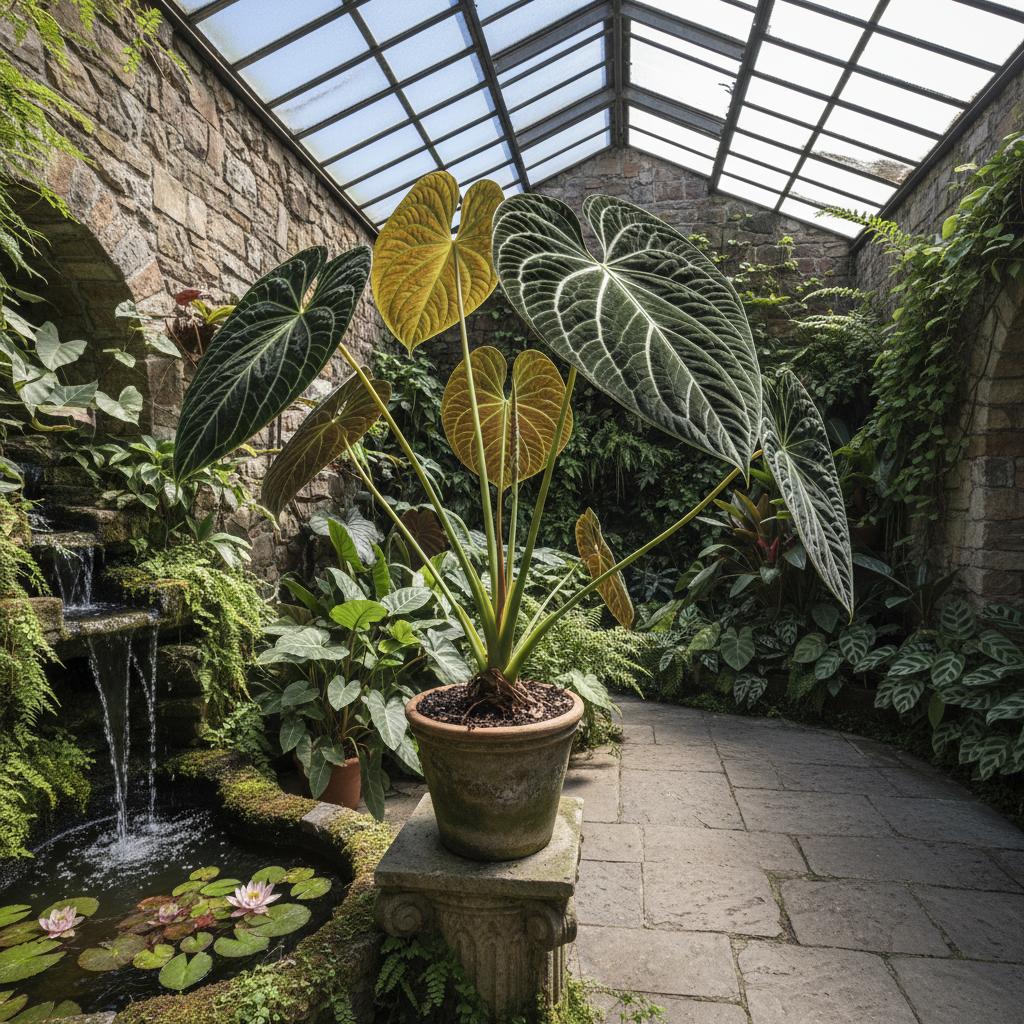
- Leaves: Large, ovate to cordate (heart-shaped), dark green with a velvety texture, featuring prominent, contrasting silvery-white or pale green primary veins;
- Flowers: Inflorescence consists of a slender, green to purplish spadix and a narrow, pale green spathe, lacking significant ornamental value compared to the foliage;
- Stem: Short, thick, and somewhat woody, frequently producing thick aerial roots for climbing and moisture absorption.
Care Guide
Water thoroughly when the top 1-2 inches of the soil mix feels dry.
Apply a balanced, water-soluble fertilizer diluted to half strength.. Fertilize only during the active growing season. Flush the soil periodically to prevent salt accumulation.
Aquarium Water:Use untreated water from routine freshwater aquarium changes. It provides a gentle, organic source of nitrogen and beneficial microbes. Ensure the water contains no added aquarium salts or medications.- Remove older, yellowing, or damaged leaves at the base of the petiole using sterilized shears;
- Wipe the large velvety leaves gently with a damp microfiber cloth to remove dust and support photosynthesis;
- Trim away any dead or rotting aerial roots, but leave healthy ones intact or guide them into the soil.
Toxicity
Warning: this plant may be toxic.
Pets: Toxic per ASPCA; contains calcium oxalate crystals causing oral irritation, intense burning of the mouth, tongue, and lips, excessive drooling, vomiting, and difficulty swallowing.
Humans: Contains insoluble calcium oxalate crystals; chewing or biting can cause immediate pain and irritation of the mouth and throat. Sap may cause contact dermatitis.
Garden Uses & Culture
Culture: Highly prized in Western indoor plant collecting communities, it is a staple of modern biophilic interior design, celebrated for bringing a dramatic, architectural piece of the rainforest into urban homes.
Usage: Cultivated primarily as an ornamental houseplant or greenhouse specimen for its spectacular foliage.