 PlantFun
Plant Needs
Characteristics
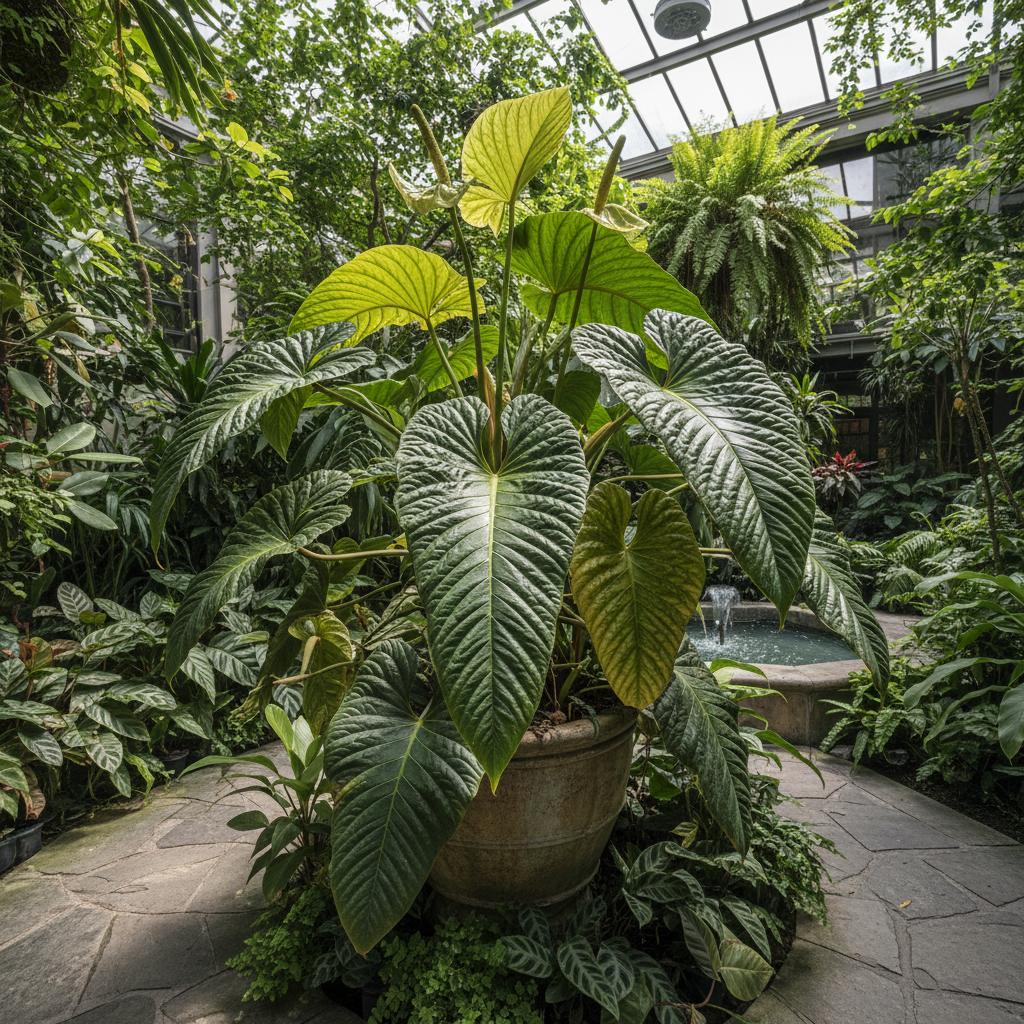
- Leaves: Large, leathery, lanceolate to broadly elliptic, featuring prominent, thick midribs and veins, arranged in a dense rosette;
- Flowers: Inflorescence consists of a lanceolate, often reflexed spathe and a cylindrical, tapering spadix, typically greenish to purplish-maroon;
- Roots: Thick, fleshy aerial roots that emerge from the base, adapted for anchoring to trees and absorbing atmospheric moisture.
Care Guide
Water thoroughly once the top layer of soil dries out, maintaining slight moisture.
Apply a balanced, water-soluble fertilizer diluted to half strength.. Do not fertilize during the winter dormancy period.
Banana Peel Tea:Steep chopped banana peels in water for 24 hours, strain, and dilute 1:1 with water. Use as a soil drench. Discard the solid peels in the compost to avoid attracting fungus gnats indoors.- Remove old, yellowing, or damaged leaves at the base of the stem using sterilized shears;
- Wipe leaves regularly with a damp cloth to remove dust and support photosynthesis;
- Leave healthy aerial roots intact, as they are essential for the plant's structural support and moisture uptake.
Toxicity
Warning: this plant may be toxic.
Pets: Toxic per ASPCA; chewing or biting into the plant releases crystals causing oral irritation, pain and swelling of mouth, tongue and lips, excessive drooling, vomiting, and difficulty swallowing.
Humans: Contains calcium oxalate crystals; ingestion causes severe mouth and throat irritation, while sap can cause skin dermatitis.
Garden Uses & Culture
Culture: Popularized in Western indoor horticulture during the late 20th-century houseplant boom, valued for its architectural form and modern aesthetic in interior design.
Usage: Cultivated primarily as a striking specimen houseplant for homes and conservatories, or as an understory landscape plant in tropical climates.