 PlantFun
Plant Needs
Characteristics
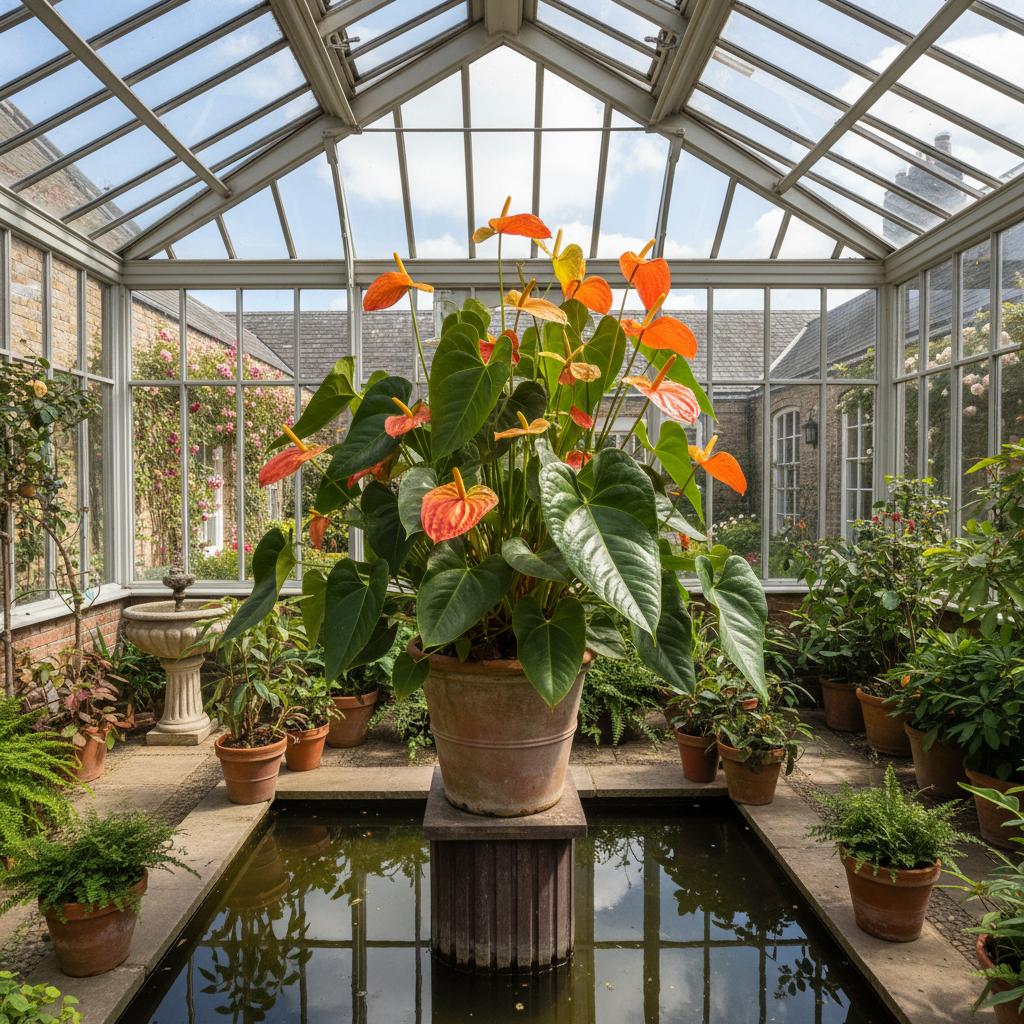
- Leaves: Glossy, dark green, heart-shaped (cordate) to lanceolate, with a prominent midrib and leathery texture;
- Flowers: Features a modified leaf called a spathe that is bright orange and glossy, with a central protruding spadix (yellow to orange-red) bearing tiny true flowers;
- Stems: Short, erect stems that frequently produce thick aerial roots;
- Roots: Epiphytic root system designed to grasp tree bark and absorb moisture from the humid air.
Care Guide
Water thoroughly when the top inch of soil feels dry, ensuring excess water drains completely.
Apply a balanced, water-soluble fertilizer diluted to quarter strength.. Avoid over-fertilizing, which can cause salt buildup and root burn. Flush the soil with plain water every few months.
Banana Peel Tea:Soak chopped banana peels in water for 24-48 hours, strain, and dilute 1:1 with water. Apply to the soil to encourage blooming. Discard the solid peels in an outdoor compost bin to avoid attracting fungus gnats indoors.- Remove spent or fading flowers by snipping the stem at the base to redirect energy to new growth;
- Trim away any yellowing, brown, or damaged leaves using sterilized pruning shears;
- Wipe leaves regularly with a damp cloth to remove dust and improve photosynthesis.
Toxicity
Warning: this plant may be toxic.
Pets: Toxic per ASPCA; contains insoluble calcium oxalates causing oral irritation and GI upset.
Humans: Contains calcium oxalate crystals; ingestion causes severe mouth and throat irritation.
Garden Uses & Culture
Culture: In Western floral design, Anthuriums symbolize hospitality, abundance, and long-lasting happiness due to their open, heart-shaped spathes and extended vase life.
Usage: Widely cultivated as a premium indoor ornamental plant and highly valued in the commercial cut-flower industry for tropical arrangements.