 PlantFun
Plant Needs
Characteristics
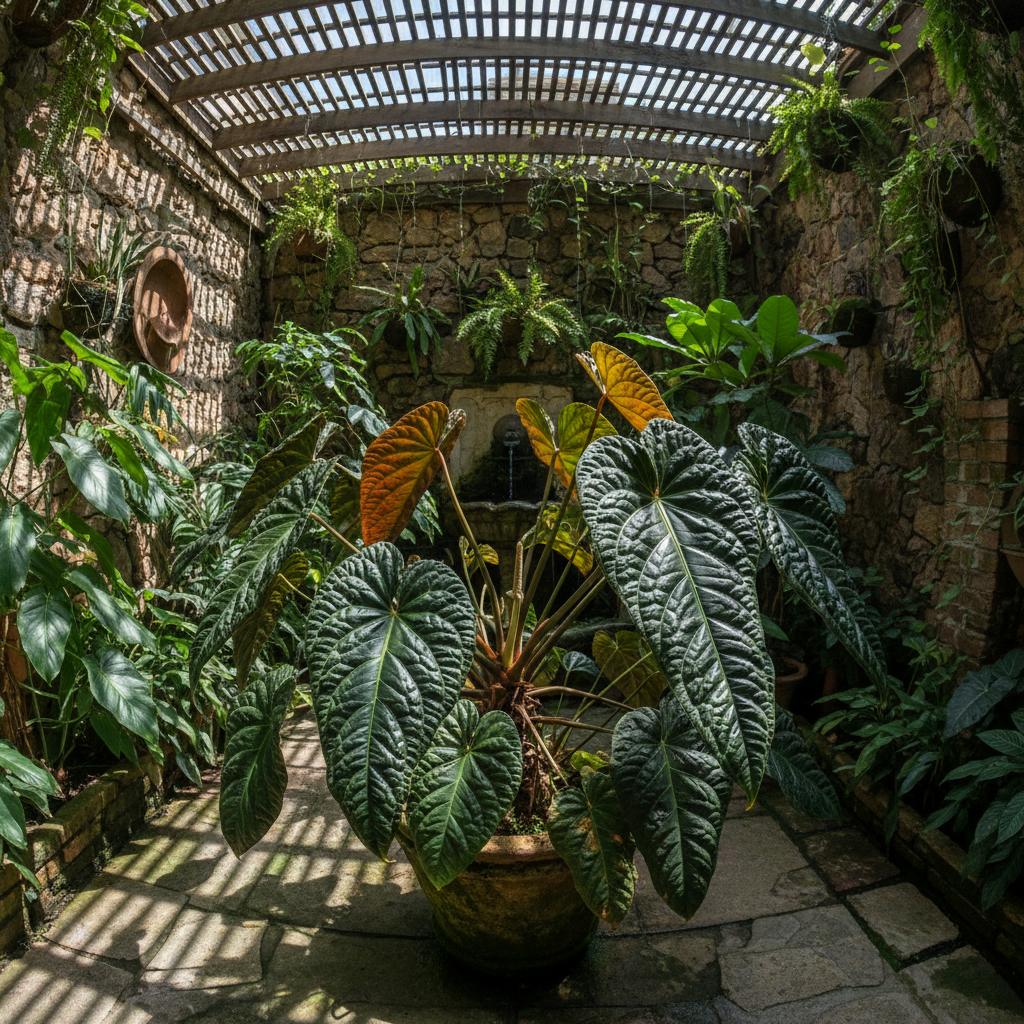
- Leaves: Deeply bullate (puckered and pebbled texture), cordate to ovate, dark green, leathery, with highly prominent venation;
- Stems: Creeping rhizomatous stems that root readily at the nodes along the soil surface;
- Flowers: Inflorescence features a greenish to maroon reflexed spathe and a stout, purplish-brown spadix;
- Roots: Thick, fleshy adventitious roots emerging from stem nodes.
Care Guide
Water thoroughly when the top inch of the soil feels dry to the touch.
Apply a balanced, highly diluted liquid fertilizer to damp soil.. Aroids are sensitive to fertilizer burn; always dilute heavily and flush the soil periodically.
Aquarium Water Fertilizer:Use untreated aquarium change water to hydrate the plant. It provides gentle, natural nitrogen and trace minerals without the risk of chemical burn. Ensure the water is at room temperature and free of added aquarium medications.- Remove yellowing, dead, or damaged leaves at the base of the petiole to maintain aesthetics;
- Trim back overly long creeping stems if a more compact growth habit is desired;
- Always sterilize pruning shears with rubbing alcohol before use to prevent the spread of bacterial or fungal pathogens.
Toxicity
Warning: this plant may be toxic.
Pets: Toxic to cats per ASPCA due to insoluble calcium oxalate crystals causing severe oral irritation.
Humans: Contains insoluble calcium oxalate crystals which can cause oral and gastrointestinal irritation if ingested.
Garden Uses & Culture
Culture: Highly sought after in Western houseplant communities and terrarium hobbies for its unique, deeply textured foliage, often used to add a prehistoric or exotic aesthetic to indoor collections.
Usage: - Cultivated primarily as an indoor ornamental foliage plant; - Excellent candidate for large terrariums or vivariums due to its high humidity requirements and creeping nature.