 PlantFun
Plant Needs
Sunlight
Requires bright, indirect light; avoid harsh direct afternoon sun which can scorch the leaves.
Watering
Keep the potting medium consistently moist but not waterlogged; requires high ambient humidity (60%+).
Temperature
Prefers warm tropical temperatures; protect from cold drafts and temperatures below 15°C.
Characteristics
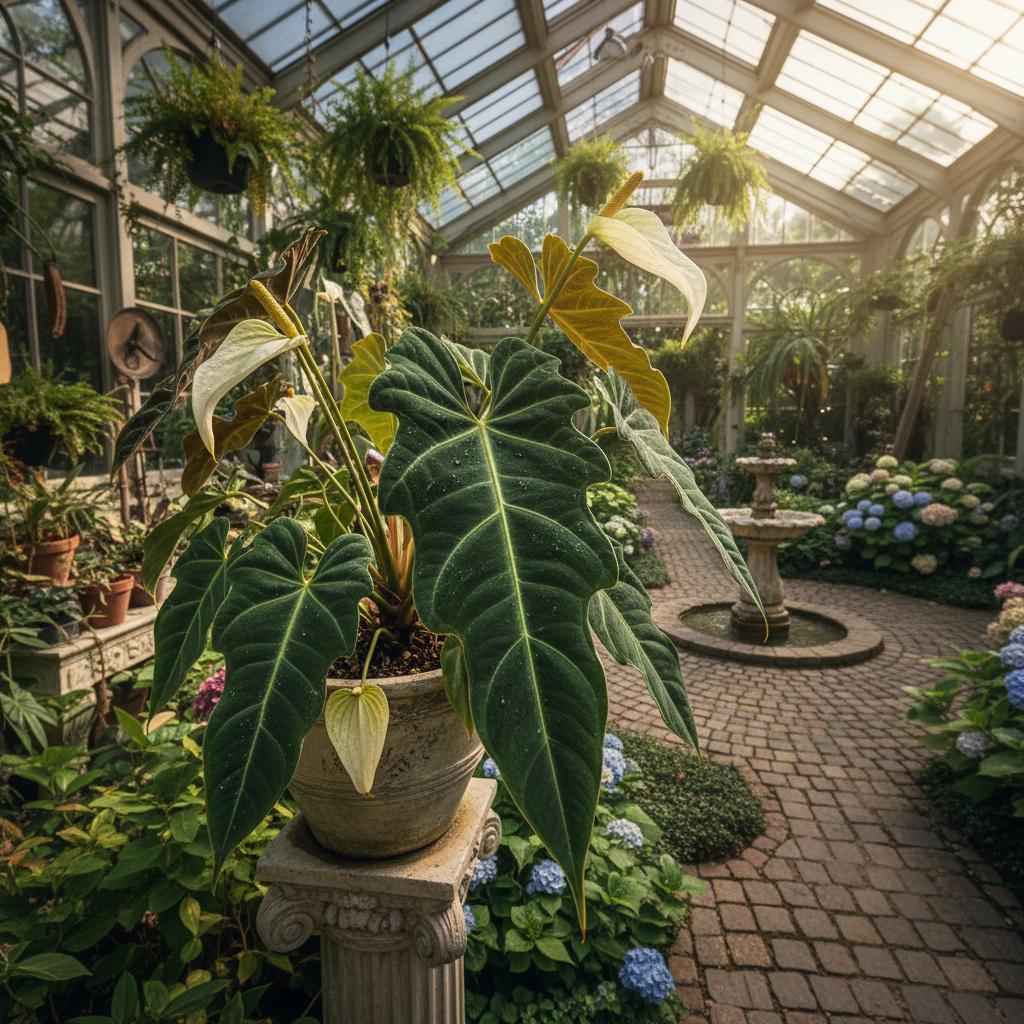
- Leaves: Elongated, strap-like, pendant, dark green with prominent rippled or corrugated margins;
- Flowers: Inflorescence consists of a relatively inconspicuous green to purplish spathe and spadix;
- Roots: Thick, fleshy aerial roots adapted for epiphytic growth, covered in velamen.
Care Guide
Watering
Water thoroughly when the top inch of the substrate feels dry.
Fertilization
Apply a diluted balanced liquid fertilizer.. Use a weak fertilizer solution to prevent root burn.
Aquarium Water Fertilizer:Use untreated aquarium change water to water the plant; it provides a gentle, natural source of nitrogen perfect for foliage growth without the risk of chemical burn.Pruning
- Remove yellowing or dead leaves at the base of the stem using sterilized shears;
- Trim away any dried or rotting aerial roots during repotting;
- Wipe leaves gently with a damp cloth to remove dust and maintain photosynthetic efficiency.
Toxicity
Warning: this plant may be toxic.
Pets & Humans
Pets: Toxic per ASPCA; contains calcium oxalate crystals causing oral irritation, intense burning, and vomiting.
Humans: Contains insoluble calcium oxalate crystals; chewing or biting can cause oral irritation and swelling.
Garden Uses & Culture
Culture: Highly prized in Western aroid collector communities for its dramatic, architectural foliage, often displayed on tall pedestals or in hanging baskets to showcase its cascading leaves.
Usage: Indoor ornamental plant, greenhouse specimen, hanging basket feature.