 PlantFun
Plant Needs
Characteristics
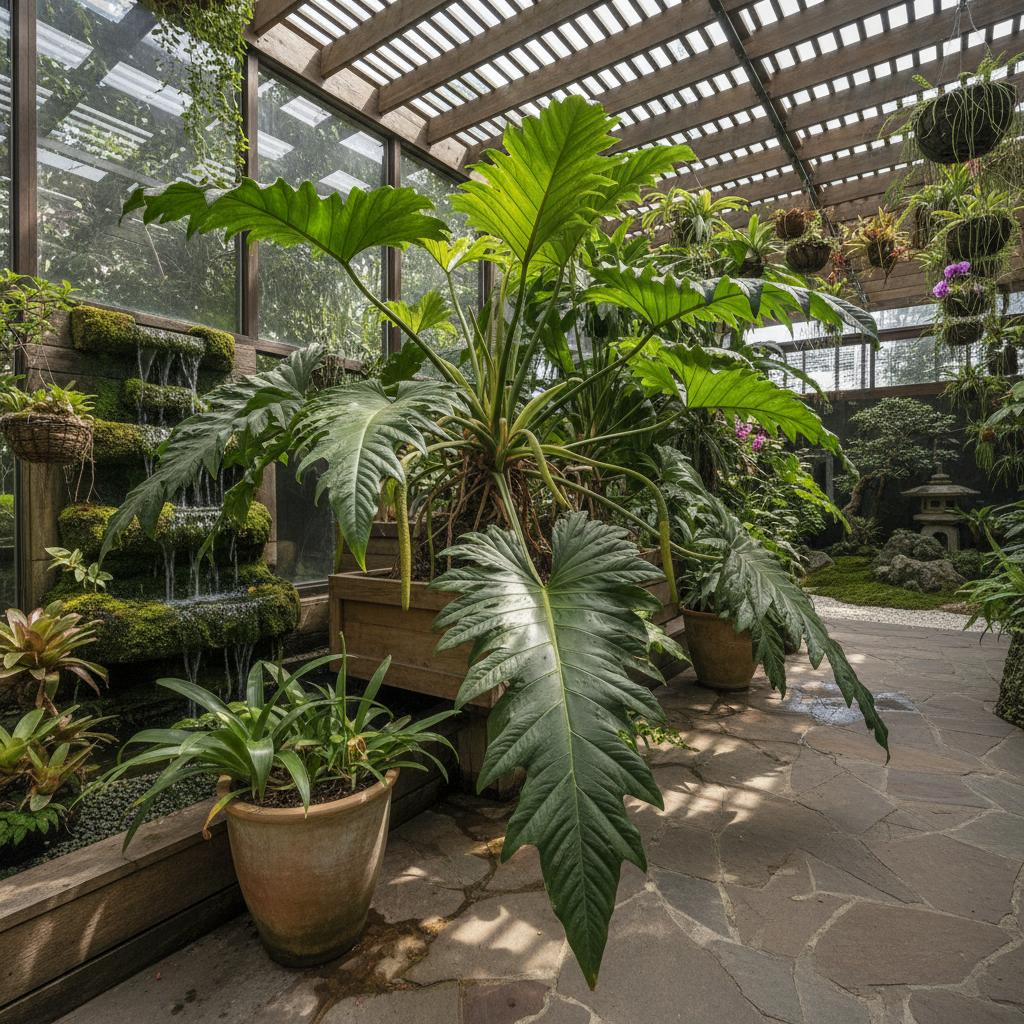
- Leaves: Large, coriaceous, broadly lanceolate to obovate, up to 1.5 meters long, with undulate (ruffled) margins and a prominent midrib, forming a rosette;
- Flowers: Inflorescence features a narrow, reflexed, greenish to purplish spathe and a long, dark purple to brownish spadix;
- Roots: Thick, fleshy aerial roots adapted for epiphytic or epilithic growth, often forming a dense root mass at the base.
Care Guide
Water thoroughly once a week, keeping the substrate slightly moist but never waterlogged.
Apply a balanced, water-soluble fertilizer diluted to half strength.. Fertilize only when the soil is moist to avoid burning the sensitive fleshy roots.
Banana Peel Tea:Soak chopped banana peels in water for 24-48 hours, strain, and use the diluted liquid to water the plant. Discard the solid peels in compost; do not leave raw peels on the indoor soil surface to avoid attracting fungus gnats.- Remove yellowing, damaged, or dead leaves at the base using sterilized shears to maintain aesthetics and hygiene;
- Snip off spent inflorescences at the base of the stem to redirect the plant's energy to foliage growth;
- Trim damaged or rotting aerial roots, but leave healthy, firm aerial roots intact as they absorb moisture from the air.
Toxicity
Warning: this plant may be toxic.
Pets: Toxic per ASPCA; ingestion causes oral irritation, intense burning and irritation of mouth, tongue and lips, excessive drooling, vomiting, and difficulty swallowing.
Humans: Contains insoluble calcium oxalate crystals; chewing or biting can cause painful irritation of the mouth, lips, and throat, along with possible contact dermatitis from the sap.
Garden Uses & Culture
Culture: Highly prized in Western indoor horticulture as a statement "bird's nest" plant, bringing a bold, architectural jungle aesthetic to modern interiors and conservatories.
Usage: Primarily grown as an ornamental foliage plant in homes, botanical gardens, and tropical landscape designs.