 PlantFun
Plant Needs
Sunlight
Prefers partial to full shade; avoid direct afternoon sunlight which can scorch the fronds.
Watering
Requires consistently moist, well-draining soil; do not allow the root ball to dry out completely.
Temperature
Thrives in temperate to subtropical climates; protect from severe, prolonged freezing temperatures.
Characteristics
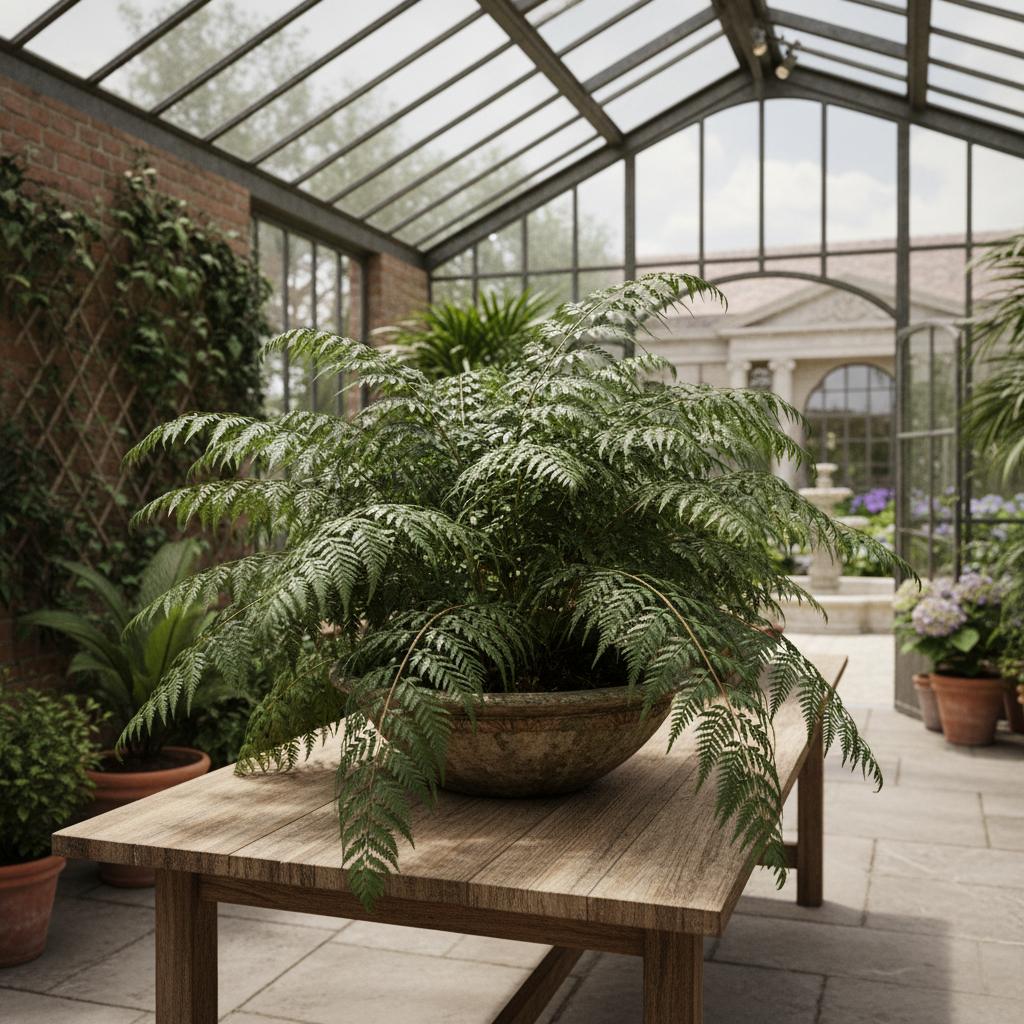
- Leaves: Fronds are evergreen, leathery, 2- to 4-pinnate, glossy dark green above, with margins bearing distinct bristle-like (aristate) teeth;
- Rhizomes: Creeping, densely covered with brown to blackish linear-lanceolate scales;
- Spores: Sori are round, located on the abaxial surface of the pinnules, covered by kidney-shaped (reniform) indusia.
Care Guide
Watering
Keep soil evenly moist, watering when the top inch feels slightly dry.
Fertilization
Apply a diluted, balanced liquid fertilizer monthly.. Ferns are sensitive to heavy fertilization; use at half-strength to prevent frond burn.
Used Coffee Grounds Tea:Steep a small amount of used coffee grounds in water overnight, strain, and use the liquid to water the fern. This provides gentle nitrogen and maintains the slight soil acidity ferns love. Avoid applying thick layers of raw grounds directly to the soil to prevent mold.Pruning
- Remove dead, damaged, or yellowing fronds at the base to maintain a tidy appearance;
- Prune in late winter or early spring before new fiddleheads emerge;
- Sterilize pruning shears with rubbing alcohol before use to prevent disease transmission.
Toxicity
Warning: this plant may be toxic.
Pets & Humans
Pets: Non-toxic to cats per ASPCA guidelines for true ferns.
Humans: Generally considered non-toxic to humans; no known toxic principles.
Garden Uses & Culture
Culture: Ferns have long been celebrated in Victorian Pteridomania (fern madness) as symbols of woodland mystery, elegance, and botanical fascination in European conservatories.
Usage: Excellent for shaded woodland gardens, underplanting shrubs, shaded borders, and as elegant indoor houseplants in bright, indirect light.