 PlantFun
Plant Needs
Characteristics
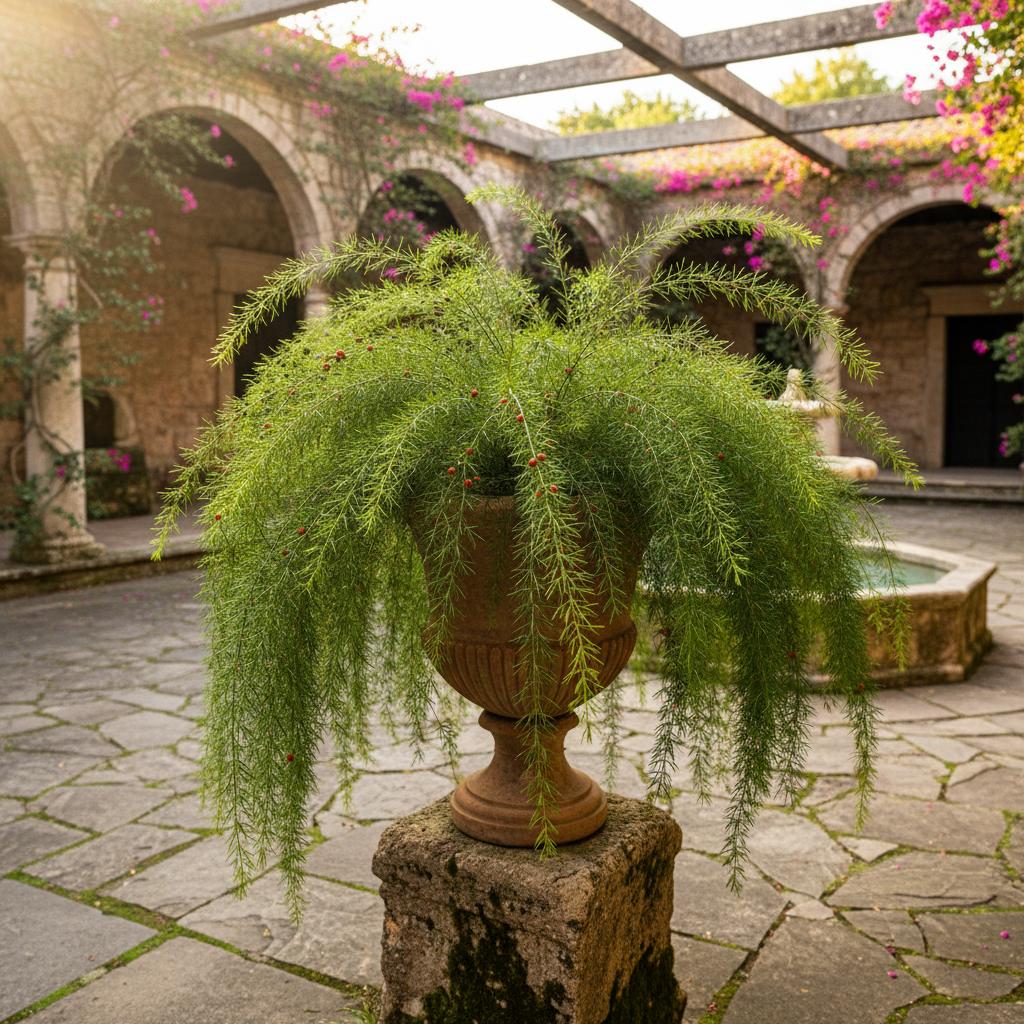
- Leaves: True leaves are reduced to inconspicuous scales; the green, needle-like structures are modified stems called cladodes, arranged in whorls;
- Flowers: Small, fragrant, white to pale pink flowers borne in axillary racemes;
- Fruit: Spherical berries that ripen to a bright red, containing 1 to 3 black seeds;
- Roots: Features a network of fibrous roots and fleshy, water-storing tubers.
Care Guide
Water thoroughly when the top inch of soil dries out.
Apply a balanced liquid fertilizer.. Feed monthly during the growing season; halt fertilization in winter.
Banana Peel Tea:Steep chopped banana peels in water for 24-48 hours, strain, and use the liquid to water the plant. Avoid leaving raw peels on the soil surface to prevent pests and mold.- Trim back old, yellowed, or bare stems to the soil line to encourage fresh growth;
- Wear gloves while pruning to protect skin from mild sap irritation and small hidden thorns;
- Prune in early spring before the active growing season begins.
Toxicity
Warning: this plant may be toxic.
Pets: Toxic per ASPCA. Repeated dermal contact can cause allergic dermatitis. Ingestion of berries causes vomiting, diarrhea, and abdominal pain.
Humans: Mildly toxic if berries are ingested, causing gastrointestinal upset; sap may cause contact dermatitis.
Garden Uses & Culture
Culture: Popularized in the Victorian era as a robust parlor plant, it symbolizes endurance and lushness in Western indoor gardening traditions.
Usage: Widely used in hanging baskets, container gardens, and as a trailing accent in floral arrangements. Serves as an evergreen groundcover in frost-free climates.