 PlantFun
Plant Needs
Characteristics
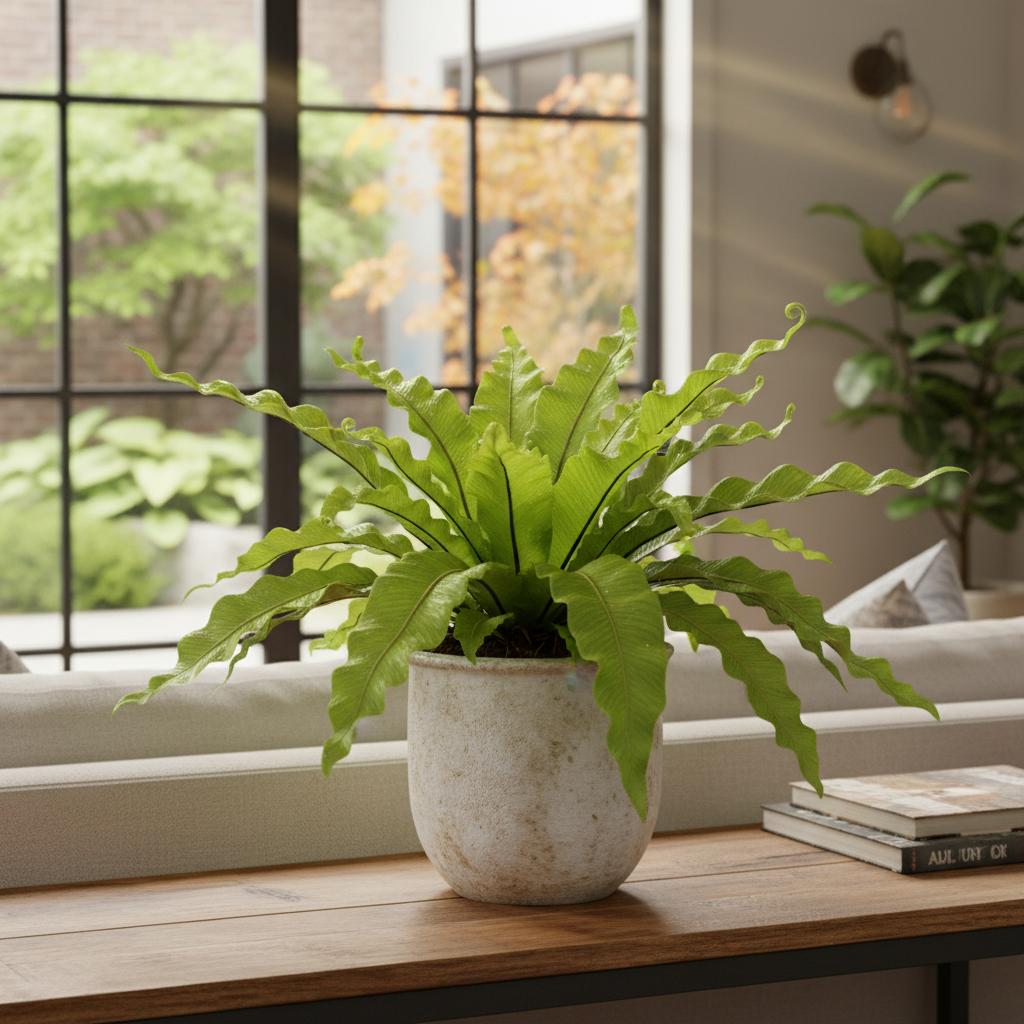
- Leaves: Light green, glossy, undivided fronds forming a tight rosette; the 'Crissie' cultivar features distinctively branched, forked, or crested tips on mature fronds.
- Stems: Short, erect rhizome covered with scales, forming the base of the "nest".
- Spores: Linear sori arranged in parallel diagonal lines along the midrib on the underside of mature fronds.
- Roots: A dense, spongy mass of fuzzy brown roots that anchor the plant and absorb moisture from the air and debris.
Care Guide
Water thoroughly when the top inch of soil feels dry, watering the soil directly rather than the center rosette.
Apply a balanced, water-soluble fertilizer diluted to half strength.. Ferns are sensitive to over-fertilization; always err on the side of caution and use highly diluted solutions.
Aquarium Water:Use diluted, dirty aquarium water during water changes. It provides gentle, natural nitrogen. Avoid if the tank has been treated with medications or high salts.- Remove dead, yellowing, or damaged fronds at the base to maintain appearance.
- Do not trim the brown, fuzzy roots at the base, as they help anchor the plant and absorb moisture.
- Avoid handling the delicate new fronds emerging from the center of the rosette, as they are easily damaged.
Toxicity
Warning: this plant may be toxic.
Pets: Non-toxic to cats (per ASPCA).
Humans: Non-toxic to humans.
Garden Uses & Culture
Culture: In Victorian England, ferns became a symbol of botanical fascination during the "Pteridomania" (fern craze), often displayed in elaborate glass Wardian cases to protect them from the polluted air of the Industrial Revolution.
Usage: - **Ornamental**: Popular indoor houseplant valued for its architectural shape and vibrant green color. - **Landscaping**: Used as an epiphyte on trees or in hanging baskets in tropical and subtropical gardens.