 PlantFun
Plant Needs
Characteristics
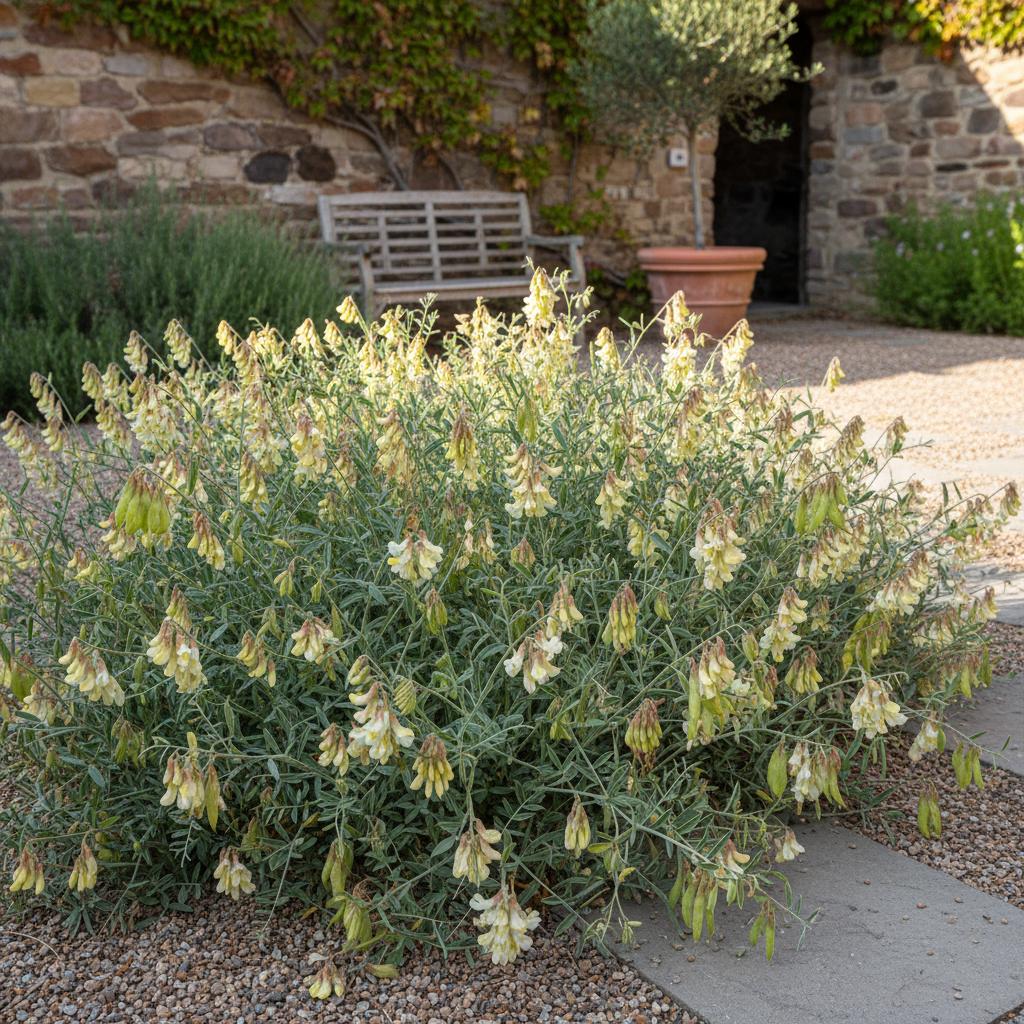
- Leaves: Pinnately compound, 10 to 25 leaflets; leaflets are elliptic to lanceolate, slightly pubescent on the underside.
- Flowers: Pale yellow to white, papilionaceous (pea-like), arranged in dense, axillary racemes.
- Stems: Hollow, sprawling or trailing, arising from an extensive creeping rhizome system.
- Fruit: Inflated, bladder-like pods (legumes) covered in hairs, turning black when fully mature and containing multiple seeds.
Care Guide
Water moderately during active growth and establishment, allowing soil to dry between waterings.
Apply a light top-dressing of compost if soil is extremely poor.. As a legume, it fixes its own nitrogen. Avoid high-nitrogen fertilizers which encourage weed competition.
Crushed Eggshell Powder:Rinse, dry, and crush eggshells into a fine powder. Sprinkle around the base in early spring to provide calcium, which supports legume nodulation. Avoid applying too thickly.- Mow or cut back in late fall or early spring to remove dead foliage.
- Trim edges if the rhizomatous spread encroaches on unwanted areas.
- Can be grazed or cut for hay multiple times a season in agricultural settings.
Toxicity
Warning: this plant may be toxic.
Pets: Unlike many toxic "locoweeds" in the Astragalus genus, this specific species is non-toxic and lacks swainsonine.
Humans: Considered non-toxic, though not typically consumed by humans.
Garden Uses & Culture
Culture: Introduced to North America in the 1920s, it became a staple in Western agricultural programs for reclaiming disturbed lands and providing bloat-free pasture for livestock.
Usage: Widely used as a non-bloating forage crop for cattle and sheep, for hay production, and as a premier groundcover for erosion control on steep banks and mine reclamation sites.